[Practical Asset Management] KOSDAQ Finds Its Bottom... Four Stocks to Watch
Growing Optimism Over KOSDAQ Supply-Demand Improvement and Policy Shifts
Spotlight on Stocks With Growth, Financial Stability, and Strong Shareholder Returns

KOSDAQ is once again drawing attention. With signs that the concentration of capital in large-cap KOSPI stocks is easing, and policy changes such as strengthened delisting requirements and the introduction of a promotion and relegation system underway, there is a growing sense of optimism about structural improvements in the market. In this context, experts advise investors to focus on fundamentally strong yet undervalued stocks.
KOSDAQ: Lower Valuation Pressure Amid Solid Earnings Outlook
This month, the KOSDAQ index has corrected down to the vicinity of 803 points, which corresponds to the 120-month moving average, a key long-term trend indicator. The price-to-earnings ratio (PER) has also fallen back to its historical average, alleviating valuation pressure. In contrast, the pace of adjustment in the annual operating profit consensus (the average of market forecasts) has been relatively stable compared to the past, leading analysts to conclude that the main causes of the index's decline are related to supply and demand dynamics and investor sentiment, rather than a deterioration in corporate earnings forecasts.
There are also signs of change in market flows. This year, retail investors have made a net purchase of 14.6 trillion won in leveraged exchange-traded funds (ETFs) but have posted a net sell of 7.5 trillion won in KOSDAQ. The average daily trading value gap between KOSPI and KOSDAQ has widened to about 2.9 times, which has contributed to a supply-demand vacuum in KOSDAQ and a decline in the index. However, since July, retail investors have reversed course and made a net purchase of 2.6 trillion won in KOSDAQ.
Policy changes are also affecting KOSDAQ. With the implementation of strengthened delisting requirements, the final plan for the KOSDAQ promotion and relegation system is scheduled to be announced in the fourth quarter of this year, along with the introduction of select-segment linked ETFs. This series of policy momentum is expected to drive the removal of insolvent companies while also promoting the selection of high-quality firms.
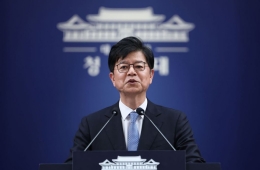
Kim Dongyoung, research analyst at Samsung Securities, stated, "The KOSDAQ index is now attractive in terms of both price and fundamentals," and he added, "The alleviation of concentrated supply and demand, as well as policy momentum, will be the key factors for a future rebound."

Spotlight on Undervalued Companies with Strong Earnings and Solid Financials
Samsung Securities emphasized that KOSDAQ small- and mid-cap stocks should not be filtered by straightforward quantitative screening alone, but with consideration for growth potential, financial stability, and shareholder returns. For growth, companies posting sales and operating profit growth rates of at least 20% and an operating margin of at least 15% were highlighted. For financial stability, a return on equity (ROE) above 15% and a debt ratio below 70% were used as criteria. Regarding shareholder returns, a dividend yield above 4% and a payout ratio above 30% were taken into account.
Based on these criteria, Samsung Securities picked InBody in the growth category, Suprema and Taekwang for financial stability, and MegastudyEdu for shareholder returns. Given the typically high volatility of small- and mid-cap KOSDAQ stocks, the approach was to combine different investment concepts rather than focusing on a single standard.
InBody stands out as it has concentrated on the niche field of body composition analyzers while expanding its presence in the global market. It has set new record highs in sales for ten consecutive quarters, and in the second quarter of this year, re-entered the 20% operating margin range even excluding tariff refund effects. In the United States, demand growth stemming from hospital adoption in connection with the expanded prescription of GLP-1 obesity treatments has served as a growth driver. InBody is also expanding its European operations. As of the first half of this year, overseas sales account for 87% of the company’s total sales, with direct sales making up 85% of sales as well. Samsung Securities projected that InBody aims for mid-term annual sales growth of 15% and an operating margin of 20%.
Suprema’s investment appeal lies in rising security demand resulting from increased global investment in data centers and infrastructure. Integrated security systems now account for 81% of the company’s consolidated sales in the first half of this year, and Suprema supplies hardware terminals for access control and time-attendance management, as well as associated software. Notably, a rise in demand for high-end security products is expected to lead to increased sales prices and volumes. Suprema is also scheduled to launch an artificial intelligence-powered camera globally in early 2027.
MegastudyEdu's main points of focus are its dividend returns and changes in educational policy. As university admissions reform for the 2028 academic year shifts high school grading from a nine-level to a five-level system, school grades are expected to become far more important. As a result, there is a potential for increased demand for offline education and a rise in Megapass’s market share. Samsung Securities analyzed that the growing importance of integrated social studies and science, as well as the cancellation of math as an elective subject, could also impact related businesses. Notably, if the company maintains dividend payouts at last year’s level, the annual dividend yield for this year could reach about 8.3%.
Hot Picks Today
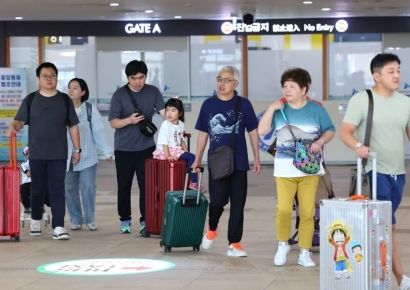 "Instead of Japan, Let's Go to Korea": Chinese Tourists Flock In... Travel Demand Surges During Up to 13-Day Golden Holiday
- "No Age or Income Limits, Everyone Gets 100,000 Won... This City to Provide Subsidies to All Residents"
- "I’m Now Afraid of Chinese People"... Chinese Restaurant Owner Appeals After Being Threatened Over Sign
- "1.62 Million Won per kg? Why Are Prices So High... Even After Chuseok, They Haven't Dropped" Yangyang Songi Mushrooms Reach Record-High Price
- "Did They Really Use That Pot for Cooking?" Outrage as Chinese Kindergarten Caught Washing Rags in Kitchen
Taekwang manufactures industrial fittings used in liquefied natural gas (LNG), shipbuilding, and power plant construction. With growing investment in LNG and combined cycle power generation in North America, export volumes are expected to rise, and approximately 80% of total sales come from exports. In particular, as the proportion of high value-added products like stainless steel and alloy steel increases, the potential for improvements in profitability grows as well. Additionally, if geopolitical risks in the Middle East ease, demand for previously delayed projects could recover.
© The Asia Business Daily. All rights reserved. Unauthorized AI training and use prohibited.