Police Recover 26.3 Billion Won in Phishing Losses Previously Thought Unrecoverable
38.1 Billion Won Moved from Banks to Virtual Asset Exchanges
Refund Nearly Impossible Under Old System... Police Traced the Funds Back
Victims Who Sold Homes or Worked Overtime Receive Compensation
The police have recovered over 26 billion won in voice phishing losses through an extensive financial tracking operation. Although the illicit funds were transferred to electronic wallets at virtual asset exchanges, making recovery more difficult, the police helped victims by tracing the money back through as many as 170,000 bank accounts.

Visualized data showing police tracking voice phishing victim funds converted into virtual assets. Image generated by ChatGPT
View original imageThe Seoul Metropolitan Police Agency’s Metropolitan Investigation Unit announced on September 29 that it had tracked down voice phishing proceeds frozen at the five largest virtual asset exchanges in Korea since September 2023, returning 26.376 billion won to 1,137 victims.
In March 2023, during discussions with virtual asset exchanges about countermeasures to prevent phishing damage, the police identified an issue: funds frozen at exchanges often failed to be returned to actual victims. At the time, under the Act on the Refund of Financial Losses from Telecommunication Fraud, exchanges—unlike banks—could not confirm victim identities. The police therefore traced the flow of frozen money back to its source, reviewing 1,050 electronic wallets and around 168,000 related bank accounts.
Most victims had reported the fraud after realizing what had happened, but had given up hope because there was no money left in the fraudulent accounts. Some had not even known their losses had made it as far as the virtual asset exchanges. Whenever victims were identified, the police contacted them—by mail, phone, or in person—to verify both their identity and the details of the crime. As a result, out of 38.2 billion won in frozen proceeds, 26.3 billion won was returned to its rightful owners.

In March last year, a 56-year-old office worker, Mr. A, was tricked by a scammer impersonating a Shinhan Savings Bank employee. He was told that in order to receive a low-interest loan, he would need to transfer his existing loan amount to a designated account, and ended up sending 95 million won—all the money he had from savings and other loans. The loss forced him to sell his house. In June last year, Ms. B, a 28-year-old nurse, was swindled out of 40 million won by a scammer impersonating a prosecutor, who claimed that all her assets had to be investigated because she was allegedly involved in criminal activity. Ms. B was forced to work extra hours every month just to cover the mounting interest payments.
Thanks to this investigation, unreturned funds remaining at the exchanges were tracked down, enabling Mr. A to recover 22 million won and Ms. B to recover 25 million won. Mr. A said, “I was consumed by guilt, but with the police recovering part of my losses, my life has started to improve. I feel much more at ease now that there’s a possibility for further compensation.” Ms. B commented, “I couldn’t even tell my family and was struggling with the interest, but I’m deeply grateful to have gotten some of my money back.”
The police are also investigating cases where, after the end of the exchange-imposed freeze period, funds were withdrawn. This follows instances where those notified of lifted restrictions moved or used the money. As a result, 130 account holders are currently under investigation for violating the Act on Regulation and Punishment of Criminal Proceeds Concealment. The police plan to step up pre-indictment confiscation and preservation of assets to prevent further disposal of criminal proceeds, while also working to return more funds to victims.
Regulations that made it difficult to refund voice phishing losses converted into virtual assets are also being improved. Starting October 1, an amendment to the Act on Refund of Financial Losses from Telecommunication Fraud will include virtual asset service providers in the victim relief system. Even if voice phishing funds are converted to virtual assets, payment suspension and the refund process through exchanges will become possible.
Hot Picks Today
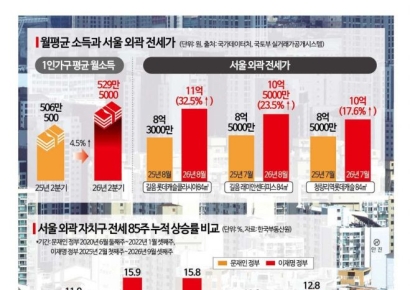 While Monthly Income Rises by 230,000 Won, Jeonse Jumps by 200 Million Won... Jeonse Surpasses Moon Administration after Sales
- [The World of Kickbacks]②Hanaro Mart Vendor Who Refused "Secret Money" Forced to Close After 10 Years
- [Regulation-Bound NPO②] Even a Century-Old Organization Faced High Barriers with the Permit-Based System
- "One in Three Unsuitable for Marriage": 72-Year-Old Professor's Diagnosis Sparks Fierce Debate Among Chinese Netizens
A police official stated, “We will thoroughly investigate voice phishing criminal groups and relentlessly track criminal proceeds hidden in virtual assets so that victims can receive meaningful compensation.”
© The Asia Business Daily. All rights reserved. Unauthorized AI training and use prohibited.

!["Failed Even With Net Assets of 400 Million Won?"... Six Criteria That Define 'The Real Middle Class' [Data Pick]](https://cwcontent.asiae.co.kr/asiaresize/307/2026092809144741876_1790554486.jpg)