[Hydrogen: A Broken Ladder] ④ There Are Stages in the Clean Hydrogen Transition...Strategies of the U.S., China and Japan
Hydrogen's value for energy security is rising, but the transition faces challenges
Projected potential production in 2030 fell 27% in a year
Japan supports price differences, China expands demand, and the U.S. ensures investment continuity
① An ecosystem caught in a vicious cycle as soon as it took its first steps
② "We invested trusting the government"... The never-ending "Valley of Death"
③ South Korea's clean hydrogen transition policy caught in a dilemma
④ The clean hydrogen transition has stages... Strategies of the U.S., China and Japan
⑤ "South Korea is trapped in idealism... It needs to redesign a realistic pathway"
South Korea is heavily dependent on energy imports. According to the Korea Energy Agency, the country's energy import dependency stood at 93.7% in 2024, based on preliminary figures. Countries that rely heavily on overseas sources for energy, like South Korea, are more vulnerable to geopolitical shocks. That is because heavy dependence on particular supplier countries and energy sources can disrupt industry and the broader economy.
Europe's dependence on Russian natural gas has recently served as another reminder of this risk. After Russia invaded Ukraine in 2022, it sharply reduced pipeline gas supplies to Europe. Gas prices surged, plunging the continent into a severe energy crisis. In the Middle East, whenever conflict breaks out, concerns about supply disruptions from major oil-producing countries and along shipping routes, including the Strait of Hormuz, add to uncertainty over global oil prices and the world economy.
Hydrogen's strategic value is gaining recognition in the context of energy security. Its role is no longer limited to serving as an energy source for addressing the climate crisis and achieving carbon neutrality. The International Energy Agency (IEA) has noted that hydrogen can broaden the range of domestic energy sources available, reduce dependence on fossil fuel imports, and help diversify supplier countries and supply routes. In particular, hydrogen produced from renewable energy can be made in regions that are not among the traditional major oil and gas producers, offering the advantage of diversifying suppliers.

However, hydrogen cannot resolve an energy crisis in the short term. According to the IEA, low-emissions hydrogen, including green hydrogen, which has substantially lower carbon emissions during production, is still more expensive than conventional fossil fuel-based hydrogen in most regions. Building infrastructure for large-scale production, storage and transportation will also take considerable time. Companies are also unlikely to commit to large-scale investment when demand has yet to reach sufficient levels. While the need for hydrogen is growing from an energy security perspective, significant barriers remain before it can be translated into a functioning market.
The annual potential production capacity of low-emissions hydrogen projects announced with the aim of beginning operations by 2030 was 27 million tons, according to the IEA's "Global Hydrogen Review 2026," published in June. This is 27% lower than the 37 million tons reported in last year's review. The decline reflects the postponement of some projects' start dates to after 2030, as well as temporary suspensions and cancellations. High production costs and uncertain demand were also cited as major obstacles to moving projects forward. Last year, global demand for low-emissions hydrogen was about 1 million tons, less than 1% of total hydrogen demand.
Nevertheless, major economies overseas are refining their policies to reduce the costs and risks of the transition as they seek to develop the low-emissions hydrogen market over the long term. Environmental imperatives such as carbon neutrality alone are not enough to move the market. The IEA has also recommended that, rather than waiting for new sources of demand, countries should first shift industries that already use hydrogen, such as refining and chemicals, to low-emissions hydrogen, while providing support to narrow the initial price gap and establishing a predictable policy framework over the long term. Ultimately, the key is how smoothly the transition from conventional fossil fuel-based hydrogen to low-emissions hydrogen can be managed.

Japan has pursued hydrogen technology development and related policies for more than 50 years, viewing them as an energy security priority since the oil shocks of the 1970s. Japan's energy self-sufficiency rate was 15.3% in 2023, the lowest among the Group of Seven (G7) countries. Industry observers in Japan and abroad generally view the country as treating hydrogen as a key pillar of its national energy strategy and maintaining policy certainty and the institutional consistency needed to support it. Its policies have also expanded in stages, from basic research and development (R&D) to demonstration projects and supply chain development, and more recently to market creation and efforts to attract private investment.
One notable feature is that Japan has opted for a pragmatic approach rather than insisting on an idealized, single pathway centered on green hydrogen. It has prioritized realistic transition prospects and securing initial demand by pursuing multiple pathways in parallel, including blue hydrogen and ammonia co-firing, which can be used now. In particular, Japan has viewed ammonia co-firing at existing thermal power plants as a practical way to create large-scale demand immediately without investing in new infrastructure, while also reducing carbon emissions from thermal power generation. This contrasts with South Korea, which excluded coal-ammonia co-firing from its clean hydrogen power generation auction market starting this year.
Japan also operates a contract-for-difference (CfD)-style scheme under its Hydrogen Society Promotion Act, compensating for the price difference between low-carbon hydrogen and conventional fuels and feedstocks for 15 years. It also supports supply chain development, including storage and transportation, as well as policy financing, creating a framework in which the government shares price and investment risks. The strategy is to bridge the demand gap until green hydrogen infrastructure matures and gradually realize a "hydrogen society."
China is fostering its market with the goal of developing a diversified hydrogen-use ecosystem by 2035. Its "Comprehensive Hydrogen Energy Application Pilot Program," announced in March, aims to expand hydrogen use beyond fuel-cell vehicles to industries such as steel and chemicals. It also calls for the gradual replacement of fossil fuel-based hydrogen with renewable energy-based hydrogen in industries with high hydrogen consumption, including refining and coal chemicals.
Its support for creating demand is also designed to focus on results. Rather than providing uniform subsidies from the central government, China is using a performance-based reward system that varies support according to results, such as the actual volume of hydrogen used and its application in products. Under the scheme, each city cluster can receive up to 1.6 billion yuan (approximately 320 billion won) over four years. The goal is to expand large-scale hydrogen use across city clusters by 2030 and bring the average final price of hydrogen down to no more than 25 yuan (approximately 5,000 won) per kilogram.
Even when hydrogen policies are pursued with a long-term perspective, specific measures may change with shifts in government or market conditions. The United States is a case in point. In 2022, the administration of then-President Joe Biden designated clean hydrogen projects that began construction by the end of 2032 as eligible for the production tax credit (45V) under the Inflation Reduction Act (IRA). The second Trump administration moved the deadline five years earlier, to the end of 2027, but retained the provision allowing projects that begin construction by the deadline to receive tax credits for up to 10 years after production starts.
Hot Picks Today
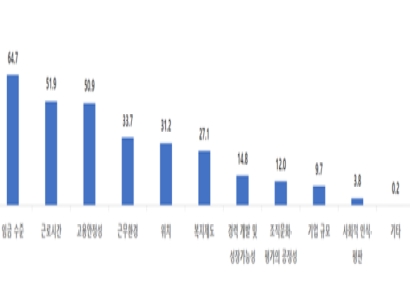 "Please Pay Me at Least 3 Million Won a Month": More Than Half of Young People Today Prioritize "Working Conditions" Over Company Size
- Selling Like Crazy Every Year... 30-Year-Old Hetbahn Takes on a New Challenge: Tastes Better Than "Mom's Home Cooking" [On-Site Report]
- "It's so popular you can't get it": 'Legendary liquor' returns after 11 years, causing a stir... 'Newtro' craze takes over convenience stores [How We Shop Today]
- "Hey, Lady, Teach Your Kids to Behave!" ... 300,000 Won in Cash and a Bodily Injury Claim Demanded Over Child's Door Ding
- "Don't Trust This Woman": Documentary on 'Investment Scammer' Earns KRW 22 Billion in One Week
Ha Jiwon, head of international cooperation at the Korea Hydrogen Alliance, said, "Even when policies change, it is important to ensure as much predictability and continuity as possible for projects that are already under investment."
© The Asia Business Daily. All rights reserved. Unauthorized AI training and use prohibited.