Three Major Telecom Companies Declare "Personal Information Protection Top Priority"... Personal Information Commission to Assess Improvement (Comprehensive)
Jaeheon Jung, Yoonyoung Park, and Beomsik Hong Attend the Meeting
Three Telecom CEOs Announce Expanded Investment in Protection
Personal Information Commission to Monitor Implementation
The heads of the three major telecommunications companies, which experienced massive personal information leakage incidents last year, met with Kyunghee Song, Chairperson of the Personal Information Protection Commission. During the meeting, they agreed on the importance of preventative measures for personal information protection and promised continued investment. They issued a joint declaration stating that personal information protection would be the top management priority and announced plans to strengthen a CEO and board-centered accountability system.

Song Kyunghee, Chairwoman of the Personal Information Protection Commission, is greeting participants at the CEO meeting of the three major telecommunications companies held at the Press Center in Jung-gu, Seoul, on the afternoon of the 28th. From left: Chung Jaeheon, CEO of SK Telecom; Chairwoman Song; Park Yoonyoung, CEO of KT; Hong Beomsik, CEO of LG Uplus. September 28, 2026. Photo by Kang Jinhyung
View original imageOn September 28, at the Korea Press Center in Jung-gu, Seoul, Chairperson Song met with Jaeheon Jung, CEO of SK Telecom, Yoonyoung Park, CEO of KT, and Beomsik Hong, CEO of LG Uplus, to discuss plans for public-private cooperation to build a safe AI and digital society. This roundtable was the first official communication between the Personal Information Protection Commission and corporate CEOs since Chairperson Song took office.
In her opening remarks, Chairperson Song stressed, "The recent string of personal information leakage incidents must be taken seriously by both the government and businesses," adding, "We must shift to a prevention-oriented protection system that detects and responds to risks before incidents occur." She also emphasized, "Personal information protection must become a core management task directly overseen by the CEO and for which the entire organization takes responsibility."
The three telecommunications companies agreed that earning the public's trust is the foundation for the industry's development and AI and digital innovation, and signed a “Joint Declaration for an AI Digital Society Trusted by the People.” They pledged to: ▲ make personal information protection the highest management value, ▲ establish CEO and board-centered accountability governance, ▲ effectively expand investment and professional talent for information protection, ▲ embed privacy by design (PbD) in all phases of AI service development and operation, and ▲ expand the development of privacy-enhancing technologies (PET).
CEO Jaeheon Jung stated, "No matter how well we respond after a personal information incident, it is very difficult to fully restore lost trust. The best personal information protection is to identify risks in advance and take proactive measures."
He added, "We are pushing for a 700 billion won-scale investment in information security over five years to continuously strengthen our protection system, and we are making 'privacy first' the principle for all employees, building a culture where consideration for personal information protection starts at the very beginning of service planning, development, and operation." SK Telecom also operates an AI governance system to preemptively identify and manage risks related to personal information and AI throughout the entire AI service process.

Jaeheon Jung, CEO of SK Telecom (from left), Gyeonghee Song, Chairperson of the Personal Information Protection Commission, Beomsik Hong, CEO of LG Uplus, and Yoonyoung Park, CEO of KT, are posing for a commemorative photo on the 28th at the Press Center in Jung-gu, Seoul, during the 'Public-Private Cooperation Meeting for an AI Digital Society Trusted by the People.' Photo by Gyojo No
View original imageKT stated it has made personal information protection its top management principle, investing 2.2 trillion won over five years in IT infrastructure modernization and related measures to overhaul the fundamental security framework.
Yoonyoung Park, CEO of KT, said, "Telecommunications are closely connected to the everyday lives of the people and manage a large amount of customer information, so we are taking on a heavy sense of responsibility and reinforcing the basics of information security. We have established a personal information protection officer (CPO) system with expertise and independence, and our CEO and board directly oversee major risks and investment plans through an accountability governance structure."
He further referenced last year’s personal information leak, saying, "I sincerely apologize once again as the CEO of KT for causing concern to the public and the government. We will do everything possible to prevent such incidents from recurring."
Beomsik Hong, CEO of LG Uplus, said that as AI and digital transformation accelerate, personal information protection has gone beyond a technical challenge and become a part of responsible corporate management. The company is focusing on fundamentals through its “Simply Uplus” management philosophy.
CEO Hong stated, "We will continue to review and strengthen our preemptive personal information protection system with the CEO, leaders, and CPO. We will not stop at post-incident responses, but will proactively invest to secure professional capabilities and embed personal information protection throughout all service processes." He also said, "For a safe AI ecosystem, we will continue to work together in developing standards and systems by sharing field experience and best practices from the industry."

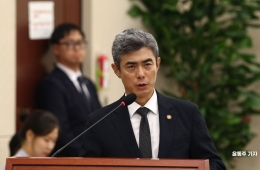
Song Kyunghee, Chairperson of the Personal Information Protection Commission, is giving opening remarks at the CEO meeting of the three major telecommunications companies held at the Press Center in Jung-gu, Seoul on September 28, 2026. Photo by Kang Jinhyung
View original imageDuring the meeting, Chairperson Song noted that, under the revised Personal Information Protection Act, which took effect on September 11, company internal controls were improved. The revisions include clarifying the CEO's final responsibility, strengthening the role of the CPO, and introducing a designated reporting system. Chairperson Song also requested that, given the recent surge in data leaks, companies should make every effort to conduct thorough internal assessments by year-end.
Particularly, due to the complex distribution system involving telecom companies, agencies, and sales stores, management of personal information at sales outlets can be especially vulnerable. Therefore, Song asked that telecom operators enhance their oversight and management of the entire distribution network. As leading companies, Song also encouraged the three telecom operators to use their experience developing voice phishing detection technologies and lead the way so that information protection and utilization capabilities can be developed throughout all industries.
The three telecom operators also agreed to actively cooperate with the government to foster professional talent by developing PET technologies and establishing industry-academia partnership programs. As suggestions, they proposed establishing a prior consultation framework to ensure effective implementation of the AI special exception system set to launch in March next year, clarifying the legal grounds for handling personal data in the AI development context, and preparing AI agent guidelines. In response, the Personal Information Protection Commission plans to create effective operational plans that will make a real difference for data-based research sites and aims to publish a “Guideline for Personal Information Processing by Agentic AI” (provisional name) within the year.
The three telecom companies also conveyed the realistic difficulties of strengthening their protection systems. After the meeting, Sangmin Lee, Director General for Personal Information Policy at the Personal Information Protection Commission, briefed reporters and said, "The three telecom companies are doing their best, but since systems built 20 years ago and the latest technologies coexist, immediate comprehensive improvement is difficult, and they requested more time." He added, "The companies also suggested that the government take part in fostering information protection personnel."
Hot Picks Today
 "Eat and Play All Day for Just 20,000 Won"... Rise of 'Chinese Gatherings' Spreading by Word of Mouth
- "I Washed Dishes Too"... The '22,000-Won Jensen Huang' Who Went Viral Makes a Sincere Request to NVIDIA
- Korean Student Among Alleged Perpetrators in Cornell University Gang Rape Case... US Actress Florence Pugh Calls Incident "Disgusting"
- "One in Three Unsuitable for Marriage": 72-Year-Old Professor's Diagnosis Sparks Fierce Debate Among Chinese Netizens
The Personal Information Protection Commission plans to conduct interim monitoring to ensure the joint declaration by the three telecom companies is being upheld. Director Lee said, "There is consensus that it would be meaningful to compare the current state to the past and inform the public of the results after conducting a mid-term assessment. We will continue communication in the way the industry prefers, without predefining formats."
© The Asia Business Daily. All rights reserved. Unauthorized AI training and use prohibited.

!["Failed Even With Net Assets of 400 Million Won?"... Six Criteria That Define 'The Real Middle Class' [Data Pick]](https://cwcontent.asiae.co.kr/asiaresize/307/2026092809144741876_1790554486.jpg)