Illegal Drones Near Presidential Residence: 950 Cases Detected in National Security Areas Over 5 Years
Assemblywoman Kim Jeongjae Releases Ministry of Land Data
134 Cases at the Seoul Presidential Residence Over 5.5 Years
623 Near Nuclear Power Plants, 93 Around the DMZ
It has been revealed that incidents of illegal flights by civilian drones have continued to occur in national security zones that require the highest level of security, including the airspace above the presidential residence and areas near the Demilitarized Zone (DMZ).
According to data submitted by Assemblywoman Kim Jungjae of the People Power Party, a member of the National Assembly Land, Infrastructure and Transport Committee, and obtained from the Ministry of Land, Infrastructure and Transport, a total of 950 illegal civilian drone flights were detected in national security-related zones from 2021 to June 2026.
The highest number of cases occurred near nuclear power plants, with 623 incidents. There were 134 illegal flights discovered around sites such as the presidential residence in Seoul. Temporary no-fly zones established for state ceremonies or visiting dignitary protection accounted for 100 cases, and 93 incidents were detected near the DMZ.
Unauthorized intrusions into national security areas have risen sharply. The number of detected cases increased from 46 in 2021, to 97 in 2022, and 254 in 2023. There were 228 incidents in 2024, 200 last year, and already 125 in just the first half of this year.

Incheon Port Authority is conducting joint training for illegal drone detection and response at Incheon Port together with military, police, and related agencies. Incheon Port Authority
View original imageA total of 1,667 drones nationwide were subject to fines for violations of the Aviation Safety Act from 2021 to June 2026. Of these, 935 cases—more than half—involved incursions into restricted airspace, including national security areas. They were followed by 458 cases of infringement within airport-controlled airspace, 136 cases of nighttime flying after sunset, and 107 cases of unlicensed operation.
By region, Seoul saw the highest number of cases at 306. Ulsan followed with 226, Incheon with 190, North Gyeongsang Province and Busan each with 179, Gyeonggi Province with 173, and Jeju with 121 cases.
There have also been cases where unauthorized drone flights have led to criminal penalties. On September 16, the Seoul Central District Court handed down suspended prison sentences to a graduate student and others who flew unmanned aerial vehicles across the Military Demarcation Line to the Kaesong area in North Korea. The court stated, “This poses a significant threat to aviation safety, and the risk and culpability are severe.”
The Ministry of Land, Infrastructure and Transport explained to the lawmaker’s office that when unauthorized drones are detected, “the military and police cooperate to investigate any legal violations, after which, upon the request of the police, local aviation authorities impose fines. The detection and interception of drones in military-controlled no-fly zones—such as military installations and areas around the Military Demarcation Line—are handled directly by military authorities.”
Hot Picks Today
 "Using Up Every Last Vacation Day for an Overseas Trip at Year-End" Bookings Surge 138%... Thought It Was Japan Again, But...
- "I Should Enjoy It After Retirement": Prices Quadruple... Memberships Over 100 Million Won Popular, but Closures Mount
- U.S. Housing Market Index Hits More Than 14-Year Low, Falls Below Expectations
- "Why Is This in Here? It's Disgusting"... Woman Sues Famous Taco Chain for $250,000 After Finding a Cow Tooth in Her Taco
- "Come Live With Me on My Farm": Man Sells Everything and Travels 1,930 km, Trusting a Beautiful Woman
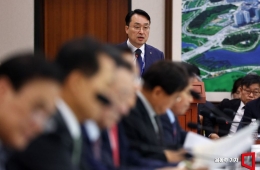
Assemblywoman Kim Jungjae stated, “Illegal drone flights continue to be detected in areas directly related to national security, such as nuclear power plants, the presidential residence, and the DMZ. Relevant agencies must thoroughly inspect and tighten their detection, interception, and response systems for illegal drones.”
© The Asia Business Daily. All rights reserved. Unauthorized AI training and use prohibited.