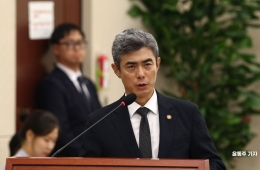
As Responding to Relationship-Based Crimes Grows More Vital, Over Half of Women and Youth Division Heads Lack Investigation Certification
Among Women and Youth Division Heads Nationwide, Only 45.2% Hold Criminal Investigation Certification
Certification Required for Investigators, But Not for Division Leaders
On the Ground, "Women and Youth Investigations Seen as Entry-Level Teams"
It has been revealed that more than half of the heads of women and youth divisions at local police stations, who are responsible for leading investigations into cases where immediate response is essential, such as sexual violence, stalking, and child abuse, do not possess a criminal investigation certification, which is considered the equivalent of a “license” for investigators. This stands in stark contrast to the heads of investigation and detective departments at local stations, who are almost all certified investigators. As the challenges and level of responsibility in investigating relationship-based crimes continue to rise, there are growing calls for clear personnel standards to ensure leadership with expertise in investigations.

According to data submitted by the National Police Agency to Assemblyman Park Sangwoong of the Public Administration and Security Committee on the 29th, as of last month, only 85 out of 188 (45.2%) heads of women and youth divisions at police stations nationwide held a criminal investigation qualification. In contrast, 293 out of 294 (99.7%) heads of investigation divisions and all 177 heads of detective divisions were qualified investigators.
The criminal investigation qualification is a personnel system designed to select and manage police officers with investigative expertise separately. Investigators are selected through annual examinations, and their qualifications must be renewed every five years by completing relevant job training or passing a renewal exam. According to the personnel principles for investigative police, it is standard practice for investigative departments at police organizations under the direction of officials such as the investigation planning coordinator, head of the investigation bureau, or chief of the detective bureau at the National Police Agency to be staffed with qualified investigators.
Despite the continuous strengthening of investigative functions at women and youth divisions — such as the establishment of special crime teams — these divisions are still not subject to mandatory staffing by certified investigators. Given that initial response and on-site judgment are crucial in cases of sexual violence, stalking, domestic violence, and child abuse, the expertise of the women and youth division head is essential. Even if the division head does not personally conduct investigations, they oversee and supervise major investigative procedures as the final approver.
However, there are no standardized personnel criteria to verify a certain level of investigative expertise for these division heads. There were also significant regional disparities in the number of certified investigators leading women and youth divisions. There were no qualified investigators among the eight division heads in Jeonnam or among the twelve in North Gyeongsang Province. In Seoul, only 8 out of 30 division heads (26.7%) were certified, and in Northern Gyeonggi Province, only 3 out of 11 (27.3%) had the qualification. In contrast, North Jeolla Province had 7 out of 8 heads (87.5%), Busan had 13 out of 15 (86.7%), and Daejeon had 5 out of 6 (83.3%) certified as investigators.

Especially as the criminal justice system is about to undergo significant changes, the police are focusing on strengthening personnel management through enhanced investigative capabilities and an expansion of specialized personnel, with the criminal investigation qualification now serving as a primary tool for managing expertise among investigators at the local level. This is why there is increasing discussion about setting expertise standards for the heads of women and youth divisions, tailored to the unique demands of their roles.
The recent string of relationship-based crimes has brought the issue of professionalism within women and youth policing to the forefront. In March this year in Namyangju, Gyeonggi Province, Hoon Kim (44), who was wearing a location-tracking electronic ankle bracelet (electronic monitoring device), killed a victim who was under police protection. In Gwangju this May, there was controversy over whether rape and murder charges should be brought against Yoonki Jang (23), who murdered a high school girl he did not know, raising questions about investigative negligence. Following these incidents, the police diagnosed issues such as insufficient risk assessment by women and youth divisions and lack of work proficiency due to frequent staff rotations during internal reviews.
Moreover, the women and youth divisions are criticized not just for the lack of clear expertise standards at the leadership level, but also for shortcomings in the investigator training system itself. On the ground, women and youth investigation teams are widely seen not as specialized units staffed with experienced investigators, but as introductory departments where new officers learn the basics of investigation. A police official from Seoul stated, "There is a perception that women and youth investigation is a kind of entry-level team where officers learn how to handle and draft investigation documents and gain initial experience," adding, "Many staff members learn the investigative basics there before moving on to broader teams such as integrated investigation units."
Hot Picks Today
 "Eat and Play All Day for Just 20,000 Won"... Rise of 'Chinese Gatherings' Spreading by Word of Mouth
- "I Washed Dishes Too"... The '22,000-Won Jensen Huang' Who Went Viral Makes a Sincere Request to NVIDIA
- Korean Student Among Alleged Perpetrators in Cornell University Gang Rape Case... US Actress Florence Pugh Calls Incident "Disgusting"
- "One in Three Unsuitable for Marriage": 72-Year-Old Professor's Diagnosis Sparks Fierce Debate Among Chinese Netizens
As the need to respond to relationship-based crimes grows, there are increasing calls to improve the expertise of investigators in women and youth divisions, both through establishing personnel standards for division heads and by reforming how investigators are assigned and trained. Lee Yoonho, professor of police administration at Dongguk University, said, "It is difficult to judge investigative competence based solely on having a qualification, but it is important to develop expertise criteria that also consider awareness and understanding of women and youth victims." Regarding the operation of women and youth investigation teams, he commented, "We should move in the opposite direction of the current practice, so that officers with broad investigative experience and backgrounds can apply this knowledge in the more specialized field of women and youth policing. If these departments are viewed as entry-level training grounds, it risks minimizing the importance of work involving women and youth altogether."
© The Asia Business Daily. All rights reserved. Unauthorized AI training and use prohibited.

!["Failed Even With Net Assets of 400 Million Won?"... Six Criteria That Define 'The Real Middle Class' [Data Pick]](https://cwcontent.asiae.co.kr/asiaresize/307/2026092809144741876_1790554486.jpg)