September Middle East Oil Exports Hit Post-Iran War High... "Supply Maintained by Shadow Fleet"
Recovery in Oil Exports from Saudi Arabia and UAE
"Shadow Fleet" Tankers Sustain Supply

Kpler, an energy data specialist, announced on the 27th (local time) that the major oil-exporting countries in the Middle East have recorded their highest crude oil export volume since the outbreak of the Iran War earlier this month. This is analyzed as being due to an increase in the number of “shadow fleet” tankers that deliver Middle Eastern oil by bypassing sanctions and maritime blockades against Iran, thus maintaining oil supply levels.
According to Kpler, Saudi Arabia, the United Arab Emirates (UAE), Iraq, Oman, Qatar, Kuwait, and Iran exported 12.8 million barrels of crude oil per day in September. This is the highest volume since the end of February this year, when the Iran War began. However, compared to the pre-war daily export volume of 18.8 million barrels, it represents a decrease of 6 million barrels.
The main reason for the recovery in Middle Eastern oil exports is analyzed as the supply volume rebounding due to the continued standoff between the United States and Iran, with no additional large-scale military clashes. Reuters reported, “This rebound is due to the recovery of crude oil exports through the Strait of Hormuz,” and added, “After Saudi Arabia’s pipelines were attacked by the Houthi rebels in Yemen, Saudi oil exports increased elsewhere, with this month’s volume expected to reach 7.4 million barrels, which led the supply recovery.”
Middle Eastern crude oil exports decreased after the memorandum of understanding (MOU) on the US-Iran end-of-war agreement collapsed and the ceasefire period ended in early July. Subsequently, the unofficial ceasefire between Saudi Arabia and the Houthi rebels also broke down after four years, leading to a resumption of war and further increasing supply constraints.
However, it is now being analyzed that a significant portion of the supply has been restored as “shadow fleet” tankers, which operate by turning off their Automatic Identification System (AIS) to evade both Iranian sanctions and US maritime blockades, have become more active in the region. Nikkei reported, “In the market, there is analysis that the number of tankers passing through the Strait of Hormuz with AIS turned off is increasing, and these vessels are supporting oil supply and curbing price hikes,” adding, “International oil prices have not surged to the $150 level that was feared at the beginning of the war.”
Hot Picks Today
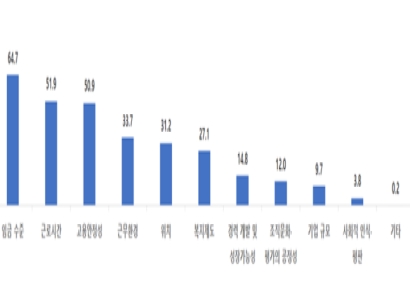 "Please Pay Me at Least 3 Million Won a Month": More Than Half of Young People Today Prioritize "Working Conditions" Over Company Size
- Selling Like Crazy Every Year... 30-Year-Old Hetbahn Takes on a New Challenge: Tastes Better Than "Mom's Home Cooking" [On-Site Report]
- I Thought Only 'Old Guys' Ate It... Young People Are Hooked on This 'Unusual Food' at Risk of Disappearing? [Delicious Stories]
- "Hey, Lady, Teach Your Kids to Behave!" ... 300,000 Won in Cash and a Bodily Injury Claim Demanded Over Child's Door Ding
- Beachgoer Finds 'Plastic' That Turns Out to Be Perfume Ingredient Worth More Than Twice as Much as Gold
Iraq’s push to construct an oil pipeline passing through Syria and Turkiye is also expected to be a future variable. According to Nikkei, the Iraqi government is reviewing a new pipeline project connecting the country to Syria and Turkiye. The project is expected to require at least $15 billion (about 21.1 trillion won) and about four years for construction. For now, as large-scale exports through the Strait of Hormuz are inevitable, the Iraqi government has been offering crude oil to buyers at a $20–30 per barrel discount to international oil prices since August in an effort to secure customers.
© The Asia Business Daily. All rights reserved. Unauthorized AI training and use prohibited.