[Power K Woman] "Warning Signs of Dating Violence, Including Extreme Control... Cases Where Every Victim Could Have Been Saved"
Heo Minsook, Legislative Investigator at the National Assembly Research Service
"Extreme Control and Strangulation Before the Incident"
"Simply Asking Can Identify High-Risk Groups"
"No One Should Be Subjected to Abuse or Violence"
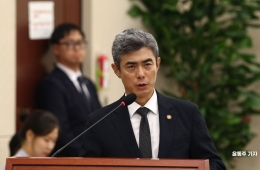
Heo Minsook, Legislative Investigator at the National Assembly Research Service, has consistently voiced concerns about incidents involving vulnerable groups such as women, children, and adolescents. Since beginning her work as a legislative investigator in 2017, she has authored a total of 109 reports to date. Her primary focus has been on issues such as dating violence and failure to pay child support. Actively engaged in both academic and on-the-ground work, she has advocated for reforms by speaking out on incidents and striving to improve laws and institutions.
Heo explained that she approaches her work with the conviction that no human being should be subjected to abuse or violence. In an interview with The Asia Business Daily, she stated, "Because of the wage gap, someone may live in a slightly less desirable house or wear less expensive clothes, but to suffer abuse or battery means being denied your basic human rights." She continued, "Society invests much in women to help them become outstanding individuals, so what is the point if they end up getting killed?" She added, "I believe everyone should be free from violence, which is why I consider this an important area of research."

Heo Minsook, a legislative researcher at the National Assembly, poses ahead of an interview with The Asia Business Daily at the National Assembly. Photo by Kim Hyunmin
View original imageRecently, she published a book titled "Such Intimate Murderers," which analyzes the causes of dating violence and dating homicide, as well as early warning signs that could help prevent such crimes. In this book, she asserts that "dating homicide is an entirely preventable crime."
Heo, upon reviewing dating homicide cases, remarked, "These were cases where every victim could have been saved," and "If these incidents had occurred outside of Korea, the fate of those individuals could have been different." She emphasized, "This simply means the nation has failed," adding, "I want to save women." She plans to continue her efforts to refine laws and systems to prevent the deaths of women who should not lose their lives. The following is a Q&A.
- What are your primary duties as a legislative investigator at the National Assembly?
▲ First, much of the work involves responding to inquiries from lawmakers' offices. The most frequent requests involve how foreign countries operate their laws and systems, and what amendments may be needed in Korea. In addition, before being asked by a lawmaker’s office, I author reports on laws and systems that I believe to be necessary. Whether or not to visit field sites is up to the individual investigator, but since my focus is on vulnerable groups, I often visit the field.
- Are there any legislative cases that are particularly memorable to you?
▲ I once authored a report on minors leaving protective facilities after experiencing sexual violence from family members, who found themselves in a blind spot without support for self-reliance. The report, titled "Hidden Victims: Current Situation and Improvements in Support Services and Tasks for Protective Facilities for Minors Who Are Victims of Family Sexual Violence" (2024), revealed that previously, these minors were ineligible for the 'Self-Reliance Assistance Allowance' simply because their parents were presumed alive. The problem was that, in as many as 71% of cases, the parent was also the perpetrator. Subsequent legal amendments have ensured that adolescents leaving protective facilities as victims of family sexual violence can now receive the self-reliance allowance.
- What is "Such Intimate Murderers" about?
▲ Having participated in various broadcast interviews from the field, I gained a deeper understanding of specific cases. When I looked into incidents in which victims were killed, it seemed nearly impossible to rescue them under the current legal system. I wrote the book hoping that people in danger would be able to spot warning signs more quickly through its contents.
- Was there a particular case that prompted you to write the book?
▲ One highly publicized case involved the late Lee Hyojeong, a 19-year-old who reported her boyfriend to the police 11 times for ongoing assaults before her death. In the book, I included concrete details of what victims went through in real cases and what those around them witnessed. There is a deep-seated prejudice regarding crimes known as "intimate partner violence." Victims are often blamed, with questions such as "Why did you date such a bad man?", "Why didn’t you speak up?", "Why did you make him angry?", or "Why didn’t you just leave?" I felt it was essential to dispel these serious misunderstandings and prejudices about victims.

Huh Minsook, Legislative Researcher at the National Assembly, is being interviewed by The Asia Business Daily at the National Assembly.
View original image- You pointed out that "non-lethal strangulation" is an important warning sign.
▲ This is a crucial sign that is not well known in Korea. In foreign countries, such incidents are followed by fatality reviews, which often reveal that many victims experienced extreme control and strangulation before they were murdered. While a significant number of victims suffer this form of violence, police and others in Korea rarely inquire about it. In the cases described in the book, victims consistently experienced strangulation. Simply asking victims, "Have you ever been strangled?" would help law enforcement identify those at high risk.
- You have argued for criminalizing coercive control within intimate relationships. Why?
▲ Control is a form of non-physical abuse. However, Korean police typically look for visible physical injuries and only consider someone a victim if they are hurt enough to require a doctor's certificate. In most cases, though, extreme control takes place shortly before (physical violence). This includes forbidding the victim from meeting others, requiring constant permission, monitoring their whereabouts, and surveilling them. Such extreme control indicates a high-risk group. Yet, a lack of awareness leads to situations in which victims who report more than a dozen times still end up being murdered.
- Isn’t it sometimes ambiguous to classify violence in intimate relationships as a crime?
▲ There are clear standards. For example, if someone is told not to meet certain people or not to wear certain clothes but can freely refuse and act independently, then that person is likely not a victim. However, if the victim is compelled to comply out of fear of the harassment or pain that would result from refusing, they are in an abusive situation.
- What is the most urgent legislative need?
▲ The law on punishment of domestic violence should be wholly revised to include dating violence. Currently, dating violence is addressed under the Criminal Act, where charges of assault or intimidation are classified as offenses that require the victim’s complaint to proceed. As a result, even when victims risk their lives to report, they are frequently pressured by perpetrators to withdraw their complaints.

Huh Minsook, Legislative Researcher at the National Assembly, is being interviewed by The Asia Business Daily at the National Assembly.
View original image- You see many cases of dating violence in the field. What are the recent trends?
▲ The number of cases is increasing, and they are becoming more severe, often escalating to serious crimes. Dating violence does not only involve physical assaults. Most cases I see in the field involve overlapping types of harm. Offenders control their victims’ daily lives and social relationships, monitor communications and locations, coerce sex, record victims without consent, and use these recordings for blackmail. In severe cases, they may force prostitution or extort money. These acts, if considered separately, amount to assault, intimidation, rape, illegal recording, coercion, fraud, or blackmail. However, victims experience these as ongoing dominance and control within a single relationship. The stronger the control, the harder it becomes for the victim to escape, and the moment of trying to leave is when the risk of violence is highest. This repeated pattern explains why serious crimes occur after breakup announcements, reports to authorities, or the issuance of restraining orders.
- Do you think violence within intimate relationships is related to gender equality issues in Korean society?
▲ I believe the underlying factor enabling such control is the long-standing cultural perception ingrained in our society. Women have historically been expected to obey men, and married women to obtain their husband’s permission for everything. Normally, if an acquaintance orders you around, you don’t enter into a relationship of obedience. But when boyfriends or husbands dictate, society tends to regard it as acceptable, blurring boundaries. The media reinforces this: the trope of a man behaving badly but described as simply "expressing love in his clumsy way" is a classic example. This perception, which reframes control as another form of affection, has gaslighted society to some extent. It also creates a foundation where even victims may fail to recognize the abuse, and bystanders hesitate to intervene.
- Gender conflict is intensifying.
▲ There is concern that worsening gender conflict could lead to greater dating violence. Unlike the past, official channels can no longer discriminate openly against women, so there may be a perverse desire to exercise unchecked power at least over women in one’s private relationships.
- Do you have any advice for juniors who wish to pursue a similar career?
Hot Picks Today
 "Eat and Play All Day for Just 20,000 Won"... Rise of 'Chinese Gatherings' Spreading by Word of Mouth
- "I Washed Dishes Too"... The '22,000-Won Jensen Huang' Who Went Viral Makes a Sincere Request to NVIDIA
- Korean Student Among Alleged Perpetrators in Cornell University Gang Rape Case... US Actress Florence Pugh Calls Incident "Disgusting"
- "One in Three Unsuitable for Marriage": 72-Year-Old Professor's Diagnosis Sparks Fierce Debate Among Chinese Netizens
▲ I believe the most crucial quality for this work is a readiness to listen closely to the voices in the field. As long as you seek out and understand what those in vulnerable positions are really experiencing and have a genuine desire to care for them, you are fully qualified for this work. It is deeply rewarding, as it enables you to transform lives and, ultimately, contribute to gradual societal change.
© The Asia Business Daily. All rights reserved. Unauthorized AI training and use prohibited.
!["Failed Even With Net Assets of 400 Million Won?"... Six Criteria That Define 'The Real Middle Class' [Data Pick]](https://cwcontent.asiae.co.kr/asiaresize/307/2026092809144741876_1790554486.jpg)