Inje County Achieves First Artificial Hatching of Dongjagae, Releases 30,000 Fingerlings into Soyangho Lake
Result of the Indigenous Fish Industrialization Center Funded by National and Provincial Budgets
Inland Fishers' Income Projected to Rise as Center Nears December Completion
Accelerating Mass Production System and Research on Restoration of Indigenous Species
Inje County, Gangwon Province, has achieved its first successful artificial hatching of Dongjagae (commonly known as Baggasari), a core fish species contributing to fisheries income at Soyangho Lake. This milestone lays the groundwork for expanding indigenous fish populations and advancing industrialization efforts.

Inje County is releasing 30,000 young Dongjagae fish (fry), which it produced and cultivated for about two months, into the Soyangho reservoir water source area on the 28th. Provided by Inje County
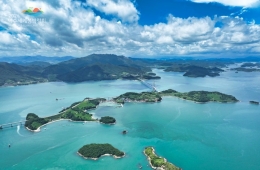
View original imageOn the 28th, Inje County announced that it had released 30,000 young Dongjagae (fingerlings), produced and nurtured over approximately two months, into the Sangsunaeri area of Soyangho Lake. In total, 40,000 artificially hatched fingerlings were secured this time, and the remaining fingerlings will also be released in sequence.
Dongjagae is a representative native freshwater fish, characterized by its yellowish body and sturdy spines on its fins. The friction sound made when moving its fins has led to the popular nickname "Baggasari." Particularly favored by consumers for spicy fish stew, the species is recognized as a major source of income for inland fishers.
This success was achieved during the process of acquiring seed production technology at the Indigenous Fish Industrialization Center, a project currently being promoted by Inje County. Inje County was selected for the Ministry of Environment’s Eco-Friendly Clean Business contest in 2020, investing a total of KRW 18.1 billion, including KRW 10.8 billion in government funding, to establish the center. As of now, 90% of the construction has been completed, with final completion scheduled for December.
Since 2023, Inje County has been accumulating artificial seed production technology transferred from the Inland Fisheries Resource Center of Gangwon Special Self-Governing Province. Starting in July this year, the county began full-scale production by collecting broodstock Dongjagae inhabiting Soyangho Lake and succeeded in producing 40,000 fingerlings through artificial hatching, initial cultivation, and management processes.
The county expects that this release will help stabilize and expand the Dongjagae population in Soyangho Lake, significantly boosting catch volume and fisher income.
Going forward, Inje County plans to further stabilize Dongjagae seed production technology and gradually expand production scale to establish a mass production system. In addition, by using the Indigenous Fish Industrialization Center as a hub, the county will continue research on artificial hatching and propagation of increasingly scarce native freshwater fish species, striving to preserve the aquatic ecosystem while promoting industrial development.
Hot Picks Today
 "I Thought Everyone Was Heading to Japan"... The Top Overseas Travel Destination for Chuseok Was This Unexpected Country
- "Does the Market Always Rise After Chuseok? KOSPI Climbed 7 Out of 10 Times in 22 Years"
- Fragrant Smell After Cleaning May Actually Pollute Indoor Air, Researchers Warn
- [Exclusive] "Why Are We Paid 10 Million Won Less at the Same Workplace?"... 101 Employees Left in 10 Years [NPS Staffing Shortage]②
- "Refusing Exclusive Contracts"...The Surprising Choice of a 20-Year-Old Chinese Worker Discovered as a Model at a Recycling Site
Mi Jeong Son, Head of the Agricultural Policy Division of Inje County, stated, "We will not only establish stable mass-production technology for Dongjagae but also continue research on endangered native freshwater fish. We are committed to increasing fishers’ income and creating a clean aquatic ecosystem where diverse fish species can coexist in harmony."
© The Asia Business Daily. All rights reserved. Unauthorized AI training and use prohibited.

!["Rejected Despite 400 Million Won in Net Assets"… Six Criteria That Define the 'Real Middle Class' [Data Pick]](https://cwcontent.asiae.co.kr/asiaresize/307/2026092809144741876_1790554486.jpg)