AI "Apps" Now in Space: Telepix Launches First Overseas Commercialization for Satellites
Satellite AI Service Partnership Signed with India’s SkyServe
AI Can Be Remotely Replaced After Launch
In-Orbit VLM Demonstration Planned for 2027
Technology that enables satellites to receive new artificial intelligence (AI) and software updates—similar to installing applications on a smartphone—is being commercialized overseas. This marks an effort to transform satellites, which traditionally could only perform predetermined functions as hardware at launch, into "software-defined satellites" that can download new AI capabilities as needed.
Space AI company Telepix announced on September 28 that it has signed a satellite AI service agreement with Indian space AI company SkyServe. This is the first case of offering onboard AI technology and the "Over-The-Vacuum (OTV)" orbital wireless software update—both verified on Telepix’s own satellites—as commercial services to international clients.

Telepix will support the remote deployment of SkyServe customers’ AI applications and Earth observation models onto satellites in orbit, enabling them to run directly onboard. The two companies plan to start with a single AI model, with consideration to expand the service to more than six models in the future.
The core of this service is "onboard AI," which processes data directly on the satellite. Previously, satellites had to transmit large amounts of raw image data to Earth for analysis. With onboard AI, analysis can be performed in space, allowing only the necessary results to be transmitted. According to Telepix, this can reduce the data transmission volume by up to 1/50th.
OTV technology makes it possible to install or replace new AI and software even after the satellite is in space. This means AI models can be updated or new functions added depending on the mission requirements.
Last November, Telepix validated OTV in orbit using its own developed AI CubeSat, BlueBON. In August of this year, the company successfully deployed AI-based satellite image geometric correction and geolocation estimation models on BlueBON, enabling the satellite to directly estimate and correct image locations onboard. For AI computations, Telepix uses its proprietary onboard computer, TetraPLEX, which integrates GPU, CPU, and FPGA technologies.
Telepix plans to expand this technology to operate multiple satellites as a single distributed AI computing resource by remotely deploying different AI and mission software to various satellites, forming a constellation satellite system.
In 2027, the company aims to conduct an in-orbit demonstration of a Visual Language Model (VLM) running directly on a satellite. As an AI model capable of processing both images and language, the goal of VLM is for satellites to interpret the context and meaning within imagery, surpassing mere object identification.
Hot Picks Today
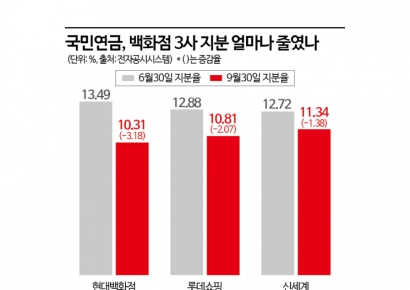 'Big Investor' NPS Has Already Cut Its Losses... Sold Department Store Stocks in Q3 Despite Strong Earnings Outlook
- "There's a Drink Like This?"... Chinese Beverage With "Korean" in Its Name Rakes in 85 Million Won in Monthly Sales
- "Bump," Then "My Phone's Broken"... Man in His 20s Arrested for Scamming 22 Million Won in Repair Costs
- "I Put in 10 Million Won, but Only 2 Million Won Is Left" ... 77% Plunge Leaves Retail Investors in Samsung Electronics and SK hynix Leveraged ETFs Crying Out
- "The leggings are all see-through. It's so embarrassing to look at," complaints prompt Lululemon to fire development staff.
Telepix CEO Cho Sungik stated, "This is the starting point for global commercialization that enables continuous updates to a satellite’s brain even after launch and allows customers to run necessary AI directly from space." He added, "We aim to connect this milestone to autonomous constellation satellite operations and in-orbit VLM demonstrations in 2027."
© The Asia Business Daily. All rights reserved. Unauthorized AI training and use prohibited.