U.S. Democrats Distance Themselves from Israel... "To Step Up Pressure if House is Regained"
Hakim Jeffries, House Democratic Leader
“Promoting Legislation to Curb Palestinian Settler Violence”
The Hill: “The Bipartisan Principle of Supporting Israel Has Been Broken”
The U.S. Democratic Party has announced that if it regains control of the House of Representatives in the upcoming midterm elections this November, it will step up pressure on Israel over the issue of settler violence in the West Bank. This signals a shift in the traditional bipartisan support that the U.S. Congress, regardless of party lines, has extended to Israel, its closest Middle Eastern ally.

Hakim Jeffries, the House Democratic Leader, is giving a speech on the 16th (local time) at the U.S. Capitol, where Democratic lawmakers gathered. Photo by AP Yonhap News
View original imageAccording to U.S. political media outlet The Hill on September 27 (local time), Hakim Jeffries, the House Democratic Leader, recently declared, “This cannot continue,” referring to the ongoing settler violence in the West Bank. Jeffries publicly stated this position, and he is considered a leading candidate for Speaker of the House if the Democrats become the majority party.
House Democratic leaders, including Jeffries, Katherine Clark, and Pete Aguilar, support a bill that would impose economic sanctions and ban entry to the United States on those who commit acts of violence in the occupied West Bank. The bill, sponsored by senior Jewish lawmaker Jerry Nadler, has attracted the signatures of 174 Democratic members of the House.
Jeffries has indicated that, if the Democrats control the House next year, this bill could be given top priority. He described it as “legislative action that must be considered to respond firmly to unrestrained settler violence in the West Bank.”
He has also stated, “We support Israel’s right to exist as a Jewish and democratic state,” but argued that “establishing a Palestinian state so that Palestinian residents can enjoy dignity and the right to self-determination should be an equally high priority.” In essence, while recognizing Israel’s right to self-defense, he maintains that the expansion of settlements undermines the “two-state solution,” which is premised on the founding of a Palestinian state.
Since its formation, the government of Israeli Prime Minister Benjamin Netanyahu has opposed the establishment of a Palestinian state and pushed the expansion of settlements in the West Bank. Recently, it has also been advancing the controversial “E-1” settlement project, which has been criticized for potentially severing much of the West Bank from East Jerusalem in practice.
In this process, cases of violence committed by settlers have increased. According to the United Nations, from January 2025 to June 2026, there were 2,803 settler attacks that resulted in Palestinian casualties or property damage. During the same period, 295 Palestinians were killed by Israeli settlers or the military, while 18 Israelis were killed by Palestinians.
Hot Picks Today
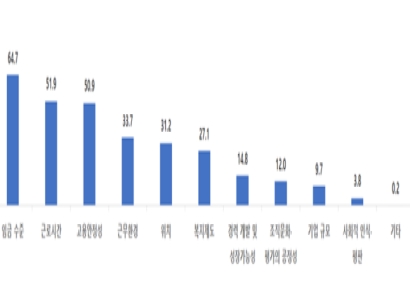 "Please Pay Me at Least 3 Million Won a Month": More Than Half of Young People Today Prioritize "Working Conditions" Over Company Size
- Selling Like Crazy Every Year... 30-Year-Old Hetbahn Takes on a New Challenge: Tastes Better Than "Mom's Home Cooking" [On-Site Report]
- I Thought Only 'Old Guys' Ate It... Young People Are Hooked on This 'Unusual Food' at Risk of Disappearing? [Delicious Stories]
- [Exclusive] Prosecution Service Overhauls Cartel "Leniency" Rules, Guarantees Reporting Firms' Legal Status from the Outset
- Beachgoer Finds 'Plastic' That Turns Out to Be Perfume Ingredient Worth More Than Twice as Much as Gold
In the past, support for Israel in the U.S. Congress was considered a “bipartisan principle,” but The Hill notes that this atmosphere has shifted since the inauguration of the Netanyahu government. The conservative Netanyahu is described by the media as having formed the most right-wing coalition government in Israel’s history.
© The Asia Business Daily. All rights reserved. Unauthorized AI training and use prohibited.