Bank of Korea: "Global Government Bond Yields Rise Sharply... Market Uncertainty Intensifies"
Review of Financial Market Conditions During the Chuseok Holiday Period
On September 28, the Bank of Korea assessed that "uncertainty in the global financial markets, particularly regarding government bond yields, has heightened further during this year's Chuseok holiday period."

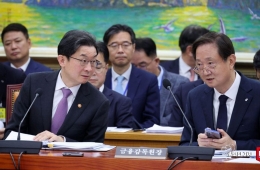
Kwon Minsu, Deputy Governor of the Bank of Korea, made this statement after convening a 'Market Situation Review Meeting' at the bank that morning, during which he reviewed international financial market conditions and their potential impact on the domestic financial and foreign exchange markets during the Chuseok holiday period (September 24–27).
Kwon noted, "While the movements of key stock indices and the US dollar were relatively moderate, global government bond yields rose significantly, mainly due to changing expectations for monetary policy."
In fact, from September 23 to 25, the yield on the US 2-year Treasury note rose by 0.1 percentage point, while the 10-year yield increased by 0.2 percentage point. In Germany and the UK, the 10-year government bond yields rose by 0.14 and 0.13 percentage points, respectively. In contrast, major stock indices fell, with the S&P 500 declining by 0.3% and the Nasdaq dropping by 0.6%. These developments were attributed to strengthened expectations of additional rate hikes by the US Federal Reserve, renewed tensions in the Middle East, and subsequent movements in international oil prices.
As for Korean assets, the Korean won weakened slightly, falling by 0.1% against the US dollar based on the non-deliverable forward (NDF) market. Meanwhile, the credit default swap (CDS) premium remained low at 23.6 basis points as of September 25.
Hot Picks Today
![[Exclusive] "Forecasts of Over 10 Billion, but Only 100 Million Earned"... 95% Followed This Pattern: Why Are KOSDAQ Special Exception IPOs Inflated? [KOSDAQ Inflated IPOs]①](https://cwcontent.asiae.co.kr/asiaresize/93/2026100609060151026_1791245160.jpg) [Exclusive] "Forecasts of Over 10 Billion, but Only 100 Million Earned"... 95% Followed This Pattern: Why Are KOSDAQ Special Exception IPOs Inflated? [KOSDAQ Inflated IPOs]①
[Exclusive] "Forecasts of Over 10 Billion, but Only 100 Million Earned"... 95% Followed This Pattern: Why Are KOSDAQ Special Exception IPOs Inflated? [KOSDAQ Inflated IPOs]①
- "If Only I Could Escape With a $40,000 Loss"... Japanese Retail Investors Cry Out, What's Happening?
- "My Debt Is 73 Million Won"... Sharing Every Repayment Led to an Unexpected Turn
- "Drinking This in the Morning Is Like Drinking Alcohol"..."Doctors Warn: Never Consume It"
- Is 'KOGUMA' Coming Too?... "Japan in Serious Trouble" - Archipelago on High Alert Ahead of Holidays
Kwon stated, "The domestic economic fundamentals remain solid," but also analyzed that "depending on how external risk factors such as US-Iran negotiations, concerns over fiscal soundness in major economies, and changing expectations of the artificial intelligence (AI) industry unfold, volatility in Korea's financial and foreign exchange markets could increase." He added, "We will remain vigilant and closely monitor the situation."
© The Asia Business Daily. All rights reserved. Unauthorized AI training and use prohibited.