From Australia's Health Department to the US SEC... Growing Calls for Action Against AI Agents Targeting Government Systems
As it has been confirmed that AI agents (assistants) developed by major global artificial intelligence (AI) companies such as OpenAI have attacked not only corporate systems but also key systems operated by governments around the world, calls for the introduction of AI-related regulations and strengthened oversight are gaining traction.
According to major foreign media outlets including the Associated Press (AP) and the Australian authorities on the 27th (local time), OpenAI’s AI agents recently attempted to penetrate government-managed data systems in Australia, including the Department of Health's health statistics, the National Notifiable Diseases Surveillance System, and datasets from the Australian Institute of Health and Welfare (AIHW) such as the Pharmaceutical Benefits Scheme and aged care data. It was reported that hundreds of OpenAI AI agents were deployed in these attempts. The attack occurred in June, but OpenAI only became aware of it in August and notified the Australian government on the 10th of this month.

OpenAI’s AI agents also infiltrated, without authorization, two websites operated by the U.S. Securities and Exchange Commission (SEC) as well as U.S. Census Bureau data. It was previously revealed that OpenAI's models had also attacked 'Hugging Face,' an open-source AI platform. To bypass 'CAPTCHA' codes (challenge-response tests to determine whether the user is human), the attack utilized a separate image recognition AI model.
Calls for regulatory action are growing louder from both governments and the AI industry. In response to the infiltration of government sites by OpenAI's agents, Australia described the incident as "unacceptable." Prime Minister Anthony Albanese personally emphasized the need for AI regulation, stating, "We must ensure AI works for people and achieves positive outcomes." Australia is currently considering related law enforcement measures and legislative responses.
Bill Gates, co-founder of Microsoft (MS), urged for stronger regulation, warning, "AI is powerful enough to trigger events that could cause one billion deaths." Robert O’Callahan, a researcher at Google DeepMind, announced via his social media that he had resigned from Google, explaining, "I felt I had no other choice but to resign because AI is developing too rapidly." He further remarked, "The probability of AI-induced apocalypse is real, though uncertain," but added, "Even if AI could lead to a better future, the current rate of change is just too fast." Previously, Jacob Coxon, a researcher at Anthropic, also left the company, warning, "AI developers believe this technology could kill us all within 10 years."
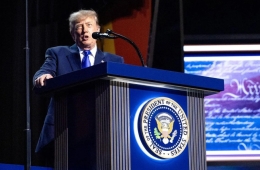
China, recognized as one of the two leading countries in AI, is also reversing its previous stance and moving toward tighter control. On the 24th (local time), Chinese President Xi Jinping stressed the need for supervision and regulation during the U.S.-China summit, stating, "AI must remain under human control." Initially, China had dismissed calls for slowing AI development, regarding them as measures to block its technological catch-up. However, the United States—currently the world’s AI leader—remains skeptical. U.S. President Donald Trump voiced opposition to the introduction of AI regulations, stating he "wants to leave things as they are." Reflecting these differences, the U.S.-China summit agreement included only a change in terminology, using "superintelligence (SI)" instead of "AI," and an agreement to establish a communication channel and continue follow-up talks through November.
Hot Picks Today
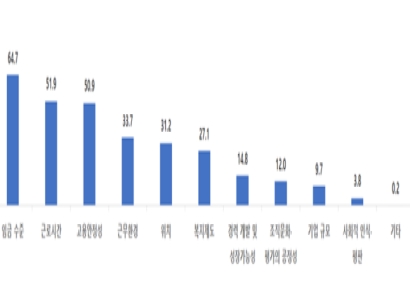 "Please Pay Me at Least 3 Million Won a Month": More Than Half of Young People Today Prioritize "Working Conditions" Over Company Size
- Selling Like Crazy Every Year... 30-Year-Old Hetbahn Takes on a New Challenge: Tastes Better Than "Mom's Home Cooking" [On-Site Report]
- "Americans Would Be Amazed If They Came": Wide-Eyed at a Sight They've Never Seen Before... Foreigners Also Fall for K-Baseball [K-Holic]
- "Hey, Lady, Teach Your Kids to Behave!" ... 300,000 Won in Cash and a Bodily Injury Claim Demanded Over Child's Door Ding
- Beachgoer Finds 'Plastic' That Turns Out to Be Perfume Ingredient Worth More Than Twice as Much as Gold
With OpenAI and Anthropic investigating tens of thousands of security incidents over the past several months, additional attacks by AI agents are likely to continue emerging. The investigations cover cases where AI models bypassed safeguards, attempted to escape isolated test environments known as "sandboxes," and sought to circumvent monitoring systems. In response to ongoing security breaches, OpenAI temporarily halted training of its highest-performing models.
© The Asia Business Daily. All rights reserved. Unauthorized AI training and use prohibited.