[Interview] Kim Sung-hwan: "The Inversion of Industrial Electricity Rates Was Wrong... Power Generation Companies' Integration Reverses Privatization Trend"
"China's Industrial Rate at 120–140 Won, Korea at 181 Won"
"Increase in Dongbok Dam Height to Begin Next Year... Project Acceleration Planned"
Kim Sung-hwan, Minister of Climate, Energy and Environment, pointed out that the current electricity rate structure, where industrial electricity rates are higher than residential rates, is a result of poor policy decisions by the previous administration. He also announced plans to revise the differential electricity rate system, which would lower industrial electricity rates in regions farther from the Seoul metropolitan area by considering local power self-sufficiency and transmission costs.
In an interview with The Asia Business Daily at the Hangang Flood Control Office in Seocho-gu, Seoul on September 21, Minister Kim said, "Industrial electricity rates have risen significantly, so the current industrial average is 182 won, while the residential rate is around 158 won. For industries such as steel and petrochemicals that consume large amounts of electricity, this inevitably puts a burden on their price competitiveness."

Kim Sung-hwan, Minister of Climate, Energy and Environment, is being interviewed by The Asia Business Daily at the Hangang Flood Control Office in Dongjak-gu, Seoul. 2026.9.21 Photo by Kim Hyun-min
View original imagePreviously, under the government of President Yoon Suk-yeol, residential and general electricity rates were frozen in October last year, while industrial electricity rates were raised by an average of 9.7%. Large-scale industrial users (Type B) saw increases of 10.2%, and industrial users centered on small and medium-sized enterprises (Type A) saw increases of 5.2%. Minister Kim stated, "It was the wrong decision by the previous administration to increase only industrial electricity rates by more than 10% at the end of its term," adding, "If electricity rates had to be raised, the burden should have been shared between industry and households."
Minister Kim announced plans to introduce regionally differentiated industrial electricity rates. For areas far from the Seoul metropolitan region, rates would be reduced by reflecting factors such as transmission costs and the local structure of electricity production and consumption. "We have released a reform plan for regional rate structures, considering transmission charges, regional electricity self-sufficiency, and the National Balanced Development Index," he explained, "and are finalizing the details."
He also mentioned that industrial electricity rates in China are around 120 to 140 won per kWh. Given that the domestic industrial average rate is currently about 181 won, the cost burden on energy-intensive industries such as steel and petrochemicals could increase further.
Regarding the integration of the five power generation public enterprises, Minister Kim said, "This is more than just an organizational restructuring; it is a reversal of the past policy of splitting up the power generation sector." He further explained, "It is not simply about merging the companies or relocating their headquarters, but about restoring the power sector from the trends of division and privatization driven by past neoliberal policies."
Hot Picks Today
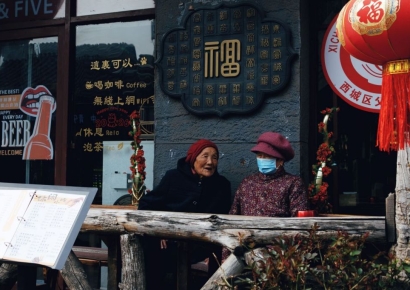 "Eat and Play All Day for Just 20,000 Won"... Rise of 'Chinese Gatherings' Spreading by Word of Mouth
He emphasized the importance of minimizing harm to workers and local communities as the unified entity transitions to a renewable energy-focused company. "During the integration process, we must ensure that workers do not lose their jobs and that areas with coal power plants are not negatively impacted," he said, presenting this as a core value of a 'just transition.' In response to concerns about the economic impact on regions affected by the closure of coal-fired plants, he stated that coal power will be phased out by 2040 and those areas will be converted into renewable energy hubs. He also explained that, if necessary, measures such as attracting new industries—including small modular reactors (SMRs) or large-scale battery facilities—could be considered to create new jobs.
© The Asia Business Daily. All rights reserved. Unauthorized AI training and use prohibited.

!["Failed Even With Net Assets of 400 Million Won?"... Six Criteria That Define 'The Real Middle Class' [Data Pick]](https://cwcontent.asiae.co.kr/asiaresize/307/2026092809144741876_1790554486.jpg)