August Sets Record with 2.25 Million Foreign Visitors to Korea; Cumulative Total Surpasses 15.05 Million, Up 21.6% Year-on-Year
Foreign Tourists Spent 14.018 Trillion Won on Cards from January to August, Up 48.5%
Chinese Arrivals Reached 4.82 Million, Taiwanese 1.66 Million
Share of Inbound Arrivals via Regional Airports and Ports Hits 27.8%
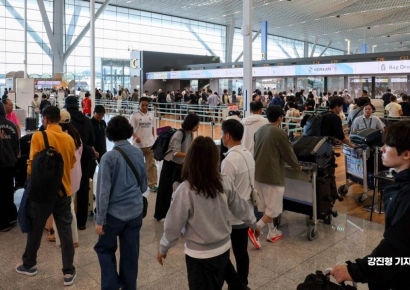
From January to August this year, the number of foreign tourists visiting Korea exceeded 15.05 million. In August alone, the number of inbound visitors reached 2.25 million, marking the highest monthly record ever.

According to the "Inbound Tourism Trends in Korea from January to August 2026" released by the Ministry of Culture, Sports and Tourism on September 28, the cumulative number of foreign visitors to Korea during this period totaled 15,048,435, a 21.6% increase from 12,379,498 during the same period last year. In August, the number of inbound visitors was 2.25 million, up 23.3% year-on-year. Both the monthly and cumulative figures represent the highest levels since records began. Whereas last year the cumulative 15 million mark was reached in mid-October, this year it was achieved nearly two months earlier.
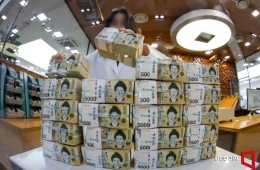
Alongside the increase in inbound visitors, tourist spending has also risen significantly. From January to August this year, foreign tourists spent a total of 14.018 trillion won on cards for tourism-related activities, up 48.5% from 9.4396 trillion won in the same period last year, setting a new high. By month, May saw the highest figure at 2.1235 trillion won, followed by June at 2.0570 trillion won, April at 1.9945 trillion won, July at 1.9530 trillion won, and August at 1.9320 trillion won.
The entry routes are also expanding beyond the Seoul metropolitan area. From January to August, the number of foreign visitors entering Korea through regional airports reached 2.83 million, up 38.2% from the previous year, while the number entering through regional ports was 1.36 million, an increase of 10.6%. The proportion of inbound visitors entering via regional airports and ports hit a peak of 27.8% for the year. The number entering via metropolitan ports also rose 81.8% year-on-year to 450,000.
By country and region, inbound travel from Greater China has seen particularly strong growth. Chinese tourist arrivals rose 29.0% to 4,816,134, maintaining their position as the largest market. Taiwan recorded 1,656,255 visitors with a 32.2% increase, the highest growth among major markets. Hong Kong arrivals increased 18.1% to 495,680 and Japanese visitors grew 17.5% to 2,698,857. Overall, visitors to Korea from Greater China reached 7,005,163, up 28.9%.
Most key Southeast Asian markets also posted double-digit growth. Arrivals from the Philippines rose 16.1% to 454,007, and from Vietnam increased 10.5% to 406,816. Indonesia saw the highest growth among the major Southeast Asian countries, up 22.5% to 295,279. The numbers for Singapore, Thailand, and Malaysia were 243,078 (+11.9%), 229,746 (+14.9%), and 206,838 (+12.6%), respectively.
The Ministry of Culture, Sports and Tourism believes that improvements in entry procedures and locally tailored marketing have contributed to growth in the Southeast Asian market. Since March 30, the government has eased requirements for multiple-entry visas for 11 Southeast Asian countries, including the Philippines, Vietnam, and Indonesia. Since May 28, a waiver program for group tourists from Indonesia allowing visa-free entry has been operating temporarily as a pilot scheme.
The Korea Tourism Organization has set up a visa support center in New Delhi, India, and has simplified certain financial documentation requirements for some applicants in Manila, the Philippines. For premium credit card holders of major local credit card companies, requirements for bank balance certificates, account statements, and income tax certificates have been waived.
Local marketing initiatives have also been expanded. The ministry and the Korea Tourism Organization hosted a K-Tourism Roadshow in downtown Singapore under the theme "Experiencing Everyday Life of Koreans," attracting 120,000 visitors over three days. Large-scale tourism promotion events were also held in Vietnam, the Philippines, and Malaysia. Social media promotion efforts have been strengthened, focusing on local influencers with over one million subscribers and those interested in Korea.
Airlines and online travel agencies have concurrently promoted air ticket sales. The number of flights on the Indonesia-Korea route from January to August increased by 8.8%, from 3,651 flights last year to 3,974 flights this year. During the same period, the number of Indonesian visitors to Korea increased by 22.5%.
Growth in Korea's inbound tourism market has outperformed major competitors. According to a comparison of tourism authority statistics by the ministry, Korea saw a 21.6% increase in foreign visitors from January to August compared to the previous year, while Vietnam posted a 14.4% rise. Over the same period, Japan's numbers decreased by 2.7% and Thailand's by 3.1%.
Kang Jeongwon, policy chief at the Ministry of Culture, Sports and Tourism, said, "Improvements in entry procedures and customized marketing are diversifying inbound visitors to Korea. We will continue to carefully manage visa issuance and airport and port arrival procedures, and strengthen K-culture-linked marketing so that the high level of inbound tourism remains strong in the fourth quarter as well."
Hot Picks Today
 "I Thought Everyone Was Heading to Japan"... The Top Overseas Travel Destination for Chuseok Was This Unexpected Country
- Monthly Salary Soars 3.7 Times from 8.25 Million Won to 30.59 Million Won... 86 Fair Trade Commission Retirees Join Law Firms Over 10 Years
- "1 Billion Won Sovereign Wealth Fund Investment at Birth"...Lee Kwangjae Proposes 'National Lifetime Basic Asset' Plan
- "V and Go Yoonjung Wear Them Too"... The Transformation of the ‘Grandma Ring’ Captivates Foreigners [K-Holic]
- "My Pants Keep Tearing at Work"... The Birth of 'Special Pants' from a Single Comment
© The Asia Business Daily. All rights reserved. Unauthorized AI training and use prohibited.