95% of Future Response Fund Projects Passed as Requested by Ministries... Park Sooyoung Criticizes "Loose Budget Compilation"
Only Six Projects Had Their Budgets Reduced Compared to Ministry Requests
It has been revealed that over 95% of expenditure projects from the Future Response Fund, which is fueled by a windfall in semiconductor tax revenue, have either been accepted as ministries initially requested or had their allocation increased. In contrast, there were only six cases in which project budgets were reduced compared to the ministries’ requests.
According to materials titled “2027 Future Response Fund Budget Project Explanatory Data” submitted by the Ministry of Strategy and Finance to Assemblyman Park Sooyoung, a member of the National Assembly’s Planning and Finance Committee, on the 27th, 125 out of 131 pure expenditure projects (excluding inter-fund transfers) maintained the original requests from ministries or were allocated additional amounts.

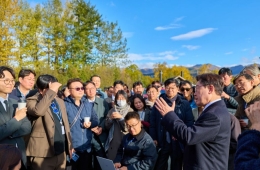
Hongkeun Park, Minister of the Ministry of Planning and Budget, is briefing on the 2027 budget proposal and the 2026-2030 national fiscal management plan at the Government Complex Sejong in Sejong City on the 28th. Photo by Yonhap News
View original image119 Projects Including Child Allowance and Local Support Passed as Originally Requested... 4 Newly Added
Among these, 119 projects were reflected in the budget just as the ministries had originally requested. Major examples include the Child Basic Allowance under the jurisdiction of the Ministry of Health and Welfare (2.93 trillion won), Local Future Growth Support Fund (3.5 trillion won) and Multi-Purpose Centers for Public Convenience (1.5 trillion won) under the Ministry of the Interior and Safety, Basic Income for Rural and Fishing Villages (1.17 trillion won) overseen by the Ministry of Agriculture, Food and Rural Affairs, and the Culture and Arts Pass (790 billion won) under the Ministry of Culture, Sports and Tourism—all of which remained as initially proposed in the budget plan.
There were four projects that were newly reflected during the budget compilation process, even though they were not included during the ministries’ initial budget requests in May. These include three projects under the Ministry of Environment—Industrial Water Supply for Advanced Industries in the Chungcheong region (8.1 billion won), Water Supply for the Honam Region Semiconductor Industrial Complex (119.6 billion won), and investment in Korea Water Resources Corporation (250 billion won)—as well as the AI Joint Subscription Support Project for university students under the Ministry of Education (20 billion won).
Funding for Industry-Academia Collaboration Doubled... 6 Projects Including Youth Opportunity Fund Reduced by 250 Billion Won
There were two projects that received larger budgets compared to ministry requests. The Support for Advanced Industry-Academia-Research Collaboration project under the Ministry of Education was allocated 551.9 billion won, twice the ministry’s original request of 271 billion won. The Regional Balanced Development Scholarship, also managed by the Ministry of Education, was increased from 285.4 billion won to 328 billion won.
Hot Picks Today
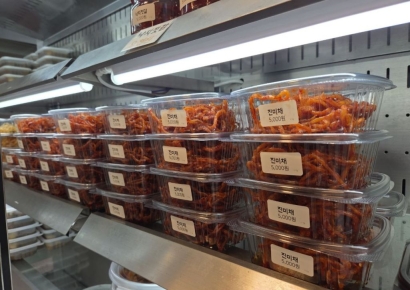 "Auntie, When Will Dried Shredded Squid Return as a Side Dish?"...Once Vanished from Restaurants, Now Making a Comeback
- "Is It Right to Pay This Much on a Fixed Salary?"... Seoul Ranks 1st or 2nd Globally for Smartphone Fees
- Bill Gates: "AI Could Kill a Billion People if Used by Malicious Actors"
- Already 1,000 Examined, Stirring Up Protest: "Why Go to the Army When We Said No?" Students Rally in the Streets
- "Is the Dermatology Clinic Near My Home Affected Too?... Where Have All the Resigned Residents Gone?"
On the other hand, there were only six cases in which the budget was reduced compared to ministry requests. These include the Youth Opportunity Fund under the jurisdiction of the Financial Services Commission (-116.3 billion won), Our Child Independence Fund (-35.7 billion won), the PhysicalAX Demonstration Project for Agriculture under the Ministry of Agriculture, Food and Rural Affairs (-78.5 billion won), the Startup-Focused University Project (-13.2 billion won) and Manufacturing AI Fellow Training Project (-500 million won) both managed by the Ministry of SMEs and Startups, and the Energy Workforce Development (R&D) program under the Ministry of Environment (-4.5 billion won), for a total reduction amounting to about 250 billion won.
Opposition: "Budget Managed Loosely... Ministry Has Been Reduced to a 'Budget Compilation Office'"
In response to this budget compilation outcome, the opposition party raised concerns that the Ministry of Strategy and Finance’s fiscal oversight function has been weakened. Assemblyman Park Sooyoung criticized, “The Ministry of Strategy and Finance, which should serve as the last line of defense responsible for managing limited finances and preventing wasteful spending, is instead facilitating a loose fiscal policy.” He further commented, “Since the Lee Jaemyung administration split the Ministry of Strategy and Finance from the Ministry of Economy and Finance, it has failed to serve its critical role in preventing waste and managing the budget. It has essentially become nothing more than a ‘budget compilation office.’”
© The Asia Business Daily. All rights reserved. Unauthorized AI training and use prohibited.