Tax Surplus Tops 50 Trillion Won on Semiconductor Boom... Future Response Fund to Exceed 200 Trillion Won
MOEF Revenue Re-Estimation: Annual National Tax at 465.4 Trillion Won Plus
Interim Corporate Tax Payments by Semiconductor Giants During August-September
Full Allocation of Surplus Tax Revenue to Future Fund Remains Undecided
The government has reportedly recalculated this year’s excess tax revenue, reflecting the booming semiconductor market and other positive factors, and is now projecting it will exceed 50 trillion won. As a result, the total size of the Future Response Fund, which the government can operate next year, is increasingly likely to surpass 200 trillion won.
According to relevant government ministries on September 27, the Ministry of Economy and Finance expects excess tax revenue to exceed 50 trillion won in its “2026 National Tax Revenue Re-estimate,” which will be announced at the end of this month. This figure significantly surpasses the already revised revenue estimate in the supplementary budget approved by the National Assembly in April.
Accordingly, total annual tax revenue for this year is expected to reach 465.4 trillion won, about 50 trillion won higher than the national tax revenue estimate of 415.4 trillion won based on the supplementary budget. This will break the previous all-time record of 395.9 trillion won set in 2022, just four years ago. Compared to last year’s national tax revenue of 373.9 trillion won, this represents an increase of more than 91.5 trillion won.

On the 5th, an employee is organizing 50,000 won bills at the Hana Bank headquarters in Jung-gu, Seoul. Photo by Jinhyung Kang aymsdream@
View original imageCorporate Performance & Recovery in Consumption: Overall Increase in Major Taxes
The released tax revenue figures show a clear rising trend. According to statistics announced by the Ministry of Economy and Finance on July 31, cumulative national tax revenue for January to July reached 274 trillion won, an increase of 41.4 trillion won compared to the same period last year. The progress rate compared to the supplementary budget was 66.0%, 2.5 percentage points higher than the five-year average of 63.5%.
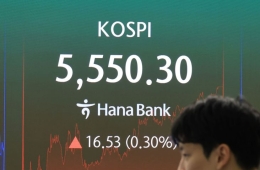
By tax category, improved corporate performance led to a 4.4 trillion won increase in corporate tax, totaling 51.8 trillion won. Income tax rose by 12.2 trillion won to 89.3 trillion won, driven by the payment of performance-linked bonuses and increased real estate transactions. The expansion of private consumption and imports resulted in an 8.1 trillion won increase in value-added tax, totaling 69.4 trillion won. Stock transaction tax surged by 348.5% year-on-year to 8.2 trillion won due to a bullish stock market, while the Special Tax for Rural Development, which is linked to KOSPI trading volume, jumped 182.5% to 13.1 trillion won.
In order for excess tax revenue to break the 50 trillion won mark, an additional 191.4 trillion won must be collected in the five remaining months from August to December. The government cites one core reason for believing this target is feasible: the interim payment of corporate taxes by semiconductor companies, which is reflected in August and September.
The cumulative corporate tax collection of 51.8 trillion won by July this year does not include the interim tax payments of companies with December fiscal year-ends. These firms, which are publicly disclosed business groups, close their semi-annual statements, report them by the end of August, and if the tax amount exceeds 10 million won, make installment payments over two months until September. For the first half of this year alone, Samsung Electronics (146.7 trillion won) and SK hynix (98.2 trillion won) together recorded nearly 245 trillion won in cumulative operating profit, making this interim payment a decisive factor influencing the total tax revenue.

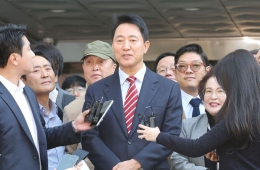
Hongkeun Park, Minister of Planning and Budget, is attending the video cabinet meeting between Sejong and Seoul held on the 22nd at the Government Seoul Office Cabinet Meeting Room in Jongno-gu, Seoul. 2026.9.22 Photo by Yongjun Cho
View original image'Fiscal Reservoir' Future Response Fund, Resources Greatly Expanded
This robust tax revenue directly translates into expanded resources for the government's planned Future Response Fund. The government describes the fund as a “fiscal reservoir” designed to overcome the limitations of the single-year budget system. The plan is to invest in youth, growth engines, local regions, and education/talent development to boost potential growth rates, and to shore up fiscal capacity with the fund if tax revenue conditions deteriorate and deficits arise. The government’s proposal for next year’s Future Response Fund includes 45.4 trillion won in investments and a reduction in new government bond issuance by 12.5 trillion won.
The “additional tax revenue” forming the base of the Future Response Fund stands at 162.3 trillion won. This consists of annual national tax revenue for 2027 that exceeds the ten-year trend line, separate from the excess tax revenue identified in this month’s re-estimate. Even by adding only this year’s minimum excess tax revenue of 50 trillion won, the fund amount reaches 212.3 trillion won.
While it is still not confirmed that the entirety of the excess tax revenue will be used for the Future Response Fund, remaining resources from global surpluses and income from idle funds can also be included, making it highly probable the fund will comfortably surpass 200 trillion won.
Hongkeun Park, Minister of Planning and Budget, stated on the 17th that once the results of the tax revenue re-estimate are released, the ministry will determine how to use the excess tax revenue in accordance with the law, following internal discussions and consultations with the Presidential Office and the Ministry of Economy and Finance.
Groundwork Laid for Three-Year Carryover Implementation, 95% Project Inclusion Rate
Meanwhile, the government has submitted a bill to the National Assembly that would allow government grant project expenses reflected in the local account of the Future Response Fund to be used for up to three years, until the second following fiscal year. If passed as is, certain eligible government grant expenses in the 2027 Future Response Fund local account will be allowed to be executed over three years through 2029.
Hot Picks Today
 "The Transfer Failed, but 'Ding-Dong,' Money Came In"... KRW 32.5 Billion Financial Incident at Toss Bank
- 122 People's Gift Certificates Pooled, 800 Million Won "Wiped Out" at Clothing Store... Suspected Abuse of Onnuri Gift Certificates' "Send as a Gift" Feature
- Female YouTuber Who Disappeared During India Trip Makes Urgent "Proof of Life" Announcement: "I'm Not Being Threatened, Kidnapped or Held Captive"
- [2026 Audit] "If the Land Ministry is the control tower, why is it just running errands for financial authorities?" ... Yoo Euidong rebukes land minister
- 'Hangover Legend' Returns After 11 Years... Lee Sunmin Hyung's 'Captain Q' Sells Out
In addition, out of 131 pure expenditure projects under next year’s Future Response Fund, about 95% (125 projects) have been reflected in the budget either as originally requested by ministries or with additions or increases. Only six projects were allocated less than the amount requested by the relevant ministries.
© The Asia Business Daily. All rights reserved. Unauthorized AI training and use prohibited.