Illegal Webtoon and Video Sites Repeatedly Return Even After Being Blocked Over 200 Times
16,390 Corrective Action Requests for Alternative Sites in Four Years
Hwang Jeongah: "Search Restrictions Needed Through Cooperation With Overseas Platforms"
Even after access to illegal webtoon and video sites has been blocked, these sites have continued to resurface by changing addresses, resulting in more than 16,000 deliberation and corrective action requests regarding alternative sites in the past four years.

Jeongah Hwang, member of the National Assembly Science, Technology, Information and Broadcasting and Communications Committee of the Democratic Party of Korea. Photo by Hyunmin Kim
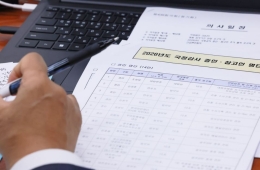
View original imageAccording to data submitted by Jeongah Hwang, a member of the National Assembly Science, Technology, Information and Broadcasting and Communications Committee of the Democratic Party of Korea, on September 27, to the Korea Communications Standards Commission (KCSC), there were a total of 24,297 corrective requests for access blocking of copyright-infringing content from 2023 through August 2026.
Among these, the number of cases that received repeated deliberation and corrective requests—because existing sites changed their addresses or launched alternative sites—stood at 16,390, accounting for 67.5% of the total. By year, the numbers broke down as follows: 6,236 in 2023, 5,771 in 2024, 1,877 in 2025, and 2,306 through August 2026.
The site with the highest number of repeated blocks was ‘HooHooTV’, which was blocked 205 times. This was followed by Azitoon (146 times), NewToki (137 times), TVWiki (117 times), and TVChak (117 times). In 2026, up until August, TVWiki was blocked 82 times, NewToki 45 times, BookToki 28 times, and ManaToki 28 times.

Even if existing illegal site addresses are blocked, new modified addresses and alternative sites keep appearing, highlighting the limitations of blocking access alone to prevent the distribution of illegal content. In reality, when searching for the names of major illegal sites on overseas search platforms like Google, the sites appear at the top of the results, which makes it easy to find new addresses despite access blocks.
The KCSC explained that after deciding on access blocks for copyright-infringing content, it provides the block list to major domestic Internet service providers (ISPs) and content delivery network (CDN) operators. However, there have been no cases in which the KCSC has requested a criminal investigation or provided related materials to other agencies concerning copyright infringement.
Hot Picks Today
 "I Thought Everyone Was Heading to Japan"... The Top Overseas Travel Destination for Chuseok Was This Unexpected Country
- "$10,000 Per Household"…Bold Offer From Data Center Developer Faces Lukewarm Response From Residents
- "More Women Choosing Not to Wear Underwear at the Gym"... Is the Claim That 'No Underwear Spreads STIs' True?
- "When Will the Plane Leave?" Bangkok Flights Delayed 11 Hours by Record Rainfall
- "Snipping Hair at the Crown"... Why Is "Babo Meori" Trending Among China's Generation Z?
Assemblywoman Hwang stated, “If you can track down illegal content sites with a single search, no matter how many times they are detected and blocked, the damage to the K-content ecosystem and creators will inevitably continue. To protect the foundation of our content industry and end the reality where offenders evade crackdowns by simply changing addresses, we must enhance our response system.” She went on to urge, “It is fundamental that the KCSC proactively request investigations, and we must also strengthen cooperation with major overseas platform operators in order to devise effective alternatives.”
© The Asia Business Daily. All rights reserved. Unauthorized AI training and use prohibited.

!["Failed Even With Net Assets of 400 Million Won?"... Six Criteria That Define 'The Real Middle Class' [Data Pick]](https://cwcontent.asiae.co.kr/asiaresize/307/2026092809144741876_1790554486.jpg)