US Supreme Court Allows 'Noncitizen Screening Tool' Ahead of Midterm Elections
Expanding Homeland Security Database
Trump Pushes for Voter Verification System to Prevent Election Fraud
Concerns Raised Over Potential Infringement of Voting Rights
With the upcoming midterm elections in November, the U.S. Supreme Court has permitted the Trump administration to deploy its 'noncitizen voter screening tool.'
On the 25th (local time), according to reports from the Associated Press and CNN, the Supreme Court reversed a lower court decision and ruled that states may use the Department of Homeland Security’s Systematic Alien Verification for Entitlements (SAVE) program to verify voter rolls.
SAVE is a database designed to check an applicant’s citizenship or immigration status to prevent undocumented immigrants from accessing federal benefits or administrative services. Last year, the Trump administration expanded and restructured the system, adding Social Security Administration (SSA) data and introducing a feature for batch searches of multiple individuals. Subsequently, state election authorities were instructed to use the system to check the citizenship status of those registered on their respective voter rolls.
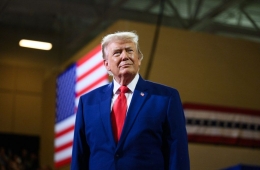
The Trump administration argued that this voter verification tool is essential for preventing illegal voting by noncitizens and protecting the integrity of elections. President Donald Trump has repeatedly claimed that such illegal votes distorted the results of the 2020 presidential election.

However, civil rights groups filed lawsuits, alleging that the federal government inappropriately consolidated and shared the personal information of millions of people throughout this process. In June, U.S. District Judge Sporkin Sukhnan ruled that the expanded SAVE program violated privacy laws, the Social Security Act, and the Administrative Procedure Act. The court noted the risk that legitimate voters could be removed from voter rolls due to incorrect information. The judge immediately invalidated the overhauled SAVE system and banned its use entirely. The federal appeals court subsequently allowed the lower court’s prohibition on SAVE to remain in effect.
The Trump administration promptly appealed to the Supreme Court, and the conservative-majority court temporarily suspended the lower court’s ban on SAVE. This paved the way for state election authorities to utilize the SAVE system before the midterm elections. The Supreme Court argued, "The lower court’s order prevents the federal government from using the program it considers most appropriate for this work."
Opponents of the system express concerns that legitimate voters could be denied the right to vote. Anthony Nells, a Texas voter, told the Associated Press that the system "infringes on people’s constitutional right to vote," calling it "another unfair tool designed to influence the upcoming and future elections."
Experts point out that delays in updating SAVE system data mean that individuals who have recently obtained citizenship are often still listed as noncitizens. Steve Richer, a former Republican election official in Arizona, wrote on social media, "The SAVE program has repeatedly proven to be a very incomplete tool," adding, "Election administrators should use it only as a starting point, not as a definitive indicator of citizenship."
Hot Picks Today
 "Quitting a Big Corporation Makes Sense": Six-Figure Salaries and Overseas Travel Attract Highly Educated Workers to This Job
- "Auntie, When Will Dried Shredded Squid Return as a Side Dish?"...Once Vanished from Restaurants, Now Making a Comeback
- A Four-Person Household with Two Children in a 17-Pyeong Home? Minimum Standard to Be Revised, Higher Target to Be Set [Real Estate AtoZ]
- "No Wonder My Wallet Feels Empty—Seoul Smartphone Fees Rank 1st or 2nd Highest Worldwide"
- Already 1,000 Examined, Stirring Up Protest: "Why Go to the Army When We Said No?" Students Rally in the Streets
Some believe that since the use of the SAVE program is left to the voluntary discretion of each state, the Supreme Court’s decision will have only a limited impact on the midterm elections. Sheena Bellows, Maine’s Democratic Secretary of State, who has consistently declined to use the SAVE program, said that the decision “does not require states to alter how they run elections” and would have no effect in her state.
© The Asia Business Daily. All rights reserved. Unauthorized AI training and use prohibited.