Women's Murders Shake South Africa... Tenth Body Already Discovered
Police: "Some Connections Identified"
Profiler Team Deployed to Investigate Violent Crimes
Amid a string of serial killings occurring near Johannesburg, the largest city in South Africa, a tenth body has been discovered.

On the 19th (local time), a woman is marching while holding a sign reading "End Crimes Against Women" at a protest held in Kempton Park, Ekurhuleni, South Africa. Photo by AFP Yonhap News
View original imageAccording to international media outlets such as the Associated Press on the 26th (local time), South African police reported that they discovered the body of a tenth woman in the Ekurhuleni area, east of Johannesburg, and are conducting an investigation.
Police stated, "At present, we can only confirm the discovery of the body," adding, "All necessary specialists have been dispatched to the scene to investigate the crime site." The victim’s identity has not yet been made public.
Previously, in Ekurhuleni, the bodies of three women were found within a 7km radius during July and August. In early September, six more bodies were discovered in just ten days, fueling suspicions that a serial killer might be responsible. In connection with the ninth body, two women and one man were arrested. However, the man was not charged due to insufficient evidence, and only the two women were indicted for murder. Authorities explained that this case stemmed from a so-called "love triangle" and was not linked to the other murders.
As of the previous day, all nine victims discovered were women in their 20s or 30s. Most victims were either naked or partially undressed and had been abandoned in vacant lots near major roads.
Authorities have deployed the Investigation Psychology Unit (IPU), a profiler team dedicated to violent serial crimes, to the case. While police have identified certain similarities in the modus operandi in some murders, they have not yet secured decisive evidence to confirm whether these are the acts of the same individual or group.
South Africa, considered one of the countries with the highest global rates of violent crimes and gender-based violence (GBV), is experiencing widespread public anger and nationwide concern over security following this series of serial murders targeting women. According to the United Nations Office on Drugs and Crime (UNODC), the annual homicide rate in South Africa is 44 victims per 100,000 people—nine times higher than the OECD average of five. Both citizens and political circles are now raising fundamental questions about South Africa’s chronic security and women’s safety issues in light of these incidents.
Hot Picks Today
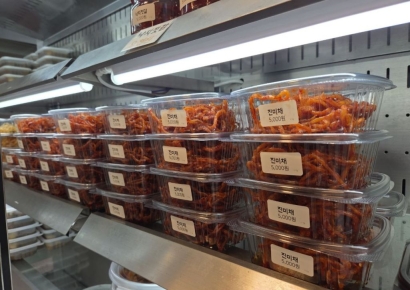 "Auntie, When Will Dried Shredded Squid Return as a Side Dish?"...Once Vanished from Restaurants, Now Making a Comeback
- "Quitting a Big Corporation Makes Sense": Six-Figure Salaries and Overseas Travel Attract Highly Educated Workers to This Job
- Relying on 'Driving Assistance' Out of Fatigue on the Way Home Can Lead to Accidents
- "Packed Plenty of Bamboo Shoots?"...Pandas Pingping and Puxiang Depart China, Begin 10-Year Stay in US
- Already 1,000 Examined, Stirring Up Protest: "Why Go to the Army When We Said No?" Students Rally in the Streets
Meanwhile, on a national level, the African National Congress (ANC) led by President Ramaphosa, along with the Democratic Alliance (DA), their coalition partner, announced that in addition to the police’s reward of 400,000 rand (about 30 million won), they would offer an extra 500,000 rand to anyone providing information necessary for solving the case. In response, the Gauteng provincial government, led by the ANC, criticized the DA for politically exploiting the tragedy.
© The Asia Business Daily. All rights reserved. Unauthorized AI training and use prohibited.