62 Tourists Generate the Economic Impact of One Resident in Population-Declining Areas
Jeonbuk Looks to Tourism for Solutions to Population Decline
All 14 Cities and Counties to Be Linked Along a Single Tourist Route
The Jeonbuk Special Self-Governing Province is shifting its tourism strategy from simply attracting as many visitors as possible toward encouraging tourists to stay longer and spend more money in the region. The provincial government plans to link the tourism resources of all 14 cities and counties along a single route, expand nighttime and culinary content, and stimulate private investment, thereby increasing both the length of stay and consumption by tourists.

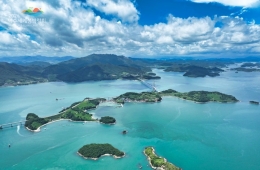
Tourism zone plan connecting 14 cities and counties in Jeonbuk region. Provided by Jeonbuk Provincial Government.
View original imageAccording to Jeonbuk Provincial Government on September 26, the 11th National Tourism Strategy Meeting recently highlighted an analysis showing that the consumption effect generated by 62 tourists is equivalent to that of one permanent resident in a population-declining area. This approach aims to increase what is known as the “relationship population”—people who, even without living locally, form ongoing economic bonds with a region through travel and visits.
The Bank of Korea’s Input-Output Tables reveal that, for the same level of investment, the number of jobs created in manufacturing is 4.7, whereas in tourism, it is more than double at 10 jobs.
This is what makes the strategy of drawing tourists as economic contributors noteworthy for areas where rapidly increasing the resident population is difficult.
The key challenge for Jeonbuk tourism is bridging the gap between visitor numbers and economic impact on the local community.
According to 2026 Q2 data from Korea Tourism Organization Datalab, Jeonbuk’s tourist spending and overnight stays are not keeping pace with the length of tourists’ visits. This means that, even when tourists remain in the region for a certain amount of time, many still leave without staying overnight or make only minimal purchases near attractions before moving on to their next destination.
The province believes that to convert visitors’ stays into spending, it needs to compensate for the lack of accommodation, large-scale tourist facilities, and nighttime content. There is a shortage of infrastructure to accommodate large numbers of visitors—such as five-star hotels, theme parks, and convention centers—and there are insufficient permanent nighttime entertainment offerings and iconic shopping experiences.
Jeonbuk Provincial Government also pointed out that, compared to manufacturing, the tourism sector usually requires smaller investments and longer periods to recover profits, making institutional support necessary to attract private-sector investment.
Jeonju Hanok Village is a prime example both of Jeonbuk’s ability to attract tourists and of the very challenges faced by regional tourism.
The number of visitors to Jeonju Hanok Village surpassed 10 million annually for the first time in 2016, and reached 15,364,206 in 2023—a 36% increase over 2022.
However, simply having visitors concentrate in one area does not lead to the growth of tourism industries in other cities and counties. In fact, when Jeonju City announced the increase in visitors to Hanok Village in 2024, it also identified the challenge of expanding tourism from Hanok Village to the entire city.
To overcome these limitations, Jeonbuk Province plans to shift away from developing each tourist site in isolation and instead focus on connecting different regions through integrated tourism. The strategy aims to move beyond daytrips, encourage overnight stays with expanded nighttime programs, and turn Jeonbuk's culinary culture into tourism products, so that meals, experiences, and shopping all translate into local economic activity.
To make this happen, Jeonbuk will establish a tourism zone linking all 14 cities and counties.
Existing resources—including national heritage nighttime tours, regional festivals, and local foods—will be developed into content that tourists can actually experience and spend on. In addition, the province plans to maximize the potential of west coast marine resources through initiatives such as the K-Tourism Island project and the West Coast Blue Tour Tourism Belt.
Major events such as the GTWS Grand Final in Muju in October and the Jangsu Trail Race will serve as models for expanding the east zone’s long-distance trail races into Jin’an and Muju. The idea is to design travel routes so that tourists not only attend events in specific regions, but also move to neighboring areas for accommodation and meals.
The province is also working in conjunction with local airport-centered tourism policies, utilizing Cheongju International Airport as an international gateway, and linking Iksan and Jeonju as partner cities. In anticipation of the future opening of cruise ports, Jeonbuk plans to prepare by improving tourist routes, multilingual guides, service training, and accommodation for overseas visitors.
Hot Picks Today
 "Quitting a Big Corporation Makes Sense": Six-Figure Salaries and Overseas Travel Attract Highly Educated Workers to This Job
- 'Twice in One Day?' An Seyoung Surprised by Japanese Event Schedule: "First Time Facing This, But I’ll Do My Best"
- "If You Move to the Countryside, 220 Million Won?" What Is This System... Japan Announces Bold Support
- Miss Jamaica Who Loved Hyundai Suffers Brain Injury After Stage Fall
- Already 1,000 Examined, Stirring Up Protest: "Why Go to the Army When We Said No?" Students Rally in the Streets
Park Dongwoo, Director of Culture, Sports, and Tourism at Jeonbuk Provincial Government, said, "In this era of regional extinction, it is difficult to increase stays and spending by having each city or county compete separately for tourists. We will redesign tourism policies to connect geographical spaces and timeframes by easing regulations, expanding incentives, and creating better conditions for private investment."
© The Asia Business Daily. All rights reserved. Unauthorized AI training and use prohibited.