"If You Move to the Countryside, 220 Million Won?" What Is This System... Japan Announces Bold Support
Japanese Ministry of Education Launches Domestic Study-Abroad Support System
Five Universities Join to Help Resolve Regional Talent Shortage
The Japanese government is introducing a "domestic study abroad" system to support university students in the metropolitan area to study in rural regions. The initiative aims to address the shortage of talent and declining populations in local areas.

The Japanese government is introducing a "domestic study abroad" system to support metropolitan university students in studying in rural areas. Getty Images
View original imageAccording to the Yomiuri Shimbun on September 25, the Ministry of Education, Culture, Sports, Science and Technology of Japan will pilot a "domestic study abroad" program in which university students from institutions located in the Tokyo metropolitan area study at regional universities or companies.
Five universities located in Tokyo and Chiba Prefecture will be included in the pilot. Each participating university will receive up to 25 million yen (approximately 220 million won) per year for three years to cover the costs associated with the domestic study abroad program. The universities participating are Chuo University, Rikkyo University, Denki Tsushin University, Shiraume Gakuen University, and Chiba University.
Chuo University plans to send students studying agriculture, tourism, and preventive medicine to various rural areas such as Niseko in Hokkaido, Noto Peninsula in Ishikawa Prefecture, and the Goto Islands in Nagasaki Prefecture.
Rikkyo University is preparing a program in collaboration with Kyoai Gakuen Maebashi Kokusai University in Maebashi, Gunma Prefecture, and Rakuno Gakuen University in Ebetsu, Hokkaido.
The Japanese government's motivation to support "domestic study abroad" comes from the acute shortage of human resources in non-metropolitan regions.
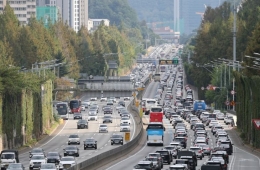
The speed of population decline in Japan's regional areas is also confirmed by statistics. According to Kyodo News and others, the number of municipalities in Japan where the population decreased by more than 10% between 2020 and 2025 was counted at 477. This is a number exceeding one-quarter of all local governments nationwide.
In the 2015–2020 survey, there were 247 municipalities meeting the same condition. Thus, the number of areas where the population declined by more than 10% in five years has increased by about 1.9 times. The municipality with the sharpest decrease was Suzu, Ishikawa Prefecture, where the population fell by 34% in 2020–2025. Wajima, a region affected by the Noto Peninsula earthquake in 2024, also saw its population drop by approximately 26%.
Hot Picks Today
 "Quitting Your Job Seems Worthwhile": Six-Figure Salaries and Global Travel Attract Highly Educated Professionals to This Booming Job
- "Now Is the Cheapest"... Stocks Forecast for a 'Sharp Rise' After December 4 [Weekend Money]
- 'Twice in One Day?' An Seyoung Surprised by Japanese Event Schedule: "First Time Facing This, But I’ll Do My Best"
- "If You Move to the Countryside, 220 Million Won?" What Is This System... Japan Announces Bold Support
- Enjoyed Your Meal, But Now Feeling Uneasy... Was Yesterday’s Kimchi Also Mislabeled?

The speed of population decline in Japan's regional areas is also confirmed by statistics. According to Kyodo News and others, the number of municipalities in Japan where the population decreased by more than 10% between 2020 and 2025 was counted at 477. This is a scale exceeding one-quarter of all local governments nationwide. Getty Images
View original imageThe Yomiuri Shimbun explained, "One of the factors driving the decline in rural populations is the large number of young people who move to the city for university and then remain there for work," adding, "The Ministry of Education, Culture, Sports, Science and Technology aims to establish the domestic study abroad system to create a flow of new talent moving into regional areas."
© The Asia Business Daily. All rights reserved. Unauthorized AI training and use prohibited.