Japanese Court Rules Ban on Electioneering by Minors Unconstitutional
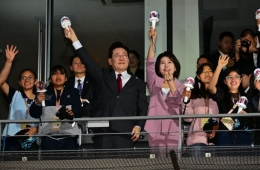
A court in Japan has ruled that the regulation prohibiting electioneering by minors under the age of 18 is unconstitutional.

According to the Tokyo Shimbun and other sources on September 26, the Tokyo District Court (District Court) ruled the previous day that the provision of the Public Offices Election Act prohibiting electioneering by minors violates Article 21 of the Constitution, which guarantees freedom of expression. In Japan, even district courts can rule on the constitutionality of laws.
Four plaintiffs, who were high school students in February last year, filed a lawsuit against the government claiming that the Public Offices Election Act, which prohibits minors from participating in election campaigns, was unconstitutional. They each sought compensation of 100,000 yen (approximately 860,000 won) from the state.
The Japanese Public Offices Election Act prohibits minors under 18 from engaging directly in electioneering or being used for such purposes by their guardians or others. Violators face up to one year of imprisonment, among other penalties. The Korean Public Official Election Act also does not permit electioneering by those under 18 years old.
The Japanese government argued that this regulation is valid as it aims to prevent children and teenagers from being drawn into inappropriate election activity. However, the court ruled that it is difficult to find grounds to legally prohibit minors from participating in electioneering according to their own interests or value judgments, and concluded that the ban is neither necessary nor a reasonable measure.
However, the court did rule that prohibiting the use of those under 18 in election campaigns is constitutional, as this prevents the possibility of guardians or others compelling minors to engage in election activities against their will.
Hot Picks Today
!["Now Is the Cheapest"... Stocks Forecast for a 'Sharp Rise' After December 4 [Weekend Money]](https://cwcontent.asiae.co.kr/asiaresize/93/2025081909273687512_1755563255.jpg) "Now Is the Cheapest"... Stocks Forecast for a 'Sharp Rise' After December 4 [Weekend Money]
"Now Is the Cheapest"... Stocks Forecast for a 'Sharp Rise' After December 4 [Weekend Money]
- 'Here We Go Again': Direct Criticism of President as Ukraine Faces Internal Clash Over Disclosure of North Korean POWs
- Woman in Her 70s Attacked at Namyangju Villa During Chuseok Holiday
- "Not Awarding Medals" Yet Another Bizarre Move by Japan... Ridiculous Operations at the Asian Games
- Miss Jamaica Who Loved Hyundai Suffers Brain Injury After Stage Fall
The court did not recognize a legislative obligation on the part of the state, stating there was no clear opportunity in the National Diet to review the legitimacy of the regulation at the time the plaintiffs gave up their electioneering activities. Consequently, the plaintiffs’ claim for damages was also dismissed.
© The Asia Business Daily. All rights reserved. Unauthorized AI training and use prohibited.