President Lee Holds Dramatic Summit with Trump in New York, Proposes CEPA in Mexico After Overseas Tour
Wrapping Up a Seven-Day, Five-Night Tour of New York and Mexico
30-Minute Summit with Trump Amid Progress on U.S. Investments
Follow-Up Talks Agreed on Nuclear Submarines, Enrichment/Reprocessing, and Wartime Operational Control
At the Unit
During his seven-day, five-night trip spanning New York and Mexico, President Lee Jae-myung secured momentum for follow-up consultations on key economic and security issues between South Korea and the United States, while expanding the scope of cooperation with Mexico from investment and trade to supply chains and high-tech industries. At the United Nations General Assembly, President Lee presented his vision for peaceful coexistence on the Korean Peninsula and the ‘K-Initiative’ to the international community, and explained plans for foreign exchange and capital market reforms as well as advanced industry investments to Wall Street investors. In Mexico, he finalized a renegotiation of the investment protection agreement that has been ongoing for seven years and agreed to launch a joint study aimed at a Comprehensive Economic Partnership Agreement (CEPA).

President Lee Jae-myung, who is visiting the United States to attend the United Nations General Assembly, is holding a summit meeting with U.S. President Donald Trump at a hotel in New York on the 22nd (local time). 2026.9.23 Yonhap News Photo by Yonhap News
View original imageProgress on US Investment and a 30-Minute Summit Meeting...Follow-Up Consultations on Nuclear Subs and OPCON Transfer
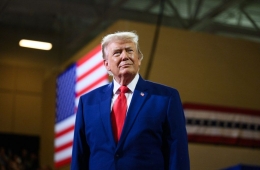
President Lee held a dramatic summit meeting with U.S. President Donald Trump in New York, which had previously been uncertain. Discussions regarding South Korea-U.S. strategic investment saw significant breakthroughs at the last minute, rapidly advancing the push for the summit. The two leaders sat down for approximately 30 minutes on September 22 (local time).
The two presidents welcomed the progress in strategic investment talks and agreed to hold follow-up consultations based on the joint South Korea-U.S. documentation prepared in November of last year. Areas for continued discussion include nuclear-powered submarines, uranium enrichment and spent nuclear fuel reprocessing, cooperation in shipbuilding, and the transfer of wartime operational control (OPCON). President Trump reaffirmed his willingness for dialogue with North Korea. Based on the so-called ‘Peacemaker–Pacemaker’ division of roles, the two leaders decided to open channels for dialogue with North Korea and maintain close communication to ensure lasting peace on the Korean Peninsula.
This summit was also significant in that security issues, where negotiations had previously stalled, were reaffirmed as matters for further leader-level consultations alongside developments in the economic agenda such as U.S. investment. Particularly noteworthy is that the transfer of OPCON was discussed at a summit for the first time. However, there was no agreement at this meeting on specific implementation timelines or methods for nuclear submarines, enrichment and reprocessing, or OPCON transfer. Both sides will need to further narrow down the details through subsequent high-level and working-level consultations.

President Lee Jae-myung is delivering a keynote speech at the UN General Assembly Hall in New York, USA, on the 22nd (local time). 2026.9.23 Yonhap News Agency
View original image‘Peaceful Coexistence’ at the UN...Pitching Currency and Capital Market Reforms to Wall Street
In his keynote address to the 81st United Nations General Assembly, President Lee presented three visions for peace on the Korean Peninsula: ‘inclusive peaceful coexistence based on mutual respect,’ ‘stable peaceful coexistence eliminating the need for conflict,’ and ‘responsible peaceful coexistence that contributes to world peace.’ He also reaffirmed a phased approach to halting and then rolling back North Korea’s nuclear and missile capabilities, with the long-term goal of a ‘nuclear-free Korean Peninsula.’ South Korea’s plan is to play a ‘Pacemaker’ role in facilitating an early resumption of U.S.–North Korea dialogue.
To the international community, President Lee proposed the ‘Global AI Inclusive Society,’ ‘Green Transformation,’ and ‘Global Energy Supply Chain Solidarity’ as the three pillars of the ‘K-Initiative.’ His vision is to expand Korea’s role in global issues such as AI, the climate crisis, and energy supply chains, not just in Korean Peninsula matters. He also suggested forming a ‘coalition of constructive contributors’ to address energy and logistics supply chain crises in regions like the Hormuz Strait and the Red Sea.
His economic diplomacy extended to Wall Street. On September 23, at the Korea Investment Summit 2026, President Lee met with key players in global finance—including Larry Fink, Chairman of BlackRock; Jane Fraser, CEO of Citigroup; and Emmanuel Roman, CEO of PIMCO—explaining Korea’s growth strategy and investment opportunities. He also sought investments in three major megaprojects in semiconductors, physical AI, and AI data centers, as well as next-generation industries like small modular reactors (SMR) and nuclear fusion.

President Lee Jae-myung is speaking at the 'Korea Investment Summit 2026' held at a hotel in New York, USA, on the 23rd (local time). From left, Timothy Geithner, Chairman of Warburg Pincus; Larry Fink, Chairman of BlackRock; President Lee Jae-myung; Jane Fraser, CEO of Citigroup; Emmanuel Roman, CEO of PIMCO. September 23, 2026. Photo by Yonhap News Agency.
View original imagePresident Lee also expressed a willingness to reform market systems. He introduced amendments to commercial law including three rounds of changes involving directors’ fiduciary duties and principles requiring the general cancellation of treasury stock, as well as a move to a 24-hour trading system in the foreign exchange market. Improving access to the foreign exchange and capital markets is a key task for South Korea’s inclusion in the MSCI developed markets index. Global investors evaluated Korea’s competitiveness in AI and semiconductors, and showed keen interest in the continued implementation of market reforms such as enhanced FX market accessibility and improved corporate governance.
Chief Communications Officer Sung Kihong gave a briefing at the press center in Mexico City, saying, “With our head of state attending the world’s largest multilateral diplomatic stage—the UN General Assembly—for the second consecutive year, we actively utilized this opportunity for comprehensive diplomacy to promote the national interest. By holding summits with the U.S. and Australia, we strengthened the foundation of international support for our Korean Peninsula policy.” He added, “Building on last year’s governance achievements, we have solidified leadership on the multilateral stage and expanded the international base of understanding and support for peaceful coexistence on the Korean Peninsula.”
Investment Protection Agreement Concluded After Seven Years...17 Cooperative Documents Signed, CEPA Proposed
During his state visit to Mexico, President Lee held a summit with President Claudia Sheinbaum on September 24 and adopted the ‘Korea-Mexico Joint Action Plan 2026–2030.’ Government and institutional representatives from both countries signed or agreed upon a total of 17 cooperative documents, covering AI, space, trade and industry, finance, culture, and more, on the occasion of the summit.
One of the most concrete economic achievements was the final conclusion of the renegotiation on the investment protection agreement, which had been underway for seven years. Export-import banks of both countries set a credit line of 100 million dollars, and agreed to establish an intergovernmental channel for dialogue regarding crude oil and key resource supply chains. The revised investment protection agreement will take effect after completing domestic procedures and ratification by the respective parliaments.

President Lee Jae-myung and Claudia Sheinbaum, President of Mexico, are shaking hands after a joint press conference at the Presidential Palace in Mexico City on the 24th (local time). 2026.9.25 Yonhap News Agency Photo by Yonhap
View original imageDiscussions on trade agreements were also reignited. However, since Mexico was not yet prepared to resume negotiations for a free trade agreement (FTA), both sides agreed to conduct a joint study on potential economic cooperation that includes not only goods trade, but also industrial cooperation and supply chains. As Mexico is currently reviewing the United States–Mexico–Canada Agreement (USMCA) with the U.S. and Canada, the plan is to monitor these developments and create the conditions for subsequent negotiations.
The presidential office explained that the ‘trade agreement’ mentioned by President Lee refers to the Comprehensive Economic Partnership Agreement (CEPA). Unlike conventional FTAs, which primarily focus on reducing tariffs on goods, CEPA is a broader economic agreement that covers cooperation in trade, investment, industry, and supply chains. As a result, tariff issues—an area of strong interest to Korean companies operating in Mexico—are also likely to be discussed in future negotiations. An official from the presidential office said, “Because CEPA covers trade, investment, industry, and supply chain collaboration, we believe tariff issues will also be addressed in the consultation process.”
Defense and aerospace cooperation was also expanded. In collaborative efforts set in motion during the summit, discussions included the potential supply and local production of components and maintenance services, notably centered on Korea Aerospace Industries’ (KAI) light attack aircraft FA-50. An official government announcement also conveyed President Lee’s hope that Korean defense equipment will contribute to modernizing Mexico’s military forces.

President Lee Jae-myung delivers a congratulatory speech at the Korea-Mexico Business Forum held at the World Trade Center in Mexico City on the 25th (local time). 2026.9.26 Yonhap News
Photo by Yonhap News
At the Korea-Mexico Business Forum on September 25, trade agreements and industrial cooperation again took center stage. President Lee said that, given the complementary structure of both countries’ industries, a comprehensive trade agreement could provide the foundation for elevating economic cooperation to a new level, and expressed hope for a swift resumption of discussions. He also proposed combining Korea’s advanced technologies with Mexico’s manufacturing base and parts ecosystem to jointly target not only the North American market but also the global market, with further cooperation spanning bio-healthcare, beauty, energy, electricity, and infrastructure sectors.
Chief Communications Officer Sung added in a briefing in Mexico City, “This state visit—the first by our head of state to Mexico in 16 years—has marked a crucial turning point in the establishment of a strategic partnership with Mexico, a core country in the politics, economy, and diplomacy of Latin America.”
At the Overseas Korean Meeting, a Direct Message on Reform—Again Rejects Speculation on Term Extension
During his trip, President Lee also addressed domestic political issues. At a meeting with Korean residents in Mexico, he cautioned against excessive radicalism in the pursuit of reform, stating, “If you try to move too quickly, too far, or too abruptly, you will face backlash.” He cited the case of the debate over abolishing the National Security Act during the Roh Moo-hyun administration, pointing out that an agreement to remove problematic provisions was almost reached, yet demands for ‘complete abolition’ ultimately led to no amendments at all.

President Lee Jae-myung is giving a greeting at a dinner meeting with overseas Koreans held at a hotel in Mexico on the 24th (local time). 2026.9.25 Yonhap News
View original imageAlthough President Lee did not mention author Yoo Si-min by name at this event, his remarks came after the presidential office publicly expressed regret over Mr. Yoo’s criticism of prosecution reform, and were interpreted as targeting both Mr. Yoo and advocates of hardline reform within the ruling bloc because Mr. Yoo had also called for the complete abolition of the National Security Act in the past.
President Lee once again dismissed rumors of seeking a term extension. He said, “There will not be any case of my tenure exceeding June 2, 2030, under any circumstance,” firmly denying any possibility of extending his term. This followed his statement at a press conference on September 18, in which he said, “I have no intention of seeking consecutive terms,” and he went as far as to specify the end of his tenure.
Hot Picks Today
![[Exclusive] "We warned you four times"... 'This' Found in an LH Happy Housing Bathroom](https://cwcontent.asiae.co.kr/asiaresize/93/2023073107570824314_1690757828.png) [Exclusive] "We warned you four times"... 'This' Found in an LH Happy Housing Bathroom
[Exclusive] "We warned you four times"... 'This' Found in an LH Happy Housing Bathroom
- "I Hate Dog Meat and Skate, Love Pizza" ... "Let's Meet" Frenzy Over Beautiful 41-Year-Old Nurse, But There's a Twist
- "Busan Is in Big Trouble"... 'This Insect,' Capable of Producing 350 Nymphs From One Female, Confirmed to Have Established Itself
- Condoms Out of Stock... "Please Stop Having Kids": Country to Deliver Contraceptive Pills Door to Door
- "It's Just Like During COVID"... A Chilling Incident in Russia [Current Affairs Show]
President Lee returned to South Korea on September 26, concluding his overseas tour.
© The Asia Business Daily. All rights reserved. Unauthorized AI training and use prohibited.