Expressway Commutes at 5 a.m. Every Day... Court Overturns Overwork Death Ruling
First Trial: "Difficult to Accept Self-Calculated Working Hours"
Appeals Court: "Commute Confirmed by Expressway Passage Time"
A court has recognized an office worker's death from overwork based on evidence such as his record of using the expressway for early morning commutes at 5 a.m.
According to Yonhap News Agency and legal sources on the 25th, the Administrative Division 6-2 of the Seoul High Court (Presiding Judges Choi Hangseok, Park Youngju, and Kim Minki) recently ruled in favor of the plaintiff in the appeal of the lawsuit filed by the family of employee A against the Korea Workers’ Compensation & Welfare Service, seeking to overturn the decision to deny survivor's benefits and funeral expenses.

In June 2022, A went to work and was later found unconscious in the driver’s seat of his car. He was taken to the hospital but died later that month after being diagnosed with cerebral hemorrhage.
The family of A applied for survivor's benefits, arguing that A worked an average of more than 52 hours per week, had an unpredictable work schedule, and was subject to significant mental stress, resulting in a heavy work burden. However, the Korea Workers’ Compensation & Welfare Service rejected the claim, stating that A’s average weekly working hours were only about 42 hours.
The family filed a lawsuit against the agency, but the court of first instance ruled in favor of the agency, stating there were no issues with its decision. Although the family contended that, based on expressway usage records and other evidence, A’s average weekly working hours were 57 hours in the 12 weeks prior to his death, the lower court did not accept this, stating, “It is difficult to recognize the self-calculated working hours.”
However, the appeals court found differently. Based on expressway usage records and testimony from colleagues, the court concluded A actually worked long hours and suffered from overwork.
The presiding judges stated, “A certificate prepared by the workplace also indicates that the deceased prepared to start work between 5:40 and 6:00 a.m. On the day A collapsed, a coworker testified that A typically arrived at work around 6:00 a.m., and A’s daughter stated that her father went to work at 4:30 a.m. that day.”
Expressway usage records from the year prior to A’s death also became a factor in the court’s decision.
Hot Picks Today
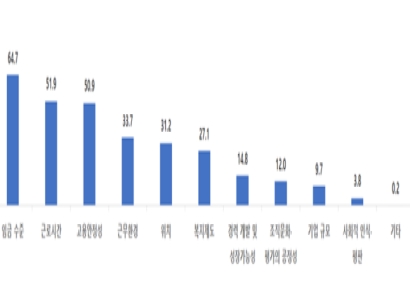 "Please Pay Me at Least 3 Million Won a Month": More Than Half of Young People Today Prioritize "Working Conditions" Over Company Size
- Selling Like Crazy Every Year... 30-Year-Old Hetbahn Takes on a New Challenge: Tastes Better Than "Mom's Home Cooking" [On-Site Report]
- He Left It in the Car and Forgot... "I Nearly Collapsed with Joy": Man Wins $1.48 Million Lottery
- Ran 18 km With 9-Year-Old Tied to Him at the Waist... "Man Banned From Competing for 3 Years"
- Beachgoer Finds 'Plastic' That Turns Out to Be Perfume Ingredient Worth More Than Twice as Much as Gold
The appeals court explained, “It can be confirmed that most of the time, A passed through the expressway around 5:00 a.m. Considering that it takes about 27 minutes by car from the expressway to the workplace, and there were no special circumstances, it is likely that A regularly arrived at work before 6 a.m.” The court further stated, “Chronic overwork at the workplace and the considerable physical and mental stress resulting from it caused A’s pre-existing hypertension to worsen rapidly, beyond its natural progression. Therefore, it can be recognized that there is a significant causal relationship between his work and his death.”
© The Asia Business Daily. All rights reserved. Unauthorized AI training and use prohibited.