Eight Suicide Attempts Reported on U.S. Aircraft Carrier During 286-Day Extended Mission
Members of the USS Abraham Lincoln Carrier Strike Group Involved in Incidents
Cases Include Rescues of Individuals Who Attempted to Jump Overboard
U.S. Navy Says Number of Attempts Not Abnormal for Extended Deployments
Reports have emerged that there were a total of eight suicide attempts within a U.S. Navy aircraft carrier strike group that had been conducting long-term operations in the Middle East region.
CNN and the Associated Press (AP) reported on the 23rd, citing a letter that Acting Secretary of the Navy Carlos Del Toro sent to Democratic Senator Kirsten Gillibrand on the 22nd (local time), that there were a total of eight suicide attempts during the deployment of the USS Abraham Lincoln carrier strike group.
Acting Secretary Del Toro explained that the suicide attempts involved not only crew members of the Abraham Lincoln, but also members of the air wing, strike group and destroyer squadron staff, escort destroyers, and personnel from the embarked air groups. He emphasized, however, that there were no deaths by suicide on board during that operational period.
Two specific cases were also disclosed. In March this year, one individual attempted to jump off the ship but was stopped by fellow crew members. In August, a member of the air wing fell into the sea but was rescued by a search and rescue helicopter. Both individuals were medically evaluated and treated, and were subsequently transferred off the ship.

On the 2nd (local time), the U.S. aircraft carrier USS Abraham Lincoln arrived at Laemchabang Port in Thailand. Photo by Yonhap News.
View original imageThis mission for the Abraham Lincoln was significantly extended beyond its original schedule. The carrier strike group, which departed California, began its assignment in November of last year and subsequently moved to the Middle East to support operations related to Iran. The Abraham Lincoln operated at sea for about 286 days—greatly exceeding the typical six-month deployment for carriers—and when it docked in Thailand in early September, the extended operation reignited attention to fatigue and mental health issues among crew members.
Mental health problems, shortages of food and hygiene supplies, and issues with onboard facilities arising from the long-term deployment of carrier strike groups have been raised since the beginning of this year. Back in February, the Wall Street Journal (WSJ) reported that fatigue and discontent were growing among nearly 5,000 crew members due to the prolonged deployment of the USS Gerald R. Ford.
At the time, the parent of one crew member shared with the WSJ that, because the Ford’s return schedule had been extended twice, their son on active duty could not attend his great-grandfather’s funeral. Another crew member confessed, “It’s hard enough not seeing family, but not knowing when we’ll meet again is the most painful part.”
However, the U.S. Navy maintains that the number of suicide attempts reported on the Abraham Lincoln does not go beyond what is typically seen during long-term deployments. ABC News quoted a Navy official explaining that eight cases is not an abnormal figure for extended assignments. By contrast, one active-duty officer told CNN that typically, there are about one or two suicide cases per year within carrier strike groups on deployment, so eight is an unusually high number.
Hot Picks Today
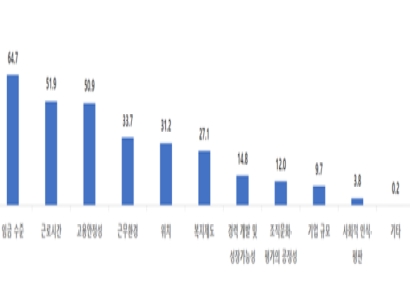 "Please Pay Me at Least 3 Million Won a Month": More Than Half of Young People Today Prioritize "Working Conditions" Over Company Size
- Selling Like Crazy Every Year... 30-Year-Old Hetbahn Takes on a New Challenge: Tastes Better Than "Mom's Home Cooking" [On-Site Report]
- Sleep Is Koreans' 'No. 1' Health Interest, but the 'Twist' Is They Averaged Less Than 7 Hours a Night This Year
- Ran 18 km With 9-Year-Old Tied to Him at the Waist... "Man Banned From Competing for 3 Years"
- Beachgoer Finds 'Plastic' That Turns Out to Be Perfume Ingredient Worth More Than Twice as Much as Gold
Meanwhile, the Abraham Lincoln carrier strike group is currently en route back home. The U.S. Navy plans to incorporate the lessons learned from this extended mission into future carrier strike group deployments and support systems for crew members.
© The Asia Business Daily. All rights reserved. Unauthorized AI training and use prohibited.