"Even a Single Meal Is a Burden"...Naengmyeon Exceeds 12,000 Won, Bibimbap Surpasses 10,000 Won
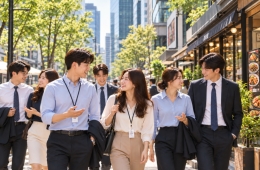
Mr. A, an office worker, now checks prices every time he chooses a lunch menu with colleagues. With even a single bowl of naengmyeon easily exceeding 10,000 won, it's not easy to open his wallet. Adding a coffee after the meal means lunch costs can approach 20,000 won, which is a burden. As a result, he increasingly opts for the company cafeteria or convenience meals.
As the average price of naengmyeon—a representative dining-out menu item—in Seoul surpassed the 12,000 won range, the continued rise in dining-out prices is adding to office workers' lunch expenses. To save on meal costs, more office workers are packing their own lunches, intensifying the phenomenon known as "lunchflation" (lunch + inflation).

According to the Korea Consumer Agency’s price information portal “Chamka Price” on September 25, the average price of naengmyeon in Seoul in August was 12,692 won. The nationwide average price of naengmyeon in August was 10,845 won, up 353 won (3.4%) from the same period last year, and bibimbap rose by 228 won (2.3%) to 10,314 won, surpassing the 10,000-won mark. Kalguksu reached 9,057 won, up 259 won (2.9%), settling into the 9,000-won range.
In addition, the average price of kimchi jjigae baekban was 9,080 won, up 339 won (3.9%) from September of last year (8,741 won). Jjajangmyeon rose by 236 won (3.4%) to 7,230 won compared to a year ago. Samgyetang was 16,868 won, and samgyeopsal (based on a 200g serving) was 17,877 won, marking increases of 2.4% and 2.5%, respectively.
Looking at the short-term trends, price fluctuations by item in August were somewhat mixed. Compared to July, kimchi jjigae baekban (up 38 won), bibimbap (up 26 won), jjajangmyeon (up 23 won), and samgyeopsal (up 35 won) saw slight increases, while samgyetang (down 39 won) and kalguksu (down 7 won) declined. Naengmyeon increased by 2 won, remaining similar to the previous month.
Hot Picks Today
 Changing Outfits and Snapping Photos in Hotels... "Please Don't Take Pictures": Europe Cracks Down on Influencers Over Privacy Concerns
- "Please Let Me Go Home"... Customers Trapped in Department Store Parking Lot for 5 Hours Vent Their Anger
- "Tried leveraged semiconductor stocks, watched 3.5 billion won shrink to 200 million won": Salaried investor in tears
- "I Should Enjoy It After Retirement": Prices Quadruple... Memberships Over 100 Million Won Popular, but Closures Mount
- "Come Live With Me on My Farm": Man Sells Everything and Travels 1,930 km, Trusting a Beautiful Woman
As dining-out prices in general continue to maintain high levels, it is expected that the shift in office workers’ consumer behavior—driven by a desire to avoid spending nearly 20,000 won on a meal and a dessert beverage—will persist for the time being.
© The Asia Business Daily. All rights reserved. Unauthorized AI training and use prohibited.