Xi's Visit to the U.S.: Economic Officials Take Center Stage Over Business Leaders, Focus on Trade Negotiations
No Executives from BYD or CATL in Delegation
Key Policy Leaders from Finance and Commerce Ministries Included
It has been confirmed that the delegation accompanying Chinese President Xi Jinping on his visit to the United States includes a large number of key officials responsible for trade and economic policy, while executives from major corporations—initially expected to join—have been excluded.
According to foreign media outlets such as Taiwan's United Daily News and Singapore's Lianhe Zaobao on September 24, President Xi's private jet landed at Joint Base Andrews near Washington, D.C. on the 23rd (local time). Senior officials overseeing China's economic and trade policies disembarked one after another.

On the 23rd, Chinese President Xi Jinping and his wife Peng Liyuan, who arrived at Joint Base Andrews in Maryland, USA, were greeted by U.S. President Donald Trump and First Lady Melania Trump. AP·Yonhap News
View original imageThe delegation's roster included Cai Qi, Director of the General Office of the Communist Party of China and chief of staff to President Xi; Wang Yi, Minister of Foreign Affairs overseeing diplomatic policy; Tang Fangyu, Director of the Central Policy Research Office; Zheng Shanjie, Chairman of the National Development and Reform Commission; Lan Fo'an, Minister of Finance; and Wang Wentao, Minister of Commerce. In addition, Chinese Vice Premier He Lifeng, who had arrived earlier in the U.S. for working-level talks, welcomed President Xi at the site.
The National Development and Reform Commission (NDRC) is China's top national body responsible for formulating medium- and long-term economic and social development plans, as well as macroeconomic policy. The General Office of the Communist Party is a key agency closely assisting the Party's central leadership and supporting the highest level of national governance. The composition of this delegation indicates a focus on coordinating macroeconomic policy and trade disputes between the U.S. and China, rather than announcing major investment or commercial contracts by large corporations.
Major foreign media had originally forecast that executives from leading Chinese electric vehicle, battery, and IT companies—such as BYD, CATL, and Xiaomi—would join President Xi's visit to the United States. This expectation was based on precedents like when U.S. President Donald Trump visited China accompanied by a delegation of U.S. business leaders and signed large-scale business contracts.
Hot Picks Today
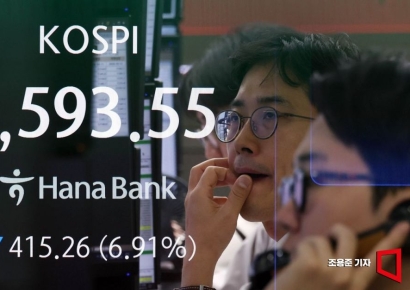 "I Invested KRW 10 Million, Only KRW 2 Million Is Left" ... 77% Plunge Sends Retail Investors Who Piled Into Samsung Electronics and SK hynix Leveraged ETFs Crying Out
- "There's a Drink Like This?"... Chinese Beverage With "Korean" in Its Name Rakes in 85 Million Won in Monthly Sales
- "No Need to Hire a Model"... The 25-Year-Old Woman Who Entered Social Media with a Face That Cost Just 1,500 Won [AI Content: The Bright and Dark Sides] 1
- "Samsung Electronics at 70,000 won, SK hynix at 200,000 won"... Why the gloomy outlook despite 'record-breaking earnings'?
- "The leggings are all see-through. It's so embarrassing to look at," complaints prompt Lululemon to fire development staff.
However, according to local media and sources, differences between the two countries regarding the conditions for Chinese investment in the U.S. and tariff issues reportedly acted as barriers to forming a business delegation. As a result, expectations for announcements of large-scale commercial agreements during this summit have diminished. Instead, detailed policy negotiations on issues such as trade tariffs, fiscal policy, and supply chains between the United States and China are expected to take center stage.
© The Asia Business Daily. All rights reserved. Unauthorized AI training and use prohibited.