Exclusive Management of Family Property for 20 Years... Supreme Court: "Failure to Account for Deposit Expenditures Does Not Constitute Embezzlement"
Supreme Court Recognizes Broad Discretion Over Funds
Overturns Suspended Sentence and Remands the Case
Even if a person who has exclusively managed a family-owned building and independently operated its funds for over 20 years cannot specifically prove how rental deposits were used, this does not automatically establish the 'intent of unlawful appropriation' required for the crime of occupational embezzlement, according to a Supreme Court ruling issued on September 25, 2026.

According to the legal community on September 25, the First Division of the Supreme Court (presiding Justice Cheon Dae-yeop) recently overturned the original verdict, which had sentenced Mr. A, charged with occupational embezzlement, to one year in prison suspended for two years and ordered him to pay compensation, and remanded the case to the Seoul Western District Court.
Since 1996, Mr. A had been exclusively responsible for managing a studio apartment building with 19 units in Nowon-gu, Seoul, under delegation from his mother and siblings. His duties included handling lease contracts, receiving and returning deposits, and paying building management expenses. In 2018, he was prosecuted on charges of failing to return part of the deposits (such as 50 million won and 30 million won) received from tenants after the expiry of their contracts, or for not complying with his co-owner brother’s demand for reimbursement after the brother paid the deposit back instead.
The first and second trials sentenced Mr. A to one year in prison with a two-year suspended sentence and a compensation order of 50 million won. The courts reasoned that since deposits received from tenants are funds strictly designated to be returned directly to the corresponding tenant, using them for any other purpose or refusing to return them indicates intent for unlawful appropriation.
However, the Supreme Court's view differed. The court focused on the fact that Mr. A had been solely responsible for handling the collection and return of deposits and the disbursement of management fees—using his own account—without separate supporting documents or reports for over 20 years, and that his co-owner siblings had not raised any objections.
The panel stated, "Considering these circumstances, it is difficult to conclusively say that the use of the deposits was strictly limited to returning them to the respective tenants." It added, "On the contrary, Mr. A was, in fact, given broad discretion regarding the purpose and timing of fund usage."
Hot Picks Today
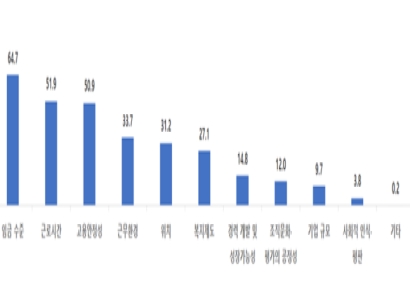 "Please Pay Me at Least 3 Million Won a Month": More Than Half of Young People Today Prioritize "Working Conditions" Over Company Size
- Selling Like Crazy Every Year... 30-Year-Old Hetbahn Takes on a New Challenge: Tastes Better Than "Mom's Home Cooking" [On-Site Report]
- Ran 18 km With 9-Year-Old Tied to Him at the Waist... "Man Banned From Competing for 3 Years"
- "Hey, Lady, Teach Your Kids to Behave!" ... 300,000 Won in Cash and a Bodily Injury Claim Demanded Over Child's Door Ding
- Beachgoer Finds 'Plastic' That Turns Out to Be Perfume Ingredient Worth More Than Twice as Much as Gold
The court continued, "Even if a person entrusted with such discretion cannot properly account for the whereabouts or use of part of the deposit, intent of unlawful appropriation should not be easily presumed unless there is clear evidence it was used for personal benefit," concluding that the lower court had erred in its interpretation of the law regarding occupational embezzlement.
© The Asia Business Daily. All rights reserved. Unauthorized AI training and use prohibited.





![[Market ING] KOSPI Seeks Rebound in Superweek Packed with Corporate Earnings and FOMC](https://cwcontent.asiae.co.kr/asiaresize/307/2026102514484873155_1792907327.jpg)