[Gallery Walk] Numbers Cascade in Jeju's Abandoned Building After 20 Years... Ryoji Ikeda's Sensory Experiment
Solo Exhibition Opens September 24 at House of Refuse in Aewol, Jeju
Largest Show Ever in Korea
25-Meter Data Tunnel and World Premieres
Exploring the Limits of Human Perception Through Light and Sound
In the forest of Aewol, Jeju, numbers cascade inside a concrete building that had been abandoned for over 20 years. Data races along LED screens suspended from the ceiling, reflected infinitely on mirrors lining both sides, making a 25-meter corridor appear endlessly extended. Audience members walking through the space see their own bodies multiplied countless times. It becomes difficult to distinguish what is real from what is an illusion in the mirror. As viewers gaze at the numbers, they are overcome by the sensation that they, too, have become part of the data.

This is the world presented by Ryoji Ikeda, the internationally renowned Japanese media artist, now aged 60, on Jeju Island. Opening September 24 at the House of Refuse, a multi-cultural complex in Aewol, Jeju City, the solo exhibition "Ryoji Ikeda" is his largest ever in South Korea. The show fills approximately 1,000 square meters with three world premiere works, two newly versioned pieces, and others making their domestic debut. Ikeda personally designed everything, from the layout and lighting to the flow of the viewing experience.
'The Critical Paths,' which opens the exhibition, encapsulates Ikeda's oeuvre. The work transforms the genomic data of 100,000 individuals—collected in collaboration with the Institute of Genomics at the University of Tartu, Estonia—into light and sound. The elapsed time of humanity's accumulated changes and diverging histories flow across LED screens. Reflected in mirrors on both sides, the data turns this narrow passageway into a boundless expanse. Audiences, in effect, are walking directly into the information that embodies the history of humankind.
Yet, in this overwhelming sight, to what extent can viewers actually comprehend the information? The genomic data is real, but it is difficult to grasp the processes of human evolution through fleeting numbers and symbols on a screen. The space Ikeda created is less a gallery for explaining data than a laboratory that exposes just how limited human perception truly is.
This question becomes even clearer in his latest work, "the irreducible," making its world premiere in Jeju. Within a pitch-black gallery, a massive LED display fills the wall with numbers stretching to the millions of digits. A floor-mounted mirror reflects and further expands the space. The numbers are visibly present, but for a human eye, reading them in their entirety or discerning their hidden rules is essentially impossible.

"Irreducible" refers to something that cannot be further simplified or reduced. Ikeda translates the situation where, even when numbers are precisely recorded, humans cannot completely verify their properties. Here, the numerals are not tools for providing clear answers, but media revealing worlds beyond human cognition. The exhibition organizers note that a sense of the "mathematical sublime" emerges from exactly this point.
In contrast, his new work "the irreducible [nº13]" is strikingly static. A single number with more than one million digits is printed onto 35mm film and displayed inside a lightbox. As light passes through, minuscule numbers appear as a unified image. Although it is a strip of film, there is no moving picture. By inscribing an endless sequence of numbers onto a strip of finite length, the artist captures the infinite world of numbers within physical material.
Conversely, "Spin" uses movement itself to deceive the senses. A tiny laser dot spins swiftly in midair, tracing lines that form three-dimensional shapes as the movement overlaps. What tangibly exists is a moving point of light, but the human eye perceives it as a continuous, connected form. This demonstrates, before our very eyes, that the world we believe we see and the world as it truly exists are not always aligned.
In "datadotgram [nº9]"—which precisely synchronizes 18 LCD panels—and "data-verse 2," which reconstructs scientific data ranging from subatomic particles to the universe, Ikeda's strength as a composer comes to the fore. The data in each panel constitutes independent scenes, while simultaneously forming a vast audiovisual structure. As visual changes and electronic sounds merge, numbers and codes function like a kind of musical score.

Since the 1990s, Ikeda has created works fusing electronic music, data, and mathematical structures. He was a member of Japan’s experimental art group Dumb Type, and has exhibited in major institutions worldwide, including the Centre Pompidou in Paris and the Park Avenue Armory in New York. Last year, he held a large-scale solo show at the Gwangju Asia Culture Center, and this year, he was selected as the winner of the 9th Nam June Paik Art Center International Arts Award.
For this Jeju exhibition, the space itself is as noteworthy as the works. House of Refuse repurposed a forest-enshrouded structure that had been abandoned for more than 20 years, transforming it in 2024 into a multifaceted cultural site. While preserving its concrete framework, the venue was redesigned to support exhibitions, music, film, food, and a wide range of other cultural content. Behind the building, pine forests and grassy lawns spread out.
The natural world outside and the artificial world of data inside stand in curious contrast. Outside, the forest’s appearance shifts with sunlight and weather; inside, meticulously calculated light and sound unsettle the audience’s senses. In some works, natural light is incorporated, so the impression of the space changes depending on the time and the weather. It is also notable that the artist, though obsessed with precision, has allowed natural variables to enter his works.

Exterior view of the House of Repose while the exhibition is in progress. House of Repose
View original imageAt the press preview held on September 22, the artist gave a live performance himself. Dressed in black clothes, a hat, and tinted glasses, Ikeda operated 10 turntables emitting sounds that repeated at different cycles. Mechanical sounds and sharp tones clashed and overlapped to create new rhythms. According to his studio manager, this was the first time in about 20 years that they had seen Ikeda perform using all 10 turntables.
Though the work starts with rigorous calculations, chance ultimately plays a part. Sounds that repeat at different intervals combine to create a new arrangement each time. This scene demonstrates that Ikeda’s work is not composed purely of cold numbers and mechanical precision alone.
Of course, the massive LED screens and striking electronic sounds are spectacles in themselves. Even without understanding the meaning of the numbers, visitors are overwhelmed by the flood of light and sound. The very questions this exhibition aims to pose only begin once the audience has marveled at the spectacle. Seeing something clearly before your eyes does not necessarily mean you have understood it.
Humanity created numbers to explain the world, but Ikeda uses numbers to expose the limits of our perception. Computers can store millions of digits and genetic data from 100,000 people, yet humans are allowed to grasp only a fraction. In an age when nearly everything can be recorded as data, how much do we truly know? In Jeju’s old forest building, Ikeda jolts the audience’s eyes and ears, leaving them with that question.
Hot Picks Today
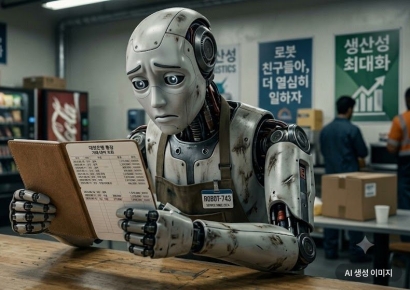 "Once Worth 4 Million Won a Day, Now Going for Chicken Money"... Chinese Robots' Humiliating Fall to 'Bargain-Bin' Prices in Just One Year
- "Who Says It's a Meal for Ordinary People? It Deserves 'Special Dish' Status Now"... The Era of 12,000-Won Bibimbap
- "I will open fire at a childcare center"... Australian man in his 20s arrested over AI chatbot conversation
- Daughter in Her 30s Ate Tteokbokki Alone... 34-kg Father Dies of Malnutrition
- "I Won't Take It Even If You Leave It to Me"... 9 Million Parents' Homes Sit Empty as 320,000 Japanese Renounce Inheritances
The exhibition runs until January 18 next year. Admission is 23,000 won.
© The Asia Business Daily. All rights reserved. Unauthorized AI training and use prohibited.