Assemblyman Shin Sungbeom Raises Issues with Comprehensive Farmland Survey... Urges Amendment of Farmland Act
“Rural Realities Such as Aging and Entrusted Cultivation Must Be Reflected in the System”
Proposes Expanding Farmland Bank Purchases and Improving Farmland Regulations
Government and Ruling Party to Follow Up with Guidance on Conventional Violations and Amendments to the Farmland Act
Shin Sungbeom, a lawmaker from the People Power Party representing Sancheong, Hamyang, Geochang, and Hapcheon in South Gyeongsang Province, urged for amendments to the Farmland Act and improvements to related systems, emphasizing that the government's comprehensive farmland survey and current farmland system must sufficiently reflect the realities of rural areas, including the challenges posed by an aging population and declining demographics.
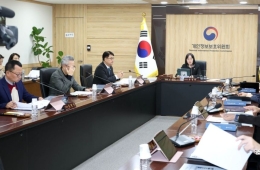
On the 21st, Assemblyman Shin held a press conference at the National Assembly Communication Center, where he presented his position on the comprehensive farmland survey and regulations on farmland use.
Assemblyman Shin argued that, in addition to discussing the necessity of conducting a comprehensive farmland survey, there should be specific follow-up measures on how to manage farmland and improve the related systems after the survey is completed.

[Photo by Mr. Seongbeom Shin's office] Congressman Seongbeom Shin held a press conference at the National Assembly Communication Office to express his position on the government's comprehensive survey of farmland and farmland use regulations, urging amendments to the Farmland Act and system improvements that reflect the realities of rural areas.
View original imageIn particular, he stressed that, unlike in the Seoul metropolitan area or regions slated for development, farmlands in depopulated areas outside the capital should be approached not only from the perspective of speculation, but also in consideration of structural issues facing rural communities—such as aging, a shortage of agricultural labor, and entrusted cultivation.
Assemblyman Shin pointed out that there are numerous cases in which elderly farmers, unable to cultivate their land themselves, entrust farming to others who own agricultural machinery, and asserted the necessity of reflecting such realities in farmland management and disposition systems.
He also raised issues regarding the operation of the Farmland Bank.
Assemblyman Shin insisted on expanding the role of the Farmland Bank, operated by the Korea Rural Community Corporation, which supports the transfer of farmland between elderly and young farmers. He cited the farmland purchase budget execution rate and the number of pending purchase applications in Geochang as examples, arguing that the farmland purchase budget should be expanded.
He also addressed matters related to farm and agricultural income, stating that, given the insufficient income generated from agriculture, the effects of strengthening farmland regulations on farmers' property rights and the rural economy should be considered together.
As proposed solutions, Assemblyman Shin called for: ▲ expanding the farmland purchase budget of the Farmland Bank, ▲ improving farmland regulations to consider increased rural stays by urban residents—such as the '5 days in urban, 2 days in rural' and '4 days in urban, 3 days in rural' models, ▲ devising policies to increase agricultural income, and ▲ improving the government's agricultural policy decision-making processes.
He particularly emphasized that, given the rise in elderly farmers who are unable to farm directly due to rural aging, institutional supplementation is needed to ensure that farmland can be smoothly transferred or leased to actual cultivators, such as young farmers.
On the same day, Assemblyman Shin also joined other People Power Party lawmakers in issuing a statement calling for improvements to farmland regulations and the methodology of the comprehensive survey. The lawmakers argued that farmland lease regulations and other rules must be revised to better match the realities faced by rural communities.
Meanwhile, on the same day, the government and the ruling party also announced follow-up measures concerning the comprehensive farmland survey.
The government and the Democratic Party of Korea revealed that while farmland used for obvious speculative purposes will be dealt with in accordance with the law and established principles, policies will be designed to provide guidance and promote system improvements for minor violations that have conventionally arisen in rural areas.
In addition, they plan to promote a special act by the end of the year to establish the legal grounds necessary for the legalization or temporary suspension of disposal of illegally converted farmland and to prepare an amendment to the Farmland Act reflecting rural realities by the first half of next year. They will also pursue measures to expand funding for the Farmland Bank and the Farmland Pension.
Hot Picks Today
 "Two Spend 500,000 Won in a Flash, Yet Wait Two Hours?" ... 'Dreamland' Shunned by Kids and Foreign Tourists
- The Era of Getting 200 Million Won After 30 Years Is Over... A Japanese Bank's "Perpetual Department Head" Who Just Clocked In Cries Out
- Spain Hit by Its Worst Tragedy... Lee Kangin, Moreno and Real Madrid Join Soccer World in Mourning
- They Said, “Make It Your Home for Life” - Then Suddenly Kicked 200 Passengers Off... What Happened to the Around-the-World Cruise?
- "130 Rice Bowls Sold Out in a Day"... 'Unfiltered Face' Adds 8 Million Won to Night Market Sales: China's Bungeunwoo
Accordingly, how the results of the forthcoming comprehensive farmland survey will be classified and applied—distinguishing farmland used for genuine speculative purposes from cases arising due to rural realities such as aging and entrusted cultivation—as well as the extent to which on-site opinions are reflected in the process of revising the Farmland Act, are expected to become key issues.
© The Asia Business Daily. All rights reserved. Unauthorized AI training and use prohibited.