[Seismic Shift in the Delivery Market] ①Can the Problem Be Solved by Focusing Only on Commission Fees?
Focus on Artificial Cost Adjustments
Real Support Beyond Commission Fees Remains Elusive
①Can the Fee-Focused Debate Truly Resolve the Issue?
②Will Consumers Still Use Delivery Apps Without Free Delivery? ... Threatened Consumer Benefits
③Flat-Rate Regulations Threaten Riders’ Delivery Fees... Where Is the Competition for Delivery Quality Headed?
④Uber's Entry Reinforces the Monopoly—Are Public Delivery Apps a True Alternative?
![[Seismic Shift in the Delivery Market] ①Can the Problem Be Solved by Focusing Only on Commission Fees?](http://www.asiae.co.kr/news/img_view.htm?img=2026092816252542822_1790580325.jpg)
The most significant change that small business owners using delivery apps will face in the second half of this year is expected to revolve around platform fees. Not only has the government made alleviating these fee burdens a key policy agenda, but several bills capping delivery app fees have also already been introduced in the National Assembly. Whether through legislation or voluntary agreements, changes to the fee structure are widely anticipated to become a reality in the near future by those in the industry.
The main question, however, is how. Artificially adjusting costs impacts small business owners first and foremost, but these effects ripple outward: they reach platforms, consumers, and riders, and then come back around to impact the small business owners again. The ongoing controversy—which persists despite years of debate—stems from the fact that simply lowering fees does not solve all problems. Experts point out that to truly address the structural difficulties faced by self-employed restaurant owners, it is necessary to look closely at the realities of small businesses on delivery apps, not just focus on immediate fee reductions.
According to the Korea Federation of SMEs on September 28, the recent "2026 Survey on Transactions by Online Platform Merchants" revealed that small business owners on delivery apps pay, on average, 26.2% of their monthly sales as total transaction costs related to their dealings with the platforms. This total transaction cost includes not only mediator commissions but also rider delivery fees, advertising expenses, information usage fees, and payment gateway (PG) fees.
![[Seismic Shift in the Delivery Market] ①Can the Problem Be Solved by Focusing Only on Commission Fees?](http://www.asiae.co.kr/news/img_view.htm?img=2026092215171238566_1790057833.jpg)
Diverging Perspectives... Genuine Support for Small Businesses Still Distant
Attention is drawn to the fact that the burden rate showed a wide range—from 3.0% to 45.0%. This is because the "mutual cooperation fee" system, introduced last year, applies different rates depending on sales volumes. Under the current fee structure, businesses in the lowest 20% by transaction amounts pay a 2.0% fee with a minimum delivery fee of 1,900 won per order. For those in the top 35%, the fee rises to 7.8% with a maximum delivery fee of 3,400 won. For the largest businesses, assuming the average delivery order amount is 25,000 won, the effective burden rate is about 24%. If these businesses invest further in advertising to stand out to consumers, their payments to the platform could rise even more.
This structure cannot be overlooked because differences in transaction amounts result in differing views regarding fee reforms. For example, franchise companies specializing in chicken and pizza that rely heavily on delivery sales and have high sales volumes consider lowering fees their foremost priority. Their high fixed costs—such as rent and labor costs—make extra delivery-related expenses a significant pressure. Accordingly, organizations such as the Council for Fair Platforms and the National Franchisee Association strongly demand regulations at the level of a fee cap.
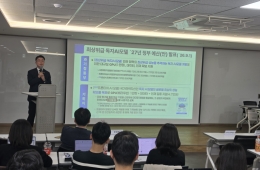
On the other hand, microbusiness owners are more desperate for immediate and tangible support than for time-consuming legislative reforms or system overhauls. On September 17, five organizations—including the Korea Federation of Microbusiness Owners and the Korea Restaurant Association—formed the "Private-Public Cooperation Council" and announced plans to directly negotiate with platforms, reflecting these urgent demands. Song Chiyoung, President of the Korea Federation of Microbusiness Owners, said, "What small businesses desperately need right now is not some distant reform, but cost reductions and tangible support they can feel tomorrow." He added, "As the debate over delivery platforms drags out, countless small businesses, unable to endure the lengthy process, may be forced into closure."
![[Seismic Shift in the Delivery Market] ①Can the Problem Be Solved by Focusing Only on Commission Fees?](http://www.asiae.co.kr/news/img_view.htm?img=2026092215171138565_1790057832.jpg)
What Has Driven Small Business Owners to the Edge?
Recently, voices in academia and industry alike stress the need to objectively identify the root causes of the severe business struggles faced by small business owners. The government has prioritized reducing the burden of delivery platform fees to establish a fair market order and create a stable foundation for the economically vulnerable, such as small businesses. However, many argue that lowering fee burdens alone is not sufficient to achieve these policy goals.
Professor Kim Taehee of the Department of Hotel and Tourism Management at Kyung Hee University analyzed 17,220 sets of data related to restaurant management from 2019 to 2025. The results indicated that the main causes of management difficulties for restaurants were not delivery app usage itself, but rather excessive competition, costs of ingredients, and labor—all structural expenses. According to the "Restaurant Business Management Status Survey Report," jointly published by the Ministry of Agriculture, Food, and Rural Affairs and the Korea Rural Economic Institute (KREI), the ratio of food ingredient and labor costs at restaurants has, for the first time in recent years, exceeded 70% of sales. This supports Professor Kim's analysis.
Therefore, there are recommendations that, rather than focusing solely on fee regulation, policies such as reducing procurement costs for food materials and supporting the digital transition of small and independent stores should be implemented in parallel to relieve the actual management burden on delivery app merchants. Professor Kim stated, "Price regulation cannot be a sufficient policy tool to resolve the management crisis of merchants on delivery apps. Policy review must take into account the cost structures and sales volumes of individual businesses."
Industry insiders also agree that lowering platform fees alone cannot overcome the structural difficulties faced by self-employed business owners. Ko Kyungjin, Chairman of the Korea Association of Delivery Platform Merchants, said, "Reducing the purchase costs for ingredients and easing financial burdens, tailored support for microbusinesses, and expanding sales channels—a multifaceted approach is needed to improve both the cost and revenue structures of small businesses."
Hot Picks Today
![An Apartment Once Worth 400 Million Won Nears 1 Billion... "Still Worth It" as 1990s-Born Pangyo Workers Flock to Gyeonggi Gwangju [Report]](https://cwcontent.asiae.co.kr/asiaresize/93/2026100211322949134_1790908349.jpg) An Apartment Once Worth 400 Million Won Nears 1 Billion... "Still Worth It" as 1990s-Born Pangyo Workers Flock to Gyeonggi Gwangju [Report]
An Apartment Once Worth 400 Million Won Nears 1 Billion... "Still Worth It" as 1990s-Born Pangyo Workers Flock to Gyeonggi Gwangju [Report]
- Gangnam Home Prices Drop by 1 Billion Won, but Seoul Buyers Flock to Mid- and Low-Priced Apartments After Tax Reform Plan [Real Estate AtoZ]
- "Huge Sum in Pension Account He Never Knew About... What Happened to Chinese Man in His 70s Who Collected Scrap for 21 Years?"
- Flight Attendant Kneeled to Apologize... China Eastern Airlines Bans Passenger Who Continued to Complain
- Musk's Partner Reveals Sudden Breakup Just a Week After Saying "I Love You"
© The Asia Business Daily. All rights reserved. Unauthorized AI training and use prohibited.