Escalator Double Line Standing Campaign Discontinued... No More Asking Others to Move Aside
Follow-up Measures Announced After Ministry’s “Public Forum”
Establishing a Culture of Waiting Instead of Demanding Others to “Move Aside”
Deploying Public Workers in High-Risk Areas...Improving the Usage Environment
The Ministry of the Interior and Safety is shifting its policy direction regarding escalator usage by discontinuing the previous “stand on both sides” campaign and promoting a voluntary safety culture based on public opinion.

Citizens are lined up to board the escalator at Exit 3 of Seongsu Station in Seongdong-gu, Seoul. Photo by Yonhap News Agency
View original imageOn the 23rd, the Ministry announced, "We will no longer enforce the one-size-fits-all two-line standing campaign or related regulations for the safe and convenient use of escalators."
This decision was made based on the results of the "Public Forum on Improving the Culture of Safe Escalator Usage," which took place at Baekyangnuri, Yonsei University, on August 29.
Over 200 citizens and relevant experts participated in the forum to discuss various aspects—such as accident causes, usage patterns, and facility and management issues—sharing their perspectives on each area.
Jang Gyeryeon, Head of the Korea Labor and Management Relations Institute, explained that, “Actual usage trends show little difference between single-line and double-line standing. Individual movement efficiency and collective efficiency do not necessarily align.” He also noted that few countries regulate line-standing on escalators.
Professor Heo Yunseop of Korea Lift College stressed the need to consider equipment safety, pointing out, “Walking on an escalator applies impact to the steps, which can strain the equipment,” and highlighting the issue of postponed maintenance.
During the panel discussion, there were calls for the need to foster a culture of consideration for vulnerable groups and others instead of demanding people to move aside; to adopt management practices such as predicting and stockpiling spare parts for component life cycles; and to improve the environment by considering multiple factors, such as equipment condition and congestion.
In another discussion, 200 citizens were divided into 25 groups and presented a variety of opinions. Suggestions to improve usage habits included using elevators for bulky items, creating a culture of waiting, rather than asking others to move aside, and maintaining a safe distance from the person ahead.
Other suggestions for improving the usage environment included enhancing hygiene to encourage using handrails, putting up safety guidance signs such as reminders to avoid using mobile phones and guidance to elevator alternatives, installing floor lights, and increasing safety signage.

To measure public perception changes regarding safe escalator use, two rounds of surveys were conducted among forum participants before and after the event.
The results showed that more people regarded safety as more important than speed, and while support for double-line standing increased, a significant proportion favored flexible application based on the situation.
In the second survey, support for double-line standing was 45.9%, while support for single-line standing or flexible application depending on the situation was 52.1%, indicating an almost even split. There was also strong support (69.1%) for pursuing comprehensive safety measures rather than rigid line-standing rules.
The forum confirmed that the public values both safety and convenience as equally important when using escalators.
The Ministry is revising the “settling double-line standing culture” item in its first Basic Elevator Safety Management Plan to focus on “establishing a voluntary safety culture through practicing three major safety rules and improving the usage environment,” reflecting public opinion.
While the uniform double-line standing campaign is being discontinued, public workers and volunteers will be deployed in high-risk areas, such as long-travel or high-traffic escalators, to ensure safe usage.
The Ministry will strengthen education and publicity to establish a culture of safe usage. The three major safety rules issued are: holding the handrail, not walking or running, and staying within the safety line. These messages will be delivered through public service advertisements and short-form videos, and tailored safety education for children and seniors will be expanded.
Additionally, infrastructural improvements such as installing handrail sanitizers and increasing floor indicators and safety signs will be promoted.
The phrase, “Do not ask the person ahead to step aside,” will be included in on-site announcements, in cooperation with related agencies such as the Ministry of Land, Infrastructure, and Transport. A Ministry official explained, “Approximately 70% of actual escalator accidents occur not because of the line-standing method, but because people lose their balance while trying to make way for others.”
Hot Picks Today
 "I Should Enjoy It After Retirement": Prices Quadruple... Memberships Over 100 Million Won Popular, but Closures Mount
- "I thought getting into a big company was the goal"... The 'position' only 1 in 121 employees reaches
- "Jealous of Koreans" - Now a Must-Do on Every Trip... The Place Where Foreigners Spent KRW 229.8 Billion
- “I Bought Big Packs to Stock Up Because They Were a Better Deal”... Why Are They Disappearing From Grocery Stores?
- "Please Let Me Go Home"... Customers Trapped in Department Store Parking Lot for 5 Hours Vent Their Anger
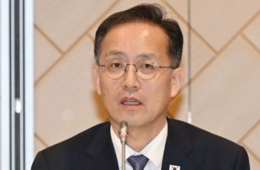
Park Hyungbae, Director General for Safety Prevention Policy, stated, "We will do our utmost to reflect your valuable opinions in policy so that escalators can become even safer and more convenient means of transportation. We also ask the public to join us in practicing the three major safety rules and fostering a voluntary safety culture."
© The Asia Business Daily. All rights reserved. Unauthorized AI training and use prohibited.