[Public Voices] Fabs Can Be Built, But People Cannot
"The fifth stage of the BK21 project should not simply be a project to fill seats, but rather, it must be a project that leaves behind talented people."
In 2031, the first fab at the Yongin National Industrial Complex for semiconductors will begin operations. The government has pledged to develop semiconductor, physical artificial intelligence (AI), and AI data centers as the three mega projects and to create 800 trillion won worth of production bases in the southwestern region alone—a landmark investment aimed at securing the nation's future. Who, then, will be the researcher working on that very production line, mastering new equipment, improving yield, and thinking about next-generation devices on that day? Four years of undergraduate studies, followed by five to seven years for a master's and doctoral degree. Tracing back from that future, today's researcher is either an undergraduate currently weighing the option of entering graduate school, or a new student just setting foot in a laboratory. The completion date for the fab can be brought forward with funding and determination, but the time it takes for a single researcher to grow cannot be shortened, no matter the amount of capital invested.
The numbers are already flashing warnings. According to one analysis, the domestic semiconductor industry alone is expected to lack more than 5,000 master's and doctoral-level experts over the next 10 years. The sectors with the most acute shortages—system semiconductors, processes and equipment, and materials—are all domains that rely exclusively on highly trained talent cultivated in graduate schools. While the semiconductor industry is one where nanometers determine margins, nurturing skilled professionals to sustain that industry is a decades-long commitment.
The battlefield for semiconductor competition is not at the undergraduate level—it is the graduate schools. Foundational breakthroughs in new device structures, next-generation materials, and the low-power computation needed for the physical AI era have all emerged without exception from research in master's and PhD laboratories. The research capacity of our graduate schools essentially equates to our nation's technological sovereignty. Conveniently, the basic plan for the fifth stage of BK21 is scheduled to be drafted at the end of this year. This project must not be treated as just another graduate school financial support program. Instead, it should be designed as the fourth pillar of the national mega projects: following fabs, data centers, and physical AI, it must become the "people pillar."

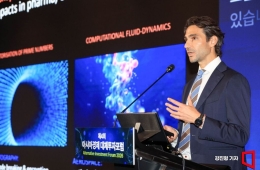
Daewon Kim, Professor in the Department of Semiconductor Engineering at Kyung Hee University
View original imageThe key question is how to achieve this. There is no doubt that the past four stages of BK21 have raised the research capabilities of our graduate schools. Yet, what semiconductor graduate programs truly require is not simply increased funding, but a paradigm shift in how the project is structured. I would like to propose four approaches.
First, let's establish high-quality "university fabs" in each region and share them among all. Thanks to semiconductor-specialized graduate programs, more universities have developed their own fabs, which is progress. However, bridging the generational gap with industry remains a challenge. Instead of competing by adding a small fab at every institution, universities, companies, and the government should form consortia to jointly operate fabs in every industrial hub, open for use by anyone regardless of their affiliation, with education and research as their core missions. Belgium's imec, which has long served as a global training ground for semiconductor talent through its networks with European universities, is a fine example of this model.
Second, graduate schools should be included in the design blueprints of national industrial complexes. One of the key secrets to successful talent training in Hsinchu Science Park in Taiwan was the proximity of universities and research institutions to the industrial zone. The Yongin National Industrial Complex is beginning construction this year. Now is virtually the last chance to secure space for graduate research buildings and shared cleanrooms alongside fabs and roadways.
Third, funding should follow people, not projects. France has addressed this issue through its industrial PhD program, the so-called "CIFRE" system, in which companies formally employ doctoral candidates and the government shares the cost of their salaries. Korea should also introduce company-employed industrial PhDs in the semiconductor sector and substantially expand the "Semiconductor Fellowship" program, providing direct support to students and allowing them to choose their advisors and laboratories freely. When money follows projects, graduate students remain "workforce"; when money follows individuals, those students become "researchers."
Fourth, the pool of mentors should be broadened. If there are only a few hundred professors specializing in semiconductors, let us bring mentors from outside academia into the classroom. Make it standard practice for top-level corporate engineers—senior or master engineers—to serve as official co-advisors, the "cross-appointment" system, in the fifth stage of BK21. Conversely, professors should spend sabbaticals working directly in fabs, learning the latest industrial processes firsthand.
These policy suggestions all have one end in mind: to enable the very best students to choose graduate study and the path of a researcher for themselves. Stable working conditions, predictable career paths, and the pride of knowing that their research sits at the heart of the nation’s next leap forward—these are the things that the fifth stage of BK21 must deliver to every graduate student’s desk.
On the day the mega projects are completed, what we will see standing before us are fabs and data centers. However, the true legacy, the force that will fill them and open the way to future progress, is a generation of researchers. That is why the word "graduate school" must appear alongside the number 800 trillion won.
Hot Picks Today
 "Eat and Play All Day for Just 20,000 Won"... Rise of 'Chinese Gatherings' Spreading by Word of Mouth
- "I Washed Dishes Too"... The '22,000-Won Jensen Huang' Who Went Viral Makes a Sincere Request to NVIDIA
- Korean Student Among Alleged Perpetrators in Cornell University Gang Rape Case... US Actress Florence Pugh Calls Incident "Disgusting"
- "One in Three Unsuitable for Marriage": 72-Year-Old Professor's Diagnosis Sparks Fierce Debate Among Chinese Netizens
Daewon Kim, Professor in the Department of Semiconductor Engineering at Kyung Hee University
© The Asia Business Daily. All rights reserved. Unauthorized AI training and use prohibited.

!["Failed Even With Net Assets of 400 Million Won?"... Six Criteria That Define 'The Real Middle Class' [Data Pick]](https://cwcontent.asiae.co.kr/asiaresize/307/2026092809144741876_1790554486.jpg)