Will Korean Investment in the U.S. Bring Secondary Benefits? ESS and Transformer Exports to the U.S. Anticipated
If Power Infrastructure Investments Lead to Data Center Demand Growth
Battery and Power Infrastructure Sectors Poised to Benefit
Rising Expectations for a "Positive Impact"
The primary reason for the Korean government’s U.S.-focused investments being concentrated in the power infrastructure sector is the surging electricity demand from artificial intelligence (AI) data centers in the United States. As demand from U.S. data centers increases, domestic battery manufacturers and power infrastructure companies are emerging as major beneficiaries.
According to the report "Changes in the U.S. Energy Storage System (ESS) Market Structure and Response Directions" published on the 27th by the Korea Trade-Investment Promotion Agency (KOTRA), the electricity demand from U.S. data centers is projected to soar from 52 gigawatts (GW) last year to 115 GW in 2030.

An energy storage system (ESS) is an essential facility for stably supplying power and responding to peak demand, addressing the steeply rising electricity needs. ESS units are used near data centers to charge electricity during off-peak periods and discharge it to alleviate load fluctuations when demand spikes.
Especially, ESS is necessary for data centers that will receive power from gas combined cycle power plants, which are likely to be the first major Korean investment project in the United States. This is because an ESS can provide stable electricity between newly constructed power plants and data centers.
Korean battery manufacturers are already focusing on the U.S. ESS market as a new growth engine. Facing challenges from a slowdown in electric vehicle (EV) battery demand, Korean battery companies have been diversifying their portfolios with batteries for ESS to find new business opportunities.
LG Energy Solution demonstrated its competitiveness in ESS products for AI data centers by joining Nvidia’s AI Factory ecosystem program. To enter the American ESS market, SK On signed a 1.0742 trillion won supply contract for lithium-iron-phosphate (LFP) cathode materials with POSCO Future M. iM Investment & Securities predicted that Samsung SDI’s third-quarter ESS sales will increase by about 32% compared to the previous quarter.
Power infrastructure companies are also expected to see secondary benefits. As the establishment of transmission and distribution networks connecting data centers and power plants increases, the demand for electric power equipment such as transformers and cables inevitably rises. Areas of concentrated data center expansion may experience bottlenecks due to transmission network connection delays or insufficient power supply capacity.
HD Hyundai Electric, LS Electric, and Hyosung Heavy Industries, all of which manufacture ultra-high voltage transformers and circuit breakers, are cited as companies benefiting from U.S. power infrastructure projects. These enterprises have already increased their order backlogs thanks to expanded investments in the U.S. power grid, and this new wave of investment is expected to further boost their contract volumes.
Hot Picks Today
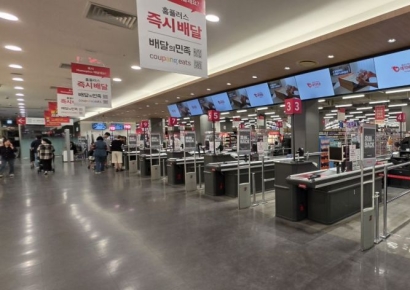 "Korean Beef for Dinner Tonight" - Drawn in by Half-Price Deals, but... "What Else Is There to Buy?" at 'Empty' Homeplus
- [Exclusive] "My paycheck fell short, and I couldn't get a card loan either" More people in their 40s and 50s turn to 'cash advances'; "debt-investing woes" put long-term delinquency among those in their 20s and 30s on red alert
- “I Thought It Was Just Inflammation”: 70 Men Have Died of Breast Cancer in This Country in 5 Years
- How Far Should "Investigative Powers" Be Allowed for Prosecutors on the Future Committee Fact-Finding Team?
- "Come Live With Me on My Farm": Man Sells Everything and Travels 1,930 km, Trusting a Beautiful Woman
“Once Korean investment in the U.S. power sector gains momentum, every manufacturing industry will require power infrastructure, so total demand for power equipment will inevitably increase, which is expected to have a positive effect overall,” said an industry official.
© The Asia Business Daily. All rights reserved. Unauthorized AI training and use prohibited.