K-Defense Sector Smiles Despite Middle East Talks... Postponed Contracts Returning [Weekend Money]
Sequential Resumption of Weapons Procurement Decisions in the Gulf Region
Continued Contract Wins for Hanwha Aerospace and Hanwha Systems
![K-Defense Sector Smiles Despite Middle East Talks... Postponed Contracts Returning [Weekend Money]](http://www.asiae.co.kr/news/img_view.htm?img=2026091713381732503_1789619897.jpg)
Despite moves toward easing tensions in the Middle East, securities analysts have projected that domestic defense companies will continue to benefit. The reasoning is that decisions by Middle Eastern nations to acquire weapons, previously delayed by the war, are likely to resume, and the United States may see medium- to long-term replenishment demand after expending large quantities of interceptor missiles during the conflict.
In its defense industry report, Shinhan Investment Corp. maintained an "overweight" rating on the defense sector. Researcher Dongheon Lee analyzed that even if dialogue resumes between Iran and the United States, it should not be considered a negative factor for the defense sector.
According to foreign media coverage on September 22, the United States and Iran have shown movements toward resuming talks. This appears to be a partial agreement aimed at managing inflationary pressures ahead of the U.S. midterm elections on November 3. However, as passage through the Strait of Hormuz remains virtually blocked, the resumption of dialogue does not immediately translate into the end of the war or the reopening of the strait.
In fact, since Iran declared a full attack on passing ships in June, traffic volume through the Strait of Hormuz has dropped significantly. The number of daily transits averaged 85.5 last year, but fell to just 3.9 per day in September this year. Even during the two-week ceasefire in April, the daily transit volume remained at 7.1 ships, confirming that a ceasefire and the reopening of the strait do not necessarily occur simultaneously, the report pointed out.
The area of conflict has also expanded. Although Saudi Arabia sought to bypass the area by increasing the capacity of its east-west pipeline to 7 million barrels per day through the Red Sea, transit volume through the Bab-el-Mandeb Strait dropped again after the Houthis seized control of Mokha Port and Perim Island on September 11. As a result, the Middle Eastern conflict has expanded from the Gulf region to the Red Sea.
The main variables for the defense industry are not the war itself, but the weapons consumed during the conflict and the future need for replenishment. These changes have been especially pronounced in the U.S. interceptor systems.
According to the report, the U.S. exhausted its PAC-3 interceptor missile inventory rapidly by using $4.2 million PAC-3 missiles to intercept drones worth only $35,000. Bottlenecks in the production process mean it could take several years to restore inventory levels.
The fact that advanced weaponry alone could not end the war is expected to affect future defense demand. There is a possibility that Korean defense companies, which can reliably supply large quantities and offer relatively fast delivery, will see sustained medium- to long-term demand.
In reality, defense contracts in the Middle East that had been postponed due to the conflict are gradually being resumed. In the first half of this year alone, U.S. Foreign Military Sales (FMS) approvals for the Middle East totaled 61.2 trillion won.
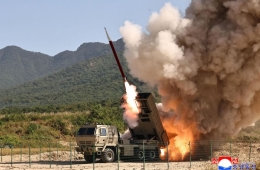
Domestic companies are continuing to sign contracts. On September 10, Hanwha Aerospace signed a contract with Croatia to supply 18 units of the Cheonmu multiple launch rocket system for 641.1 billion won. On September 15, Hanwha Systems also announced that it was negotiating key conditions of an integrated air defense project with the United Arab Emirates (UAE) EDGE Group. The company explained that this marks its entry into a system integration business for the first time in four years since exporting the Cheongung-II (M-SAM).
Shinhan Investment Corp. forecasted that decisions by Gulf states to introduce new weaponry, which had been put on hold due to the war, will resume in sequence. Thus, even though stock prices of defense companies have fallen around 37% from their recent peaks, the trend of contract awards continues, analysts said.
However, risks that domestic defense companies must consider include dampened investor sentiment stemming from an early end to the conflict, and the requirements of interoperability that may arise during the U.S.-led construction of air defense networks.
Hot Picks Today
![The Game Is About to Change: Samsung Electronics and SK hynix Poised for Revaluation as "GPUs Are the Heart, Memory Is the Blood Vessel" [Weekend Money]](https://cwcontent.asiae.co.kr/asiaresize/93/2026091114124525201_1789103564.jpg) The Game Is About to Change: Samsung Electronics and SK hynix Poised for Revaluation as "GPUs Are the Heart, Memory Is the Blood Vessel" [Weekend Money]
The Game Is About to Change: Samsung Electronics and SK hynix Poised for Revaluation as "GPUs Are the Heart, Memory Is the Blood Vessel" [Weekend Money]
- "I’m Withdrawing All My Stocks for the Bank"... Chuseok Spurs Surge in Installment Savings With Up to 13.5% Yields
- "Is It Happening Again?" "This Time Is Different"... Rice Cakes Make a Vibrant Comeback Among MZ Generation [The Way We Live Now]
- "How to Capture the Beneficiary Stocks"... Rising Hopes for Revaluation Amid Confirmed U.S. Investment Projects [Weekend Money]
- "What's With a Joseon Widow's Plump Filler Lips?"... Nana Apologizes: "If It Seemed Awkward, It's My Fault"
Researcher Dongheon Lee commented, "There is no reason to see easing tensions as a negative factor for the defense sector. Decisions on weapons imports by Middle Eastern countries that had been postponed by the war are resuming, and the United States has depleted a significant portion of its interceptor missiles, leading to cumulative medium- to long-term replenishment demand." He added, "The net effect of war ultimately translates into increased weapons requirements."
© The Asia Business Daily. All rights reserved. Unauthorized AI training and use prohibited.