Dependence on Middle Eastern Oil to Be Lowered from 70% to 50%... 20 Million-Barrel Storage Facilities to Be Expanded by 2030
Ministry Finalizes First Resource Security Basic Plan at 6th Resource Security Council
Non-Middle East Oil to Account for Over 50% by 2035
Diversification in Import Routes, Methods, and Oil Grades
Taking the recent Middle East crisis as an opportunity, the government has decided to reduce the country's crude oil dependence on any specific region to below 50% by 2035. The move aims to diversify both the sources and methods of crude oil imports through such measures as expanded support for freight rate differentials and an increase in long-term contracts, thereby lowering the current 70% reliance on Middle Eastern oil. Additionally, to address potential instability in maritime routes—such as a blockade of the Strait of Hormuz—the plan calls for securing crude oil storage facilities with a capacity of 20 million barrels by 2030.
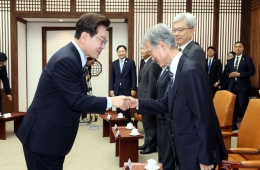
The Ministry of Trade, Industry, and Energy announced on the 23rd that it held the '6th Resources Security Council' at the Korea Trade Insurance Corporation and deliberated and finalized four main agenda items, including the 1st Basic Plan for Resource Security and a revised 5th Oil Stockpiling Plan.

A ministry official stated, "The Middle East war has demonstrated that a resource supply chain concentrated in certain regions and delivery routes can threaten the stability of people's livelihoods and industry in times of crisis. Therefore, the government will stabilize crude oil supply structures by diversifying import routes, methods, and grades to reduce regional dependence on crude oil to below 50%, and will also strengthen both public and private stockpiling capabilities to enhance supply chain resilience."
◆ Crude oil to be less than 50% from non-Middle Eastern sources by 2035, gas dependence on any single country below 30% = The government has set a goal to reduce the share of crude oil imported from a single region to below 50% and gas to under 30% by 2035. As an initial measure, it will pursue diversification of import sources and shipping routes to reduce the current 70% dependence on Middle Eastern crude oil. The scope of support for freight rate differentials—currently around 25%—will be expanded, as well as introducing differentiated support based on diversified oil import performance and streamlined customs administration for diversification. For gas, the government will continue to promote diversification by comprehensively considering supply security, production volumes, and strategic partnerships.
The government will also diversify import methods and infrastructure. For crude oil, spot purchase-based diversification will be expanded to include more long-term contracts, and long-term contract volumes will be secured through cooperation with producer country governments. Overseas development will focus on stable resource imports through limited equity investments and signing import contracts, while domestic resource development projects will proceed with a principle of private sector participation. To further diversify facilities, a new resource security fund will be established to expand long-term support for crude oil diversification. Facility investment support will be provided for refinery upgrades and conversions, while R&D support for advancing refining technology will help build multi-crude processing capabilities.
For key minerals, projects of national strategic importance will be intensively supported, taking into account the vulnerability of supply chains for each mineral and their overall impact on domestic industry. In addition, stockpiles will be expanded for particularly vulnerable minerals, and resource recycling capabilities will be strengthened to enhance supply chain resilience.

◆ Expand crude oil storage facilities by 2030 = The government has also revised the 5th Oil Stockpiling Plan (2026–2030) in light of the uncertain external conditions following the Middle East war, such as increased instability in major maritime transport routes, and the need to strengthen domestic oil storage capacity and connectivity with the petrochemical industry.
Since there have been no new storage facility expansions since the 4th Oil Stockpiling Plan (2014–2025), the government now plans to expand storage facilities with the capacity to secure an additional 20 million barrels of crude oil by 2030. The newly expanded facilities will also be leveraged to increase both national strategic reserves and international joint reserves with oil-producing countries.
Going beyond the traditional focus on fuel oil, the government also plans to secure additional volumes of condensate—a very light liquid hydrocarbon mixture that is produced together with natural gas or separated during gas processing—in order to ensure stable domestic production of naphtha during emergencies, given the close linkage with the petrochemical sector.
◆ Key minerals expanded to include rare earths = The number of key minerals will be increased from the current 38 to 51 by adding 10 types of rare earth elements and 13 types of additional minerals, including fluorspar, phosphorus, and germanium. Key minerals are designated by the minister of the Ministry of Trade, Industry and Energy based on the Act on National Resource Security, and are selected by considering both the supply-demand risks and their economic and industrial significance. Through these additional designations, the government expects to broaden its supply chain management scope and respond promptly to the rising demand from advanced industries such as semiconductors and batteries.
The target amount for key mineral stockpiles has also been set higher. The 1st Key Minerals Stockpiling Plan, reviewed and approved on this day, is the country's first statutory plan established following the enactment of the National Resource Security Act in 2025, and covers stockpiled items, target volumes, and operation methods for the 2026–2035 period. The number of stockpiled items will increase from 24 to 29, reflecting the addition of new key minerals. The stockpile duration for minerals vulnerable to supply chain risks will be managed differentially, ranging from the current 180 days to up to 365 days, based on supply-demand risk for each mineral.
In addition to public stockpiles, the concept of 'total national available inventory,' which encompasses private stockpiles and resource recycling raw materials, will be introduced to comprehensively assess the total inventory available to domestic industry, and to build an effective response system for supply-demand crises.
Hot Picks Today
 "Two Spend 500,000 Won in a Flash, Yet Wait Two Hours?" ... 'Dreamland' Shunned by Kids and Foreign Tourists
- The Era of Getting 200 Million Won After 30 Years Is Over... A Japanese Bank's "Perpetual Department Head" Who Just Clocked In Cries Out
- Spain Hit by Its Worst Tragedy... Lee Kangin, Moreno and Real Madrid Join Soccer World in Mourning
- They Said, “Make It Your Home for Life” - Then Suddenly Kicked 200 Passengers Off... What Happened to the Around-the-World Cruise?
- "130 Rice Bowls Sold Out in a Day"... 'Unfiltered Face' Adds 8 Million Won to Night Market Sales: China's Bungeunwoo
Minister of Trade, Industry, and Energy Kim Jungkwan stated, "The experience of another Middle East war has reaffirmed that resource security is not merely a matter of obtaining cheap raw materials, but a fundamental issue of national survival essential to protecting the lives of our people and supporting industry. We will continue to pursue resource security objectives from a long-term perspective by bringing together the capabilities of related ministries, public institutions, and private firms through the Resource Security Council."
© The Asia Business Daily. All rights reserved. Unauthorized AI training and use prohibited.