While the Youth Employment Budget Increases by 700 Billion Won, Funding for Career-Interrupted Women Is Cut
Employment Equality Budget for 2024 to Be Cut by About 5% at Ministry of Gender Equality and Family
While the government is allocating a substantial budget to youth employment for the coming year, the budget for supporting employment of women whose careers have been interrupted has actually been cut. There are concerns that support for this vulnerable group, often referred to as "career-interrupted women," has been pushed down the policy priority list.
According to the Ministry for Strategy and Budget on September 25, next year’s budget for the Ministry of Gender Equality and Family’s “Employment Equality” program will total 101.9 billion won, which is a 4.8% decrease compared to this year’s 102.1 billion won. Most of the “Employment Equality” budget is accounted for by the “Promotion of Women’s Economic Activities” program, which is being reduced from this year’s 100.2 billion won to 99.9 billion won next year.
This budget is the key funding source for operating “Women’s New Work Centers” (known as “Saeil Centers”), which provide women whose careers have been interrupted due to pregnancy, childbirth, or childcare with comprehensive, life-cycle-based services such as counseling, vocational training, and job placement.

Even With New AI and Future Industry Training, Core Program Funds Are Cut Across the Board
According to the breakdown, core program budgets have all been slashed. The “Educational Training” budget, which is aimed at strengthening the vocational capabilities of career-interrupted women, is set to be reduced by roughly 1.117 billion won (4.4%), from this year’s 25.586 billion won to 24.469 billion won next year. Even though high-added-value courses and new programs in artificial intelligence (AI) talent development and career advancement will be introduced next year to meet demand in new industries, the total budget is still being cut. An official from the Ministry of Gender Equality and Family explained, “We reduced general courses in line with the AI era and reallocated according to priority.”
The budget for the “Saeil Women’s Internship” program, which provides financial support to both businesses hiring interns and the interns themselves, will also decrease by about 1.419 billion won (5.0%), from 28.619 billion won this year to 27.2 billion won next year. The ministry explained, “We recalculated the employment retention incentives paid upon transition to regular employment to reflect current employment realities,” adding, “The number of people to be supported will actually increase from 7,777 this year to 8,500 next year.”

While Youth Employment Support Grows, ‘Second-Chance’ Opportunities for Career-Interrupted Women Take a Backseat
As the nation faces a deepening labor shortage due to ultra-low birth rates and an aging population, bringing skilled women who left the workforce for childcare back into the job market is essential to maintaining South Korea’s potential economic growth rate. However, as the government focuses its financial support on youth employment, opportunities for career-interrupted women to make a comeback have been deprioritized, drawing criticism. The youth employment budget is set to increase significantly, from 2.6 trillion won this year to 3.3 trillion won next year—a hike of 700 billion won.
The Ministry of Gender Equality and Family sought to increase funding for the long-term settlement and employment retention of women in regional areas, but it is understood that these proposals were not reflected in the final review process.
"Beyond Simple Re-Employment: The Urgent Need for More Sophisticated Policies for Quality Jobs"
Experts also argue that it is premature to reduce the budget for career-interrupted women. Eun Jin Oh, Senior Research Fellow at the Korean Women’s Development Institute, commented, “While it is true that the number of married women experiencing career breaks has declined compared to the past due to factors such as lower marriage rates, issues like career barriers and underemployment among women in the labor market have not been resolved.” She stressed, “Rather than simply focusing on helping unemployed women return to the workforce as in the past, now is the time to upgrade the support system so they can use career development to transition into higher-quality jobs.”
Hot Picks Today
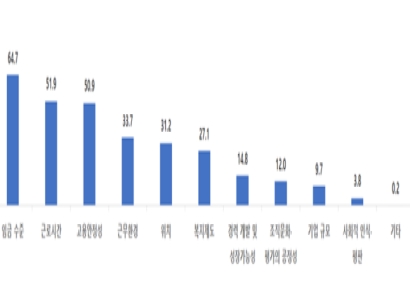 "Please Pay Me at Least 3 Million Won a Month": More Than Half of Young People Today Prioritize "Working Conditions" Over Company Size
- Selling Like Crazy Every Year... 30-Year-Old Hetbahn Takes on a New Challenge: Tastes Better Than "Mom's Home Cooking" [On-Site Report]
- I Thought Only 'Old Guys' Ate It... Young People Are Hooked on This 'Unusual Food' at Risk of Disappearing? [Delicious Stories]
- [Exclusive] Prosecution Service Overhauls Cartel "Leniency" Rules, Guarantees Reporting Firms' Legal Status from the Outset
- Beachgoer Finds 'Plastic' That Turns Out to Be Perfume Ingredient Worth More Than Twice as Much as Gold
© The Asia Business Daily. All rights reserved. Unauthorized AI training and use prohibited.