Automatic Fire Extinguishers to Be Installed in Aging Apartments Without Sprinklers
Automatic Dispersion of Fire Suppressant After Detection... Lower Costs
Seoul Pilot Program This Year, Gradual Nationwide Expansion Next Year
Mandatory Electrical Safety Inspections and Distribution of Smoke Detectors
The government will distribute automatic fire extinguishers to 6.68 million aging apartment units that do not have sprinklers. For 8.97 million households that require smoke detectors, stand-alone smoke alarms will be provided, and starting next year, these will also be included in the mandatory scope for electrical safety inspections.
On the 23rd, the Ministry of the Interior and Safety announced that it would begin follow-up measures such as legal amendments and securing a budget to implement the “Strengthened Fire Safety Management Measures for Aging Housing.”

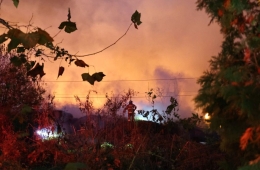
The scene of the fire that occurred in an apartment in Gayang-dong, Gangseo-gu, Seoul last August. Photo by Yonhap News.
View original imageThis initiative supplements previous measures to prevent recurrence of incidents following the apartment fire in Busan in September of last year. In February, a high school student died in Eunma Apartment, and in July, two elementary school students lost their lives in a townhouse in Eunpyeong-gu, Seoul while their guardian was out. Last month, in an apartment in Gayang-dong, Seoul, a resident with a brain lesion disability and her son, who were recipients of basic livelihood benefits, passed away. All these homes were over 30 years old, and none had sprinklers or smoke detectors installed.
First, the government plans to gradually supply automatic fire extinguishers to 6.68 million aging apartment units without sprinklers. These extinguishers can be installed in areas with a high risk of fire and automatically detect fires and release suppression agents even when no one is present. They are easier to install than sprinklers and cost around 25,000–30,000 won per unit.
This year, a pilot program is being conducted for 39,000 households in Seoul, with expansion planned next year using local government funds. From 2028, national funding will help scale up the distribution nationwide. However, expanding sprinkler installations is considered to have limitations. It is estimated that retrofitting sprinklers in old apartments without them would require a budget of 57 trillion won. There are also practical issues, such as inconvenience to residents due to construction inside housing units.
Additionally, from 2027, the government will make electrical safety inspections mandatory for aging apartments without sprinklers and will add outlets and multi-tap power strips—key ignition points for electrical fires—to the list of items inspected. The additional inspection costs will be covered by the Electric Power Industry Infrastructure Fund.
To enable early fire detection, the government will also expand the distribution of stand-alone smoke detectors. Out of 21.72 million households nationwide, 8.97 million require smoke detector installation. Of these, 4.53 million vulnerable households without detectors are already eligible for support from the National Fire Agency, but the remaining 4.44 million have been excluded from support programs.
Hot Picks Today
 "Wow, Have Middle-Aged Men Had This All to Themselves?"... Women in Their 20s and 30s Find Comfort in a Standing Drink
- "Koreans Spend 1 Million Won Each and Come Back"... 'They Said They Were Going for Value for Money,' but Open Their Wallets Wide in Japan
- "Naked Again?" Controversial Actress Crosses a Line... Slammed for Sexualizing 'Child Characters'
- U.S. Eighth Army Commander: "North Korean Troops Gaining Modern Warfare Experience in Ukraine War... Threat to Korean Peninsula Security"
- "A Cream Costing 15,000 Won to Make Sells for 350,000 Won"... The 'Break-Even Point' That Fits Strangely Well
A Ministry of the Interior and Safety official stated, “We will ensure that each follow-up measure—such as legal revisions, pilot programs, and budget allocations—proceeds without delay and will move quickly on tasks that can be implemented immediately. We will review progress quarterly and continue to consult with relevant agencies on any delayed or insufficient actions.”
© The Asia Business Daily. All rights reserved. Unauthorized AI training and use prohibited.