On the Front Lines of Party Negotiations, Junho Chun: "To Build a Problem-Solving National Assembly, Our Way of Working Must Change" [National Assembly Advancement Act 2.0]
"Rising Expectations for Competent Politics and a Working National Assembly"
"Fast-Track Reform Aims to Prevent Prolonged Stalemates on Key Public Welfare Issues"
"A Firm Response Unavoidable if the Filibuster Is Abused"
"The pace of change in the world has become extremely fast, so our systems must be adapted accordingly. In order for the National Assembly to develop problem-solving capabilities that match these changes, the 'way we work' truly needs to change."
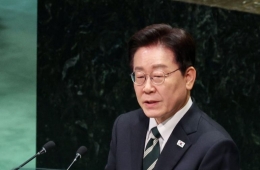
Junho Chun, Senior Deputy Floor Leader of the Democratic Party of Korea, repeatedly emphasized the need for a "productive National Assembly" during an interview with The Asia Business Daily. As someone who has negotiated on the frontlines during behind-the-scenes dealings between the ruling and opposition parties, Chun assessed the National Assembly Advancement Act, enacted in May 2012, by saying, "Times have changed since then."

Junho Chun, Deputy Floor Leader for Operations of the Democratic Party of Korea, is giving an interview with The Asia Business Daily. Photo by Dongju Yoon
View original imageHe believes that, although the physical confrontations that used to characterize the Assembly are now gone, greater expectations have emerged for "competent politics that solve problems" and a "National Assembly that delivers results," which now demand even greater speed and capability in legislative work.
Chun said, "It is not possible to apply only the efficiency of corporations to politics, but if we simply focus on past procedures and agreements, people will be frustrated and wonder, 'What is the National Assembly actually doing?'" He continued, "I believe we now need a system capable of solving real problems while also upholding democratic order, procedures, consultations, and the spirit of governance." He added, "Even now, I don't consider the system to be complete. Rather, we should see it as a continuous process where our systems and practices continue to evolve in line with the demands of the times and changing circumstances."
Previously, on August 20, the Democratic Party passed a revision of the National Assembly Act at a plenary session, shortening the deliberation period for fast-track bills from the existing 330 days to 90 days. Regarding this amendment, which reforms the National Assembly Advancement Act, Chun explained, "By focusing our review efforts over three months, we ensure ample time for debate and proposed revisions, but this also prevents crucial public welfare bills from remaining in limbo without any conclusion." Chun continued, "If the main opposition's standing committee cannot reach a conclusion within a certain period, or if it appears there is little possibility of a conclusion from the outset, then a choice must be made." He further stated, "If there are issues where the direction is clear and urgency is critical, we must boldly apply the fast-track system to make decisions through swift, concentrated deliberation—this effort to improve efficiency needs to go hand in hand."
The Democratic Party has also expressed a desire to revise the unlimited debate (filibuster) system in conjunction with the fast-track process. In the 22nd National Assembly alone, there have been 34 instances of filibustering—the most ever. Chun said, "Up until now, we have respected the voices of minority parties calling for the maintenance of spaces where the opposition can express their views, but if the filibuster continues to be abused to block or distort government affairs, we will have no choice but to make a decision." In response, the Democratic Party has proposed measures such as requiring at least one fifth of all members to remain present in the chamber for a filibuster to be sustained.

Junho Chun, Senior Deputy Floor Leader of the Democratic Party of Korea, is being interviewed by The Asia Business Daily. Photo by Dongju Yoon
View original imageThe following is a Q&A session.
-Is there anything you hope to see from the opposition during the regular session of the National Assembly?
▲I believe efforts should be made not just to raise issues but also to present alternative solutions. Unconditional opposition is not appropriate. When alternatives are brought forward, discussions can lead to compromise and agreement. Ultimately, everyone is judged by the results of national governance, so blocking the process itself is not the right approach. Currently, the People Power Party holds chairmanships of several standing committees and operates legislative subcommittees, and it sometimes seems like they are causing unnecessary hurdles. Raising issues is fine, but they should also propose alternatives and, when necessary, work toward compromise and deal-making so that policy implementation can proceed smoothly.
-As Senior Deputy Floor Leader, what do you believe is the main reason negotiations between the ruling and opposition parties have become more difficult?
▲So far, the People Power Party has often boycotted meetings, walked out just before votes, or continuously filed for filibusters on dozens of bills in succession. This is not a negotiating tactic but rather an abandonment of negotiations altogether. The People Power Party is not upholding the original intent of the Advancement Act, but is in fact abusing its guaranteed right to debate, effectively holding legislation hostage.
-There is criticism that the Agenda Coordination Committee is now used mostly as a middle step in processing bills. What improvements do you think are necessary to restore its original purpose?
▲The original purpose of the Agenda Coordination Committee was to allow up to 90 days for deep deliberation and the creation of compromise proposals on bills where the ruling and opposition parties have significant disagreements. Since bills typically pass subcommittees through bipartisan agreement, the committee is intended to prevent bills from stalling indefinitely due to lack of consensus in the subcommittee and instead allow their passage through a committee vote. In reality, however, substantive clause-by-clause negotiations or discussions on alternative proposals often do not take place, and rather, the committee is simply used to bypass the subcommittee stage. Recently, neither side has found the Agenda Coordination Committee system to be effective.
-Are there any Assembly customs in legislative operations that used to be observed but are now being neglected?
▲It is against established custom for bills that have passed standing committee and legislative judiciary reviews to then be subject to further negotiation between the parties regarding whether to introduce them to the plenary session. Even bills that have passed committees without any divisions between the parties routinely become bargaining chips. If a bill has already passed through thorough review in the committee process—where necessity, costs, side effects, and feasibility are discussed—and there is no disagreement, then the results of that examination should be respected.
-What do you think is the minimum rule for floor operations that should be upheld irrespective of which side holds the majority?
▲It is necessary for both sides to engage in ongoing, everyday conversations. Recognizing that there are differences in viewpoints is important; at times, unexpected points of agreement may be discovered during talks, opening the door for productive negotiation. Occasionally, the passage of time itself resolves issues. However, if dialogue and communication break down, everything comes to a halt.
-Up to what point do you think consultation is appropriate before moving to a majority vote?
▲Sufficient consultation should not be judged by whether the People Power Party agrees, but by whether there was a genuine opportunity for consultation. As seen during the negotiations over the formation of the 22nd National Assembly in the latter half, if parties refuse to come to the table and instead repeatedly turn to outside tactics, the very conditions for an agreement do not exist. What is needed for compromise is to follow the basics: attend meetings, negotiate over individual clauses, present alternatives if objecting, and stick to agreed-upon schedules. Only after such meaningful consultation should majority decisions be applied.
Hot Picks Today
!["Just by Parking Money at the Bank? Unusually High Parking Account Rates Lately [Practical Asset Management]"](https://cwcontent.asiae.co.kr/asiaresize/93/2026092308565839400_1790121417.png) "Just by Parking Money at the Bank? Unusually High Parking Account Rates Lately [Practical Asset Management]"
"Just by Parking Money at the Bank? Unusually High Parking Account Rates Lately [Practical Asset Management]"
- "I Worked Hard Throughout Chuseok"...Why Office Workers Are Quitting in Droves Right After the Holidays
- "Shock at the Gym"... 'Ultimate Villain' Applies Strong Adhesive to Apartment Community Equipment
- "Quit Job to Start Life in Canada, Now Forced to Return Home"… Language School Closure Leaves Korean Students Stranded
- Crowds Flock to See Shark... Convenience Store Sales Soar 800% Amid Surging Demand

Joonho Chun, Senior Deputy Floor Leader of the Democratic Party of Korea, is being interviewed by The Asia Business Daily. Photo by Dongju Yoon
View original image© The Asia Business Daily. All rights reserved. Unauthorized AI training and use prohibited.