800 Trillion Won Honam Semiconductor Cluster Accelerates: Construction of Two Fabs to Begin in 2028
At Least Four Samsung and SK hynix Fabs to Be Built on 2.5 Million Pyeong at the Relocated Military Airport Site
630,000 Pyeong to Be Developed First Starting Next Year; Transmission Line Construction to Begin June 2027
3.1 GW of Power and 150,000 Tons of Water Per Day to Be Supplied by End of 2028
Jeonnam-Gwangju Aims for First Mass Production in June 2030; Settlement and Talent Strategies in Progress
An 800 trillion won Honam Semiconductor Cluster, which will be established on the relocated site of the Gwangju military airport, is set to commence full-scale land development beginning next year. Jeonnam-Gwangju Integrated Special City is expediting the construction of essential infrastructure—such as power and water supply systems—with the goal of starting construction of a memory semiconductor plant in 2028 and launching its first mass production in June 2030.
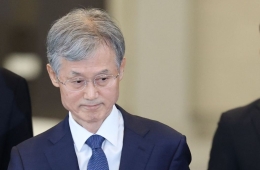
On the 22nd, Kim Gihong, Head of the Semiconductor Industry Support Division at Gwangju Special City, met with reporters at the Gwangju Government Complex to explain the progress and future plans for the Honam Semiconductor Cluster project.

On the 22nd, city officials explained the progress and future plans of the project during a press briefing for the Honam Semiconductor Cluster held at the Gwangju City Hall of the Jeonnam-Gwangju Integrated Special City. Courtesy of the reader
View original imageThe Honam Semiconductor Cluster project aims to build at least four memory fabs for Samsung Electronics and SK hynix on approximately 2.5 million pyeong of land at the relocated Gwangju military airport site. The total investment is estimated to be about 800 trillion won.
The city first plans to develop about 630,000 pyeong, including the site designated for the ammunition depot. Since finalizing the military airport site in July, the area has been designated as a candidate for a national industrial complex, and Korea Land and Housing Corporation (LH) has been selected as the prospective developer.
The city is also requesting the government create a new special provision that would allow it to begin land development work within the restricted development zone so that preliminary development can start as early as 2027. The objective is to align with the 2028 construction schedule for two memory fabs.
Efforts to establish the power supply network needed for semiconductor manufacturing are underway in parallel. In July, a working-level task force was formed, and by August, agreements on power supply were reached with the Ministry of Climate, Energy and Environment, Korea Electric Power Corporation, Samsung Electronics, and SK hynix. This month, the exemption from the preliminary feasibility study for the relevant power grid project was finalized.
The city plans to break ground on the transmission line in June 2027, supplying 3.1 GW in the first phase by the end of 2028. The total supply capacity will be scaled up to 6.3 GW in line with fab expansion.
Preparation is also underway for water supply. Last month, an exemption from the preliminary feasibility study was secured for the related project, and on the 18th of this month, a mutual cooperation body was formed for the expansion of Dongbok Dam. Consultations are ongoing to hold a residents' briefing next month.
The city aims to supply 150,000 tons of water per day by the end of 2028, and to increase the supply to 1.06 million tons per day thereafter.
Plans are also being made to prepare for the influx of a large construction and manufacturing workforce. A ‘Semiconductor City Settlement Team’ will be established to address, in the short term, housing issues for construction workers, and to develop mid- to long-term solutions for improving settlement conditions—including transportation, education, and daily living infrastructure.
Workforce development initiatives will be carried out in stages, ranging from specialized personnel for research and design to hands-on production site workers. The focus is on creating a structure that fosters local talent and enables seamless career placement and settlement within the region.
Hot Picks Today
![[Exclusive] "Oh, Oh! Why Is the Seatback Like This?" Hyundai Ioniq 9 Recalled in Korea: 15,000 Units Due to Power Seat Entrapment Risk](https://cwcontent.asiae.co.kr/asiaresize/93/2026080408453468358_1785800734.jpg) [Exclusive] "Oh, Oh! Why Is the Seatback Like This?" Hyundai Ioniq 9 Recalled in Korea: 15,000 Units Due to Power Seat Entrapment Risk
[Exclusive] "Oh, Oh! Why Is the Seatback Like This?" Hyundai Ioniq 9 Recalled in Korea: 15,000 Units Due to Power Seat Entrapment Risk
- "Quit Job to Start Life in Canada, Now Forced to Return Home"… Language School Closure Leaves Korean Students Stranded
- "Chuseok Ritual Table Cost at 309,380 Won, Down 1.2% in 2 Weeks... Apples and Pears Up Over 10%"
- "Had All My Tickets Booked for Chuseok"... Measles Outbreak and Typhoon Cause Chaos, but Japan Remains Top Choice
- "After Spending 170,000 Won on Hanwoo, This Is What I Got": Why Webtoon Artist Kim Gyusam Decided to Give Cash Instead
Kim Gihong stated, “We will move up the timeline for establishing key infrastructure as much as possible to ensure first mass production by June 2030,” adding, “We will also make proactive use of integrated financial support resources.”
© The Asia Business Daily. All rights reserved. Unauthorized AI training and use prohibited.