"Care Is Also a Business": Realistic Advice from Japan's SOMPO, Pioneer in an Aged Society [Finance Embracing Seniors]③
Interview with Kazuhiro Saito, SOMPO Care Korean Project Leader
Is "Old-Old Care" Sustainable? Structural Limitations of Family-Based Care
"If Seniors Do Less for Themselves, Frailty Follows Quickly... 'Support for Independent Living' Is
"Care should not be viewed solely as a matter of social responsibility but must be run as a sustainable business. For companies to respond to rapid population aging, they must be able to continue their business without incurring losses."

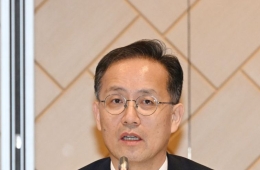
Kazuhiro Saito, Korea Project Leader of Overseas Business Office, Wellbeing Division at SOMPO Care. SOMPO Care
View original imageKazuhiro Saito, Korea Project Leader of the Overseas Business Office at the Wellbeing Division of SOMPO Care, expressed these thoughts in a recent interview with The Asia Business Daily, addressing changes needed for Korea to expand its care infrastructure in preparation for a super-aged society.
Japan transitioned into a super-aged society before Korea, which led to changes in the roles of financial and insurance companies. In particular, insurance companies have broadened their business domains from merely disbursing insurance payouts to offering preventive services that help customers maintain their health for longer, as well as care and daily living support.
SOMPO Group made its full-fledged entry into the long-term care business in 2015. The company now operates approximately 29,000 senior living units and has built a system that supports everything from disease prevention to end-of-life care. At the group level, its well-being business now handles health, care, and retirement funds as a main pillar alongside its non-life insurance business.
Saito emphasized that Korea needs changes beyond merely increasing the number of care facilities, drawing on Japan’s prior experiences. He said, "We must shift our perception of care from a form of volunteer service to a business," and noted, "It is important to nurture talent that can strike a balance between economic profitability and the moral responsibility inherent in elder care."
From After-the-Fact Care to 'Prevention and Asset Management'... Evolving Needs among Japan's Elderly
Saito noted that the needs of Japan’s elderly have shifted significantly over the past 10–20 years. Previously, insurance payouts or physical care would be provided when someone required institutional care. Now, the focus has shifted to prevention and asset management in order to maintain independence for as long as possible. "In Japan, the gap between average lifespan and healthy lifespan is around 8.7 years for men and 12.1 years for women," he explained. "Many people want to live in good health for as long as possible."
He also described how Japan's public long-term care insurance system—similar to Korea’s National Long-term Care Insurance—has evolved. "Kaigo" refers to daily care provided to the elderly or the sick. He said, "Since the introduction of the long-term care insurance system, the focus has shifted from 'provision-type care benefits' to 'prevention-type care benefits,' and the role of local governments in managing funding and benefits has grown."
Changes in family structure have also influenced insurance and care services. As both nuclear families and population aging progress in Japan, the problem of "old-to-old care"—older adults caring for other elderly people—has become more serious. Saito stated, "It has become structurally difficult to rely solely on the family for care and asset management. Merely providing insurance payouts or facilities and services as care funding is no longer enough; comprehensive solutions are now required."
"Insurance Payouts Are Not Enough": Why SOMPO Entered Direct Care
!["Care Is Also a Business": Realistic Advice from Japan's SOMPO, Pioneer in an Aged Society [Finance Embracing Seniors]③](http://www.asiae.co.kr/news/img_view.htm?img=2026092210204637852_1790040045.jpg)
Saito explained that the decision for an insurance company to operate its own care facilities and home-care services—rather than just selling care-related insurance or partnering with other providers—came from the realization that after-the-fact monetary compensation alone cannot fundamentally resolve the insecurities of a super-aged society. "We decided to secure a foundation for direct service provision that can directly engage with people’s daily lives in their later years," he added.
In practice, SOMPO has built a system that supports elderly people at every stage, from disease prevention to need for care, all the way to end-of-life. Saito stressed, "One lesson learned from this process is that simply scaling up does not guarantee the sustainability of the business."
The biggest stumbling block was a "shortage of personnel." He noted that, in Japan, an additional 570,000 care workers will be needed by 2040 compared to 2022. "As we faced a much more serious workforce shortage than initially expected, we became acutely aware of the necessity to move away from a labor-dependent approach and restructure the system by using technology and on-site data to improve productivity," he explained. He also emphasized, "We are striving to create more capacity through higher work efficiency on the ground, which in turn leads to better working conditions and enhances the social status of our staff."
In Japan, supporting not just the elderly but their caregiving children is recognized as an important issue. Saito noted, "Family support has evolved from a personal problem to one that affects the survival of companies and the nation." According to the Ministry of Economy, Trade and Industry, the number of "business carers"—people who work while providing care to family—is expected to reach 3.18 million by 2030. Related economic losses from declines in productivity and job changes are estimated at about 9.1 trillion yen (approximately 78.4 trillion won).
In fact, approximately 106,000 people in Japan leave their jobs each year to care for family members. Many of these are in their 40s and 50s, holding key positions within companies, which increases the corporate burden. Saito explained, "We provide 'work–care balance support' services for companies and offer dedicated counseling services for families as a key area to help protect people's career continuity."
The Challenge of Combining Finance and Care: Regulation and Compliance

Saito pointed out that when Japanese financial groups expand into the care and senior business, they must address multiple regulatory and compliance issues—not only public long-term care insurance, but also personal data protection and financial consumer protection. Regarding the public care insurance system, he said, "The profit base of care businesses is determined by the publicly set care fees. Strict separation rules established by the Ministry of Health, Labour and Welfare apply to the simultaneous provision of public benefits and out-of-pocket services, making it difficult to flexibly design prices and services."
There are also issues around personal data. The care field involves handling sensitive data such as physical and cognitive function. Group affiliates within the same financial group cannot freely use such information. Saito pointed out, "Sensitive data, such as physical functions identified onsite, cannot be directly used for insurance or financial sales and underwriting within the group. Stringent consent procedures and a 'firewall' governance structure for information separation are required."
Protecting financial consumers is also crucial. When recommending financial products to elderly customers with declining cognitive function, strict procedures according to regulatory guidelines must be followed. Saito stressed, "Procedures such as having relatives participate or conducting multiple interviews are required. A high standard of compliance is essential to prevent conflicts of interest or suspicions that trust built during care is being used for financial product sales."
"Care Should Be a Profitable Business"
Saito suggested that Korea, as it expands its senior business sector, should first shift from a "service-providing care" mindset to one centered on "empowering independence." He emphasized that this is "the most important issue," adding, "A care approach where everything is done for the elderly requires an enormous workforce to support each individual." Amid low birth rates and population aging, it is simply not possible to drastically increase the care workforce, making the service-providing care model unsustainable. "When people lose the ability to do things on their own, their health can deteriorate rapidly. It is important to reconsider care so that people take responsibility for what they can do and handle those themselves," he explained.
He also spoke about shifting the focus from "family-centered" to "person-centered" care. Saito said, "When older adults must do things because their families demand it, even if they themselves do not want to, the workload onsite can increase significantly. Instead of catering to family expectations, it is crucial to provide services that truly focus on the individual receiving care." He added, "Care must be provided first and foremost for the individual's own happiness."
In particular, Saito pointed out that Korea’s rate of population aging is about 2.5 times faster than Japan’s. "At this pace, a rapid expansion of care infrastructure to accommodate the elderly is needed, making participation from private companies and large business groups essential," he said.
However, he also cautioned that if the business isn’t profitable, ongoing investment cannot be expected: "Private-for-profit companies will not participate, or at least will not build a sufficiently large supply base, if they are unable to turn a profit. Systems and environments that guarantee at least a sound, break-even profit are needed to keep up with the pace of population aging," he remarked.
"We Need People Who Understand Both Economics and Ethics"

Kazhiro Saito, Project Leader of Sompo Care Korea, emphasized, "Care services must be provided primarily for the individual's happy life." The image contains the phrase, "I want to support daily lives lived authentically." Sompo Care
View original imageSaito emphasized that when large enterprises and financial institutions move into the senior and care business, "a sense of balance between economics and ethics" is vital. It is difficult to run such a business successfully by focusing solely on one aspect—either "economic profitability" for sustainability or "social value" from caring for seniors. "We urgently need to foster talent who can maintain a balance between these two elements," he said. "Care business is very unique. It is best to understand that it is completely different from general business operations."
He added that not all issues can be solved by large companies alone—SMEs, sole proprietors, and social welfare corporations each have roles to play. "When each business operator understands their own role and cooperates at the local level, a welfare society acquires real meaning. Although competition is of course necessary, now is not the time to prioritize competition alone; cooperation is just as important," he said.
Hot Picks Today
 "Jealous of Koreans" - Now a Must-Do on Every Trip... The Place Where Foreigners Spent KRW 229.8 Billion
- [Why&Next] Why NAVER Is Doubling Down on Membership with 'Nepe Festa'
- "I thought getting into a big company was the goal"... The 'position' only 1 in 121 employees reaches
- "'No! Dad, Run!'... Father Moved by 5-Year-Old Son Who Shielded Him from Ghost at Korean Folk Village"
- "Please Let Me Go Home"... Customers Trapped in Department Store Parking Lot for 5 Hours Vent Their Anger
Ultimately, he concluded that the most urgent action is not to expand premium senior services for the wealthy, but to adequately build a care infrastructure for ordinary people. "What we must do now is to ensure that national crises do not arise because of the cost of care, by providing care infrastructure for the ordinary public, not the affluent minority," he stressed. "By ‘ordinary people’ I mean the middle class and everyday citizens, not high-income groups." He added, "I hope that various business types can work together to overcome the country's low birth rate and aging population, which are truly national challenges."
© The Asia Business Daily. All rights reserved. Unauthorized AI training and use prohibited.


!["Please, Just Take Them Off" - They Made It All the Way to Bed... Then Fecal Bacteria Struck [Deep Scroll]](https://cwcontent.asiae.co.kr/asiaresize/307/2026101610053063338_1792112730.png)