Will KOSDAQ Surpass KOSPI After Chuseok? "Three Key Conditions Will Decide" [Weekend Money]
KOSPI Typically Dominates at Year-End
Focus on 'Large-Cap Void, Theme Formation, and Supply-Demand Reversal'
Semiconductor Equipment, Robotics, and Policy Support Could Serve as Catalysts
After the Chuseok holiday and through the end of the year, the domestic stock market has structurally favored large-cap stocks centered on the KOSPI. However, some analyses suggest that under certain conditions, the KOSDAQ can stage a significant rally, vastly outperforming the KOSPI.

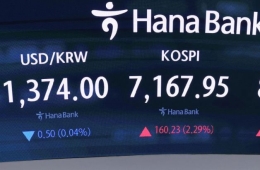
On the 22nd, the KOSPI, KOSDAQ, and KRW/USD exchange rate are displayed on the status board at the Hana Bank dealing room in Jung-gu, Seoul. Photo by Yonhap News
View original imageAccording to SK Securities, in years when the KOSDAQ's returns clearly outperformed after Chuseok until year-end—specifically in 2005 (by 13 percentage points), 2011 (5.5 percentage points), and 2017 (19.3 percentage points)—three common conditions were in play: a void among large-cap stocks, the emergence of a clearly defined leading market capitalization theme, and a reversal in supply and demand dynamics.
In 2005, foreigners' net selling of large-cap stocks and the stem cell bio sector were influential factors; in 2011, earnings expectations for shipbuilding and chemicals were downgraded due to the European financial crisis while the mobile gaming and entertainment sectors gained momentum; and in 2017, after the semiconductor super cycle, profit-taking and a strong rally among bio leaders such as the Celltrion Group stocks and SillaJen occurred. In all cases, a pronounced upward wave was completed when significant net buying by foreign and institutional investors aligned.
Typically, the year-end market environment is structurally more advantageous for large-cap KOSPI stocks than for the KOSDAQ. This is because, at the end of December, a surge of individual investors sell shares to avoid major shareholder capital gains taxes, putting downward pressure on KOSDAQ supply and demand. Additionally, due to incentives for year-end dividends and window dressing activities by institutions (where fund managers adjust portfolios for performance evaluations at year-end), major investors tend to focus their attention on high-dividend large-cap stocks and KOSPI-listed companies. As a result, the seasonal advantage for the KOSDAQ has tended to be more pronounced in January of the following year rather than at year-end.
However, SK Securities assessed that while the conditions for KOSDAQ to surpass the KOSPI are not fully in place as of 2026, the possibility still remains. Since July, debates have continued over whether semiconductors have peaked, making third-quarter earnings announcements a potential inflection point for large-cap stock trends. Additionally, while momentum in the leading market cap bio sector is weak, foreign investors are forming positions mainly in semiconductor equipment and robotics themes.
Hot Picks Today
 "Auntie, When Will Dried Shredded Squid Return as a Side Dish?"...Once Vanished from Restaurants, Now Making a Comeback
- "Is It Right to Pay This Much on a Fixed Salary?"... Seoul Ranks 1st or 2nd Globally for Smartphone Fees
- Monthly Salary Soars 3.7 Times from 8.25 Million Won to 30.59 Million Won... 86 Fair Trade Commission Retirees Join Law Firms Over 10 Years
- Jang Donghyuk Criticizes 'Landmine Incident'... "Deliberate Investigation Delay Grounds for Presidential Impeachment"
- "Is the Dermatology Clinic Near My Home Affected Too?... Where Have All the Resigned Residents Gone?"
Nah Seung-Doo, a research analyst at SK Securities, stated, "Given that government policies to activate the KOSDAQ could create an environment for institutional net buying, we cannot afford to take our eyes off the market." He added, "It will be important to pay close attention to major companies' earnings and policy trends following Chuseok."
© The Asia Business Daily. All rights reserved. Unauthorized AI training and use prohibited.