"Why Live in Seoul When You Can Pay Half Here?" 30 Minutes to Gangnam... Private Sales Begin in Gyeyang New Town
- Public Sale Prices for 84㎡ Units in Phase 3 New Towns Surpass 700 Million Won
Still Retaining a Safe Margin Compared to Neighboring Seoul
- S-BRT Network Connecting Gimpo Airport, Gyeyang, and Daejang Set for Launch
Private Development Appl

Due to rising construction costs and raw material prices, the final sale prices for Phase 3 New Town main subscription units have increased by more than 100 million won compared to the estimated sale prices presented during the preliminary subscription phase. Nevertheless, compared to the ever-surging apartment prices in Seoul, they still maintain a 'half price' competitiveness, which continues to attract genuine homebuyers looking to secure their own homes to Incheon Gyeyang Technovalley (Gyeyang New Town), located adjacent to the southwestern area of Seoul.
According to recent information from the Housing and Urban Guarantee Corporation (HUG) and Korea Land & Housing Corporation (LH), the confirmed sale price for the main subscription of a 84㎡ public sale unit in Incheon Gyeyang Block A6 has been set at around 700 million to 720 million won. This translates to a sale price of approximately 21 million won per 3.3㎡ based on supply area. Compared to the estimated sale price of 527 million won during the preliminary subscription phase in 2021, this is an increase of about 178 million won (33.8%).
Likewise, the sale prices for main subscription units of 84㎡ in other major Phase 3 New Towns, such as Namyangju Wangsuk and Goyang Changneung, have also risen to around 700 million won, clearly reflecting the increased construction costs in the sale prices.
As public housing complexes are also seeing a sharp rise in sale prices, the burden on applicants is increasing. However, the prevailing view in the market is that "these remain an attractive alternative compared to the high entry barrier for purchasing a home in Seoul."
The reason Gyeyang New Town continues to be compared in this context, even with the increased sale price burden, is not only its adjacency to Seoul, but also the fact that the actual supply schedule is becoming concrete.
According to Korea Real Estate Board statistics, apartment sale prices in Seoul have been on the rise for over 80 consecutive weeks, with the upward trend spreading even to peripheral areas. In particular, the average sale price of apartments in Gangseo-gu, a district directly adjoining Gyeyang New Town, is approximately 48 million won per 3.3㎡. Calculated for an 84㎡ area, apartment prices in Gangseo-gu, Seoul, are formed in the range of 1.2 to 1.5 billion won. In comparison, the sale prices in Gyeyang New Town, being in the 700 million won range, are only about half of those in neighboring Seoul districts.
In addition, robust transportation networks and large-scale development incentives that offer quick access to central Seoul support Gyeyang New Town's residential value. Physically adjacent to Gangseo-gu, Seoul, Gyeyang New Town allows residents to easily share living zones. By using Bakchon Station on Incheon Subway Line 1, it is only three stops to Gimpo Airport Station, where five railway lines (lines 5 and 9, Airport Railroad, Seohae Line, Gimpo Gold Line) intersect. This enables access to Magok District in about 20 minutes and Yeouido in about 30 minutes.
Further, plans for the expansion of mid- to long-term rail networks are materializing. The 'GTX-D Y-shaped Line', expected to drastically improve the western area of the Seoul metropolitan region, has been confirmed, making it possible to reach the Gangnam area (Samsung Station) from Gyeyang and Bucheon Daejang in about 30 minutes. Additionally, the extension of the 'Daejang-Hongdae Line' (Bucheon Daejang~Hongdae Entrance), targeted to open by 2031, is boosting expectations for its inclusion in the 5th National Rail Network Construction Plan as LH resumes its economic feasibility study and local governments compete to attract the project. In the early phase of move-in, the S-BRT (Super Bus Rapid Transit), which connects Gimpo Airport Station and Bucheon Daejang, is scheduled to be operational first to minimize commuting transportation gaps.
Hot Picks Today
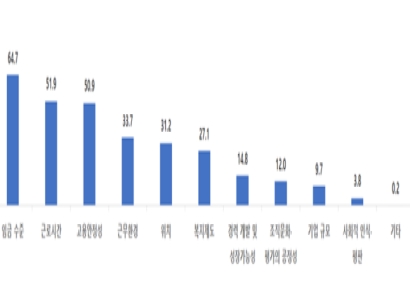 "Please Pay Me at Least 3 Million Won a Month": More Than Half of Young People Today Prioritize "Working Conditions" Over Company Size
- Selling Like Crazy Every Year... 30-Year-Old Hetbahn Takes on a New Challenge: Tastes Better Than "Mom's Home Cooking" [On-Site Report]
- "Americans Would Be Amazed If They Came": Wide-Eyed at a Sight They've Never Seen Before... Foreigners Also Fall for K-Baseball [K-Holic]
- "Hey, Lady, Teach Your Kids to Behave!" ... 300,000 Won in Cash and a Bodily Injury Claim Demanded Over Child's Door Ding
- Beachgoer Finds 'Plastic' That Turns Out to Be Perfume Ingredient Worth More Than Twice as Much as Gold
Real estate experts noted, "Considering the new-supply shortage in Seoul and the ongoing rise in labor and building costs, the 700 million won range sale price for public housing in the Seoul metropolitan area still offers a relative safety margin." They added, "Notably, in Gyeyang, the first occupancy among Phase 3 New Towns (A2 and A3 blocks) will begin in December, with private developments such as 'Bando UBORA' and 'Daebang Elium' following sequentially from October. This means that robust demand among genuine homebuyers in their 20s to 40s seeking proximity to work is unlikely to wane anytime soon."
© The Asia Business Daily. All rights reserved. Unauthorized AI training and use prohibited.