Government Decides on First U.S. Investment Project... Two Follow-Up Projects Under Review
Government Confidentially Reports Three Projects to National Assembly
Decision to Proceed with One; Two Still Under Review
Texas Gas Power Plant Favored for First Project
Up to Eight Nuclear Reactors and Alaska LNG as Follow-Up Candidates

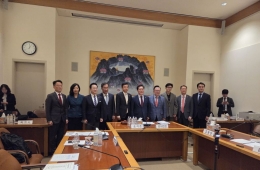
Kim Jungkwan, Minister of Trade, Industry and Energy, attended the plenary session of the Industry, Trade, Energy and SMEs Committee held at the National Assembly on the 22nd, delivering a speech. On the day, Minister Kim reported confidentially on the progress and detailed content of the investment negotiations with the United States. 2026.09.22 Photo by Dongju Yoon
View original imageThe government has decided to move forward with the first project in a planned strategic investment of 200 billion dollars in the United States. In addition, the possibility of follow-up investments is being reviewed for two other projects that have attracted interest from both Korea and the US. The leading candidate for the first project is the Encinal Gas Combined Cycle Power Plant in Texas, while the large-scale nuclear power plant construction within the United States and the Alaska liquefied natural gas (LNG) development are being discussed as potential subsequent projects. Since the two countries agreed on the basic framework for strategic investment in the US last year, the 200 billion dollar investment plan is now advancing to the actual project execution phase.
On September 22, Kim Jungkwan, Minister of Trade, Industry and Energy, attended the plenary meeting of the Industry, Trade, Energy and SMEs Committee and the Finance and Economy Planning Committee at the National Assembly, where he confidentially reported on the process and key details of investment negotiations with the US. There are a total of three US investment projects included in the report to the National Assembly on this day. Of these, one project received government approval to proceed after passing through the Project Management Committee chaired by the Minister of Trade, Industry and Energy and the Operations Committee chaired by the Minister of Finance and Economy. The other two are still under consideration, with no final investment decisions yet made.
The government adopted “commercial rationality” as the core principle in the project selection process. In his opening remarks to the Industry, Trade, Energy and SMEs Committee on this day, Minister Kim said, “We have been actively identifying business opportunities that benefit us and negotiating with the US side, and we have closely examined the projects proposed by the US side using commercial rationality as the consistent principle.” He further emphasized that the US investment “needed to be approached from the perspective of the national interest, not merely as a matter of funding input and recovery, but as an opportunity for Korean companies to expand into the US market and further establish a foothold in the global market.”
Encinal Project Leading as First Investment... Kicking Off 200 Billion Dollar Execution
The project that the government has decided to pursue first is most likely the Encinal Gas Combined Cycle Power Plant project in Texas. Reportedly amounting to approximately 22.3 billion dollars, this project involves constructing power generation facilities of over 6GW to supply electricity to artificial intelligence (AI) data centers, semiconductor factories, and other key customers.
The Encinal project has been a top consideration as the first strategic investment in the US. It is a long-term cash flow generation project, where a power plant will be built in Texas—a region with high anticipated electricity demand—and electricity sold to customers such as data centers.
The key to the project is its structure for reliable investment recovery. Long-term power purchase agreements (PPAs) will be signed with off-takers to ensure cash flow, enabling recovery of invested principal and interest based on these contracts. The level of Korean companies’ participation in engineering, procurement, construction (EPC), and equipment supply will be a critical factor in determining the actual benefits of this investment.
Especially since the Encinal project will be the very first case under the 200 billion dollar strategic investment plan, it may serve as a reference for subsequent projects. The investment recovery and profit-sharing structure set in this initial project could establish precedence for future ones.
Nuclear Power and Alaska LNG as Follow-ups... No Investment Decision Yet
The other two projects included in the confidential report to the National Assembly have not yet been selected for investment. Although the government has not officially identified the projects, construction of large-scale nuclear power plants in the US and the Alaska LNG development—both previously discussed by Korea and the US—are considered strong candidates.
The nuclear power project involves constructing up to eight large nuclear power plants in the US, with an estimated total scale of about 120 billion dollars. Korea has been working to export its APR1400 nuclear reactors to the US, while also promoting the participation of domestic companies in Westinghouse Electric Company (WEC)'s AP1000 reactor construction. Investment in WEC shares is being discussed in connection with the nuclear project as well.
For the nuclear power project, not only investment recovery but also the extent to which Korea's nuclear power industry participates is crucial. Since Korean capital will be invested in US nuclear power construction, the scale of APR1400 exports to the US and equipment and construction contracts for domestic companies in the AP1000 project will be decisive in determining the real investment outcomes.
Project feasibility assessment is also essential for the Alaska LNG project. This is a large-scale initiative to transport natural gas produced in northern Alaska via pipelines to southern liquefaction facilities for export, with the US inviting participation from Korea. However, considering the immense initial costs, the length of the construction period, and the competitiveness of LNG pricing, it will be necessary to determine if stable recovery of invested capital and interest is possible.
Since Minister Kim made it clear on this day that “no concrete decision has yet been made to pursue the two follow-up projects,” it is expected that actual investment size and timing will be decided after further review of investment terms, the scope of participation by Korean companies, and profitability.
National Assembly: “Report Does Not Mean Approval”... Commercial Rationality Vigorously Scrutinized
Although the government has decided to move forward with the first project, both the ruling and opposition parties in the National Assembly voiced that commercial rationality must be thoroughly reviewed before any project actually proceeds.
The Finance and Economy Planning Committee, in particular, pointed out that submitting this report is not sufficient to verify the commercial rationality of each individual project. Bae Junyoung, secretary general for the People Power Party, stated, “We firmly reject the government and ruling party’s intention to treat today’s report as a mere formality,” warning that “today’s report does not mean that all the projects described have commercial rationality.”
Bae further emphasized, “There is no one in the world who can assess the commercial rationality of a 200 billion dollar US investment plan based on just two hours of Q&A today. Moreover, it would be wrong for either country’s government to treat this report as confirmation that the project will definitely proceed.” He stressed that the report is merely one step in the process toward eventual project execution and should not be construed as granting investment approval.
Oh Kihyung, secretary general of the Democratic Party of Korea, also stated, “Given that US-bound investments involve the public’s valuable taxes and wealth, there is consensus that the government’s report must be persuasive enough to convince the National Assembly,” adding, “We will debate commercial rationality regardless of the parties involved.”
Jo Seungrae, chair of the Finance and Economy Planning Committee, defined this report as the beginning of National Assembly vetting of the US investment projects. He said, “The National Assembly will examine and verify all necessary aspects, and since today’s report is just the first, we will discuss whether any additional verification or review is required.” He added, “We will proceed with follow-up procedures in consultation with the floor leaders of both parties and the government.”
Hot Picks Today
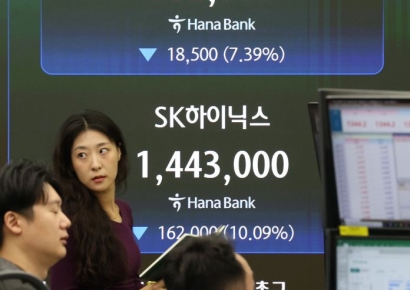 "I Like the High Dividends" "This Is a Better Bet Than Samsung Electronics and SK hynix": What Foreign Investors Bought While Selling 14.7 Trillion Won
- Women Who Say "A Husband's Annual Salary of 100 Million Won Is a Given"... Matchmaking CEO: "They Talk About It Like It's Nothing"
- "Who Turned Up the Refrigerators?" Hackers Target 700 Supermarkets, Sparking Alarm... "A Blow to France's Food Security"
- 'Discount' Ballantine's vs. 'Cost-Cutting' Johnnie Walker ... Strategies Diverge Amid Strong Dollar
- "I'll Give You 53.4 Billion Won to Keep Quiet"... Influencer Reveals Secret Deal; Musk Denies It
The Special Act on Korea-US Strategic Investment requires the government to report to the relevant standing committee prior to commencing consultations with the United States for each investment project. As such, even after this report, further National Assembly review regarding project-specific investment terms and commercial rationality is expected to continue.
© The Asia Business Daily. All rights reserved. Unauthorized AI training and use prohibited.