Gumi City Accelerates "Urban Grand Remodeling Project" for Ninth Administration
Redeveloping Traditional Markets and Creating Gumi Station Open Plaza
Improving Residential Conditions in Rural Areas through Educational Support
For the ninth popularly elected administration, Gumi City is set to launch full-scale citizen-centered innovation projects following its large-scale investment attraction initiatives.
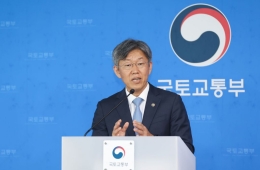
![Kim Jang-ho, Mayor of Gumi City, Holds Press Briefing on the 9th Term "Innovation Project" <br>[Photo provided by Gumi City]](http://www.asiae.co.kr/news/img_view.htm?img=2026092117443237019_1789980271.jpg)
Kim Jang-ho, Mayor of Gumi City, Holds Press Briefing on the 9th Term "Innovation Project"
[Photo provided by Gumi City]
Gumi City has presented an execution roadmap that centers on three pillars: economic, residential, and spatial innovation. This plan includes modernization of traditional markets, revitalization of neighborhood business districts, creation of the Gumi Station Open Plaza, and support for education and settlement in rural areas.
Initially, the city will undertake redevelopment and facility improvement for aging traditional markets such as Indong Market, Sinpyeong Market, and the Saemaul Central Market Noodle Alley. In particular, Indong Market—with a vacancy rate of 71.4%—will undergo mixed-use redevelopment, while Sinpyeong Market and Noodle Alley will focus on facility modernization and environmental enhancements to restore local commercial activity.
In the old downtown, a series of initiatives will be implemented, including the "Old Downtown RE:Fill Project" which transforms vacant stores into startup spaces, creation of tech startup hubs, and revitalization of self-sustained commercial districts centered around culture. The number of alleyway-type shopping districts will be increased from 24 to 50. Additionally, the city aims to expand its public delivery app "Meokgaebi" to 8,000 member stores and 100,000 users.
The area surrounding Gumi Station will be expanded by securing adjacent land, transforming the current plaza into the 5,459-square-meter "Gumi Station Open Plaza." Facilities such as a performance hall, a citizen rest area, and transportation infrastructure will be developed, along with an underground parking lot with 130 spaces, to channel the floating population in the old downtown into local commercial districts. The completion target is 2030.
In rural areas, the strategy is to attract population influx through education. Alongside scholarships for elementary students, specialized education tailored to each school, and settlement support for newly relocated families, the city plans to provide up to 25.6 million KRW in benefits for students who transfer from other cities or counties and remain until graduation.
Kim Jangho, Mayor of Gumi City, stated, "True innovation is when citizens can genuinely feel that 'our neighborhood has changed.' We aim to connect tangible changes in traditional markets, neighborhood economies, the old downtown, and rural communities to ensure the achievements of the ninth local government term are felt by our residents."
Hot Picks Today
 "I Went for the Cheap Coffee, but Now I Feel Uneasy"... Major Coffee Franchises Cited for Violations One After Another
- In Korea, Studying Medicine Is in High Demand, but in China, It's Shunned: "Why Become a Doctor When You Can’t Make Money?"
- "Surprisingly Real, Perfect Like AI" -- Global Media Praise Korean Fencer's Beauty
- "50 Million Won for Weekly Encounters"... Man in His 60s Sentenced for Deceiving Woman in Her 20s with Forged 1.4 Billion Won Account
- "I've Already Booked My Trip to Japan, But This Is Serious"...Highest Number of Measles Cases in Japan in a Decade Spurs Emergency Alert
Gumi's growth strategy, previously centered on large-scale investment attraction, is now expanding to include traditional markets, local commercial districts, and rural settlement. Ultimately, the key issue is how quickly these plans can be executed to bring about changes that residents can truly experience.
© The Asia Business Daily. All rights reserved. Unauthorized AI training and use prohibited.