"Building a Housing Ladder"...1.19 Million Public Housing Units to Be Supplied by 2030
Ministry of Land Unveils 'Housing Stability Plan' to Advance Housing Welfare
Supporting Real Demand with an Annual Average Supply of 240,000 Units
150,000 Public Housing Units to Be Supplied Nationwide by End of Next Year
Universal Pu

The government has announced plans to supply 1.19 million public housing units by 2030. Public housing refers to homes that include various public rental units and publicly sold housing, whether newly built or acquired. Of the total 1.19 million units, 920,000—or about 77%—will be supplied in the Seoul metropolitan area.
Currently, there are about 1.93 million long-term public rental units (as of the end of 2024) that offer secure leases of ten years or more. The government aims to increase this to over 2.5 million units, ensuring that more than 10% of all housing consists of such long-term rentals. For the universal public rental program targeting the middle class, the plan is to provide 190,000 units by 2030.
The Ministry of Land, Infrastructure and Transport announced these details in the ‘Housing Stability Plan’ on September 21. This marks the first comprehensive mid-term housing welfare initiative under the current administration, presenting a public housing supply plan—including public rental units—as well as current and future housing welfare strategies.

Starting with 187,000 units in 2024, the government plans to gradually scale up supply: 218,000 units in 2025, 225,000 units in 2026, 240,000 units in 2027, and 318,000 units in 2030. By type, 350,000 newly built rental units will be provided over five years, the largest portion, followed by 313,000 units through acquisition, 230,000 units for ‘jeonse’ (deposit-based lease), and around 52,000 units for public-supported private rental. Public sales will account for 243,000 units.
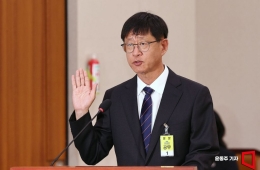
Kim Itak, First Deputy Minister of the Ministry of Land, Infrastructure and Transport, stated, “This plan not only expands public housing to a level exceeding that of advanced countries, but also aims to innovate the quality of housing and resident services to meet demand. We will transition to a customized, regionally centered support system that takes life stages and local conditions into account.”
Supplying 1.19 million public housing units means an average annual supply of about 240,000 units, which amounts to roughly 14% of the 8.717 million rental households nationwide (as of the end of 2024). It is estimated that between the fourth quarter of this year and the end of next year, about 150,000 housing units will be made available nationwide, including 100,000 units in the Seoul metropolitan area. The Ministry anticipates this will contribute to stabilizing the monthly and yearly rental markets to some extent.

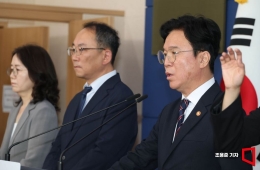
Lee Itak, First Vice Minister of Land, Infrastructure and Transport, is announcing the housing stability plan on the 21st at the Government Sejong Complex press room. The housing stability plan includes supplying 1.19 million public housing units by 2030. Courtesy of the Ministry of Land, Infrastructure and Transport
View original imageIf the government's plan proceeds as intended, the number of long-term public rentals (ten years or more) will exceed 2.5 million units by 2030. As of the end of 2024, the long-term public rental inventory rate in Korea stands at 8.4%, already exceeding the OECD average of 7.1%. The government projects that by 2030, this figure will reach double digits.
Of the 243,000 public sale units, 210,000 will be supplied in the Seoul metropolitan area. To prevent initial homeowners from receiving disproportionate benefits while keeping sales prices affordable, the government plans to introduce equity accumulation and profit-sharing models. For new long-term private rental units of 20 years or more, the Ministry is coordinating specialized mortgage products through the Korea Housing and Urban Guarantee Corporation (HUG). Detailed business models, including specific rent levels, are scheduled for announcement in the second half of this year.

Given that public rental housing has so far been focused on vulnerable groups, the newly introduced universal public rental housing will also finalize and present detailed supply conditions in the near future. Units will feature larger floor areas, with diverse layouts and finishing materials, and will be offered in high-demand locations such as urban centers and close to subway stations.
As examples cited by the government, the universal public rental model includes projects such as the Goyang Changneung B-1 Block (1,594 units, to begin construction this year), Namyangju Jinjeop 2 A-2 Block (342 units, to start in 2027), and Namyangju Wangsuk 2 A-5 Block (351 units, also to start in 2027). Units will be designed primarily around 3- and 4-bay layouts to allow for more usable interior space, with finishing materials matching the standards of private housing. Floor areas will be 55–85 square meters in residential land development districts and 40–60 square meters in urban areas.
For single young-person households, units of at least 30 square meters will generally be provided, though models under 30 square meters will also be available in core urban locations to keep rents low. Eligibility criteria, including income and asset standards and rent structures for the universal public rental program, will be finalized following public feedback and announced within this year. These standards will be higher than current public rental eligibility thresholds.

Floor plan of the universal public rental housing cited as an example by the government. Provided by the Ministry of Land, Infrastructure and Transport.
View original imagePlans are also in place to upgrade the quality of existing public rental housing. New public rental units will continue to be supplied mainly in high-demand, transit-accessible areas, while the share of medium-sized units will be increased. The standard 31-square-meter unit will be supplied with balcony expansions, effectively increasing usable space by about 5 square meters. Floors will be designed to reduce noise between units.
In addition, eligibility and coverage for the housing assistance program targeting low-income households will be expanded. The government will also broaden initiatives that help vulnerable households—such as those living in single rooms or small studio apartments—move into public rental housing. Previously, support covered rent and housing repair costs; now, options for subsidizing shared management expenses are being considered in cooperation with the National Assembly. For at-risk households who may not apply because they are unaware of such programs, the government will establish a proactive outreach system by linking data between the Ministry of Health and Welfare, local governments, and related agencies.
Hot Picks Today
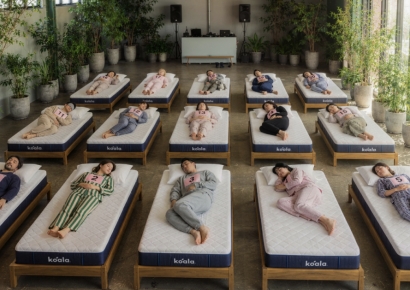 24-Year-Old Wins Sleep Contest, Takes Home 19 Million Won After Sleeping Soundly Alongside Strangers
- "Should've bought this instead of Samsung and SK hynix"... One stock rose 32% as the KOSPI fell 17%
- "Even Underwear Has to Be Cut Up with Scissors"... China Hit by Rise of "Trash Hunters" in an "If You're Slow, You're Out" Scramble
- "Please Make More," After Hitting It Big in China and Vietnam... Orion Custard Expands Production Lines
- "Photos of Kim Jong Un Released by North Korea Are a Deception"... Debate Over Death Rumors Continues
Deputy Minister Kim emphasized, “We will ensure that the Housing Stability Plan is implemented without delay so that it brings real change to people’s lives, not just remaining a plan on paper. We will monitor progress regularly, listen to voices in the field, and promptly address any shortcomings.”
© The Asia Business Daily. All rights reserved. Unauthorized AI training and use prohibited.