Faster Cyberattacks with AI, Speed Becomes Crucial for Defense... KISA to Upgrade Vulnerability Response System
High-Risk Vulnerabilities Should Be Prioritized
Legislative Efforts Underway for Vulnerability Detection and Disclosure Systems
Security-Specialized Models Should Be Validated Through a ‘Korean Glasswing’ Approach
As the speed of cyberattacks accelerates due to artificial intelligence (AI), the Korea Internet & Security Agency (KISA) is strengthening its related response system. KISA's plan is to enhance its framework for proactive cyber risk management, such as assessing the actual risk of vulnerabilities with AI and establishing institutional foundations for collaboration between businesses and security researchers.

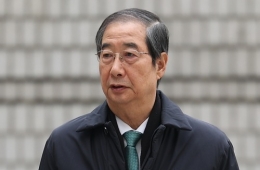
Seungkwon Bae, Head of Vulnerability Management Center at Korea Internet & Security Agency (KISA). KISA.
View original imageOn the 22nd, KISA announced that it is advancing its response system—centered on its Vulnerability Management Center—to cover the entire process from discovery and verification of vulnerabilities to remediation and information sharing.
Since May, KISA has been utilizing AI for vulnerability assessment through OpenAI’s Government and Institutions Trust Access Control (GTAC) program. The targets of these assessments are the external public web pages of critical infrastructure and major commercial and open-source software. Seungkwon Bae, Head of the Vulnerability Management Center at KISA, explained, “By using AI, we have reduced the time it takes to deliver vulnerability information to companies from one month to one week.”
KISA is also piloting a public-private partnership initiative in which companies allow external security researchers to assess their systems, and researchers notify the companies of discovered vulnerabilities to facilitate remediation. The approach includes informing companies in advance of the scope and reporting methods through a Vulnerability Disclosure Policy (VDP), and applying Coordinated Vulnerability Disclosure (CVD), which gives companies time to resolve vulnerabilities before researchers release the details to the public.
KISA plans to complete legislative research this year to support such collaborations. The aim is to address existing challenges, where even security assessments to strengthen cybersecurity can lead to legal issues if there is unauthorized access to operational systems.
AI is reducing the time required to prepare for cyberattacks. According to the Forum of Incident Response and Security Teams (FIRST), approximately 66,000 vulnerabilities are expected to be disclosed this year, a 46.3% upward revision compared to early forecasts. FIRST cited the spread of AI-powered autonomous vulnerability discovery tools as a direct factor. Bae emphasized, “The key is not to respond to every vulnerability, but to identify and respond as a priority to those that pose the highest actual risk,” adding, “It is necessary to shift to proactive risk management by identifying internet-exposed assets and the likelihood of exploitation before incidents occur.”
Security-Specialized Models Should Lead to a ‘Korean Glasswing’

Eunsung Kim, Head of Threat Response Policy Team at Korea Internet & Security Agency (KISA).
View original imageMeanwhile, there is an opinion that, alongside the government-led development of security-specialized foundation models, it is necessary to establish collaborative systems such as a ‘Korean Glasswing’.
Hot Picks Today
 "Two Spend 500,000 Won in a Flash, Yet Wait Two Hours?" ... 'Dreamland' Shunned by Kids and Foreign Tourists
- The Era of Getting 200 Million Won After 30 Years Is Over... A Japanese Bank's "Perpetual Department Head" Who Just Clocked In Cries Out
- Spain Hit by Its Worst Tragedy... Lee Kangin, Moreno and Real Madrid Join Soccer World in Mourning
- They Said, “Make It Your Home for Life” - Then Suddenly Kicked 200 Passengers Off... What Happened to the Around-the-World Cruise?
- "130 Rice Bowls Sold Out in a Day"... 'Unfiltered Face' Adds 8 Million Won to Night Market Sales: China's Bungeunwoo
To counterattack methods targeting Korea and address the domestic security environment, there is a need for models trained on Korean security data. It was also explained that, after development, the models must be pilot-tested across various companies and industries to verify their performance and safety. Eunseong Kim, Head of Threat Response Policy Team at KISA, stressed, “There should be a management system in Korea in which, after developing security-specialized foundation models, they are utilized across many companies and sectors and their performance and safety are systematically evaluated.”
© The Asia Business Daily. All rights reserved. Unauthorized AI training and use prohibited.