[Exclusive] Arrest Warrants and Interrogation Records Leaked to ChatGPT... Police Security Investigations in Disarray
From Warrants to Interrogation Statements, Investigative Reports Also Uploaded
6 Out of 7 Violations Occurred in Security Investigation Units... Serious Gaps in Security Awareness
Park Sangwoong: "Supervisors Must Also Be Held Accountable"
It has been revealed that the police leaked multiple investigation secrets—information that should have been securely protected—by uploading them to generative artificial intelligence (AI) platforms. Most of these violations occurred within the security investigation units, which took over counter-espionage investigations from the National Intelligence Service. This has raised concerns about serious vulnerabilities in the police’s security system, especially as they are responsible for national security and industrial espionage investigations.
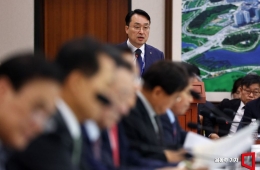
According to materials obtained from the Korean National Police Agency by Assemblyman Park Sangwoong, a member of the National Assembly's Public Administration and Security Committee, there were a total of seven violations of security regulations involving uploads of internal documents to external AI platforms, such as ChatGPT, from last year to the first half of this year. The leaked investigation documents included 44 individual items, covering arrest warrant applications, search and seizure warrants, suspect interrogation records, and preliminary investigation reports (internal investigations), among others.
![[Exclusive] Arrest Warrants and Interrogation Records Leaked to ChatGPT... Police Security Investigations in Disarray](http://www.asiae.co.kr/news/img_view.htm?img=2026092214455238452_1790055953.jpg)
Of the seven security breaches, six occurred within security investigation units. In January last year, the Security Investigation Division of the Seoul Metropolitan Police Agency was caught attempting to upload 11 items, including arrest warrant applications and documents detailing criminal facts, to ChatGPT. The Security Investigation Division of the Jeonnam Provincial Police Agency was found in March this year to have uploaded four documents—including search and seizure warrants and investigation reports—to ChatGPT. In May, the Security Investigation Division of the Gyeonggi Northern Provincial Police Agency was caught uploading six items, such as preliminary investigation reports and applications for search and seizure warrants, to Claude.
Additionally, in May, the Security Investigation Division at the Daejeon Metropolitan Police Agency leaked seven items, including suspect interrogation records and questioning files. The Security Investigation Division at the Chungnam Provincial Police Agency uploaded nine records, including email seizure warrants, to ChatGPT, and the Security Investigation Division of the Gyeonggi Southern Provincial Police Agency violated security rules by uploading three items—including communication permit forms and call logs—to both Claude and ChatGPT.
The only case outside the security investigation units involved the Anti-Corruption Investigation Division of the Seoul Metropolitan Police Agency. The Division’s first team was found to have leaked four items in March this year, including a voice recording of “Vice Chairman OOO” and other investigation materials.
Investigation documents such as search and seizure warrants and investigation reports may contain a subject’s personal information, evidence collected, details of the investigation’s progress, and directions for subsequent investigations. If such information is exposed externally or used in training generative AI, it could lead to violations of the privacy of those involved and may also disrupt ongoing investigations.
As the amended Criminal Procedure Act is set to take effect, the police have been increasing the use of AI in investigative work and are well aware of the associated risks. The headquarters’ Police Security AI Team has repeatedly sent official notices to police stations nationwide on “precautions when using generative AI platforms such as ChatGPT,” emphasizing that investigation materials or sensitive personal information should not be entered into these platforms.
Nevertheless, the continued occurrence of leaks in the security investigation units is of particular concern. Despite the fact that each provincial security investigation unit typically exercises extra caution to conceal personal information even within internal networks, actual investigative secrets keep being leaked to external AI services. This has led to calls to first strengthen security capabilities, before focusing on investigative capabilities.
Police Becoming Target for Recruitment by Foreign Agencies… AI Delegation Leaves Security Gap
![[Exclusive] Arrest Warrants and Interrogation Records Leaked to ChatGPT... Police Security Investigations in Disarray](http://www.asiae.co.kr/news/img_view.htm?img=2026092110194536091_1789953585.jpg)
Beyond leaks of investigation materials via generative AI, inappropriate contact between police officers and foreign diplomatic officials has also been uncovered. The Korean National Police Agency explained, “We are currently investigating suspicions that a police officer from the North Gyeongsang Provincial Police Agency contacted a foreign diplomatic official in Korea without reporting the contact as required.” The Security Investigation Division at the Busan Metropolitan Police Agency previously searched the residence of an intelligence officer from the North Gyeongsang agency in November last year, on suspicion of leaking information related to the Asia-Pacific Economic Cooperation (APEC) summit in Gyeongju to Chinese counterparts. However, the police agency said it could not confirm whether the ongoing investigation specifically pertained to that intelligence officer.
The police, who have taken de facto responsibility for counter-espionage and industrial espionage investigations, have now become major targets for recruitment by foreign intelligence agencies. With the revised Criminal Act expanding the application of espionage charges from hostile states to all foreign countries, and with the broader scope of security investigations, a stricter awareness of security is required—ranging from interaction with external actors to management of investigation materials.
The police are also taking steps to raise internal awareness. Bae Daehee, Director of the National Police Agency’s Security Investigation Bureau, recently cited specific examples on the internal network, including cases where a foreign diplomatic official, after meeting a police officer at a conference, repeatedly contacted them via social media to invite them for coffee or offered to pay for overseas travel; also mentioned were incidents of requests for personal information on their own nationals residing in Korea in exchange for cash. He called for strict adherence to counterintelligence rules.
Hot Picks Today
 "Jealous of Koreans" - Now a Must-Do on Every Trip... The Place Where Foreigners Spent KRW 229.8 Billion
- [Exclusive] Piling medicines into a basket and setting them on the counter: "Ready to check out?" ... Misuse concerns mount, but the government remains in the dark.
- "'No! Dad, Run!'... Father Moved by 5-Year-Old Son Who Shielded Him from Ghost at Korean Folk Village"
- "I thought getting into a big company was the goal"... The 'position' only 1 in 121 employees reaches
- "Please Let Me Go Home"... Customers Trapped in Department Store Parking Lot for 5 Hours Vent Their Anger
Assemblyman Park Sangwoong stated, “The fact that the police, whose duty is to protect national security, handed over warrants, suspect interrogation records, and reports to external AI services is not a simple individual mistake, but evidence that the police’s security system has collapsed.” He added, “If even basic investigative secrets cannot be kept, it raises the question of whether the police are qualified to handle security investigations. There must be a thorough inquiry into how this information was leaked, its impact on investigations, and all responsible supervisory personnel at every level must be held strictly accountable.”
© The Asia Business Daily. All rights reserved. Unauthorized AI training and use prohibited.



!["Please, Just Take Them Off" - They Made It All the Way to Bed... Then Fecal Bacteria Struck [Deep Scroll]](https://cwcontent.asiae.co.kr/asiaresize/307/2026101610053063338_1792112730.png)