Justice Kim Seongsu Vows to Unwaveringly Uphold Judicial Independence... First Supreme Court Appointment under Lee Administration
Emphasizes Principle of Judicial Independence in Inaugural Address
Vows to Resolve Court Delays and Safeguard Procedural Fundamental Rights
Proactive Response to New Disputes Involving AI and Climate Change
Kim Seongsu, the newly appointed Supreme Court Justice, emphasized in his inauguration address that he would unwaveringly uphold the principle of judicial independence. He also stated his commitment to helping resolve court delays, protecting the public's procedural fundamental rights, and addressing new types of disputes arising from technologies such as artificial intelligence (AI).

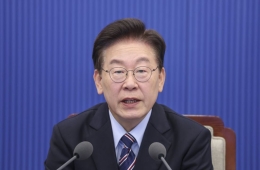
Kim Sungsoo, the newly appointed Supreme Court Justice, is delivering his inaugural address at the inauguration ceremony held at the Supreme Court in Seocho-gu, Seoul on September 21, 2026. [Joint Coverage] Yonhap News Agency
View original imageAt the inauguration ceremony held at the Supreme Court on September 21, Justice Kim said, "The judiciary is steadfastly adhering to the principle of judicial independence, and I will do my utmost in my judicial duties so that the public, as sovereigns, can feel reassured and recognize that the judiciary is quietly carrying out the serious responsibilities entrusted to it."
He continued, "I will contribute to resolving delays in court proceedings, which have been cited as a cause of distrust in the judiciary," adding, "As a member of the judiciary, I will devote all my energy and commitment to the prompt handling of cases."
He also highlighted the importance of 'procedural fundamental rights' as part of the public's right to trial. Justice Kim stated, "The Supreme Court should focus on legal reasoning as set out in the Constitution and statutes, and the findings of fact by the lower courts must rightfully be respected."
However, he added, "If procedural fundamental rights of the parties have not been properly protected, resulting in findings of fact that are far from the truth, there is an exceptional need to correct this." He explained that if parties feel their procedural rights have not been adequately guaranteed, they may come to distrust the outcome of the trial itself.
He also expressed his intention to proactively prepare for new types of disputes arising from emerging technologies such as climate change, AI, and humanoid robots. He mentioned, "I will contribute to researching and analyzing new types of disputes in advance, so that when they arise, we can reduce unproductive arguments and establish reasonable and unified standards as early as possible."
Justice Kim is the first Supreme Court Justice appointed since the inauguration of the Lee Jaemyung administration. President Lee Jaemyung awarded Justice Kim his letter of appointment at the main building of the Blue House on the morning of September 21, and also conferred a decoration upon Kim's predecessor, Lee Heunggu, the former Supreme Court Justice. After the event, President Lee held a tea meeting with Chief Justice Cho Heedae, Justice Kim, former Justice Lee, and others.
Hot Picks Today
 "Two Spend 500,000 Won in a Flash, Yet Wait Two Hours?" ... 'Dreamland' Shunned by Kids and Foreign Tourists
- The Era of Getting 200 Million Won After 30 Years Is Over... A Japanese Bank's "Perpetual Department Head" Who Just Clocked In Cries Out
- Spain Hit by Its Worst Tragedy... Lee Kangin, Moreno and Real Madrid Join Soccer World in Mourning
- They Said, “Make It Your Home for Life” - Then Suddenly Kicked 200 Passengers Off... What Happened to the Around-the-World Cruise?
- "130 Rice Bowls Sold Out in a Day"... 'Unfiltered Face' Adds 8 Million Won to Night Market Sales: China's Bungeunwoo
Previously, Chief Justice Cho recommended Justice Kim as the successor to former Justice Lee, and recommended Son Bongki, Chief Judge of the Daegu District Court, as the successor to former Justice Noh Taeak. Regarding Chief Judge Son, the Blue House stated, "It was an unilaterally submitted written recommendation with no substantive consultation," and requested that the recommendation be resubmitted. Justice Kim's appointment was approved at the National Assembly plenary session on September 17, with 227 votes in favor, 28 against, and 13 abstentions out of 268 members present.
© The Asia Business Daily. All rights reserved. Unauthorized AI training and use prohibited.